
How To
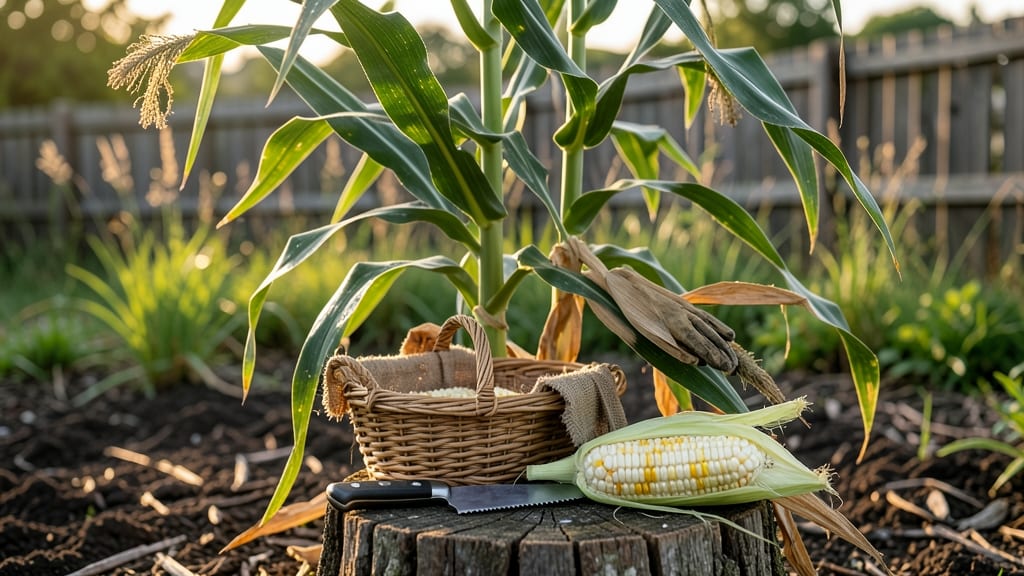
Harvesting corn at just the right time means waiting 70 to 100 days after planting, depending on the variety — but those numbers only tell part of the story.
Picture this: you’ve been watching your 🌽 plants grow, and now the silks are browning, but the kernels still feel hard. That’s the moment where one more day can turn sweet, juicy perfection into tough, starchy disappointment.
Knowing the exact signs to look for (beyond just counting days) is the key to that golden harvest.
Most gardeners focus on days to maturity, but environmental factors like heat waves or sudden cold snaps can speed up or slow down ripening.
That’s why I’ll walk you through the three foolproof tests to confirm your corn is ready — plus how to avoid the most common mistakes that ruin flavor.
By the end, you’ll know not just when to harvest, but how to test for peak sweetness and store your corn so it stays fresh longer. Let’s get started.

Sweet corn harvest timeline by variety: days to maturity guide
Harvesting corn at the perfect moment means the difference between juicy, sweet kernels and starchy, tough ears. The days to maturity listed on seed packets are your best starting point, but real-world growing conditions—like temperature, sunlight, and soil quality—can shift that timeline by 1-2 weeks.
For example, my early-season varieties often mature 5-7 days faster in hot climates like Zone 9 compared to cooler Zone 5 gardens.
Most gardeners focus on sweet corn varieties (like Silver Queen or Peaches and Cream), but super-sweet types (such as Ambrosia or Bodacious) have longer maturity windows. Even field corn, though less common in home gardens, follows its own 90-120 day schedule.
Below, I’ve broken down the harvest timelines by category so you can plan your planting calendar with confidence.
Pro Tip: Always check seed packets for specific variety details, as even within the same category, some hybrids mature 10+ days apart. For instance, Early Sunglow (65 days) is ready 2 weeks earlier than Country Gentleman (90 days). Planting a mix of early, mid-season, and late varieties ensures a continuous harvest all summer.
If you’re planting in cool climates (Zones 3–5), prioritize early-maturing varieties like Golden Bantam (65 days) to avoid early fall frosts.
In hot climates (Zones 8–10), you can stretch your harvest by planting succession crops every 2 weeks—even late varieties like Country Gentleman will thrive with consistent 1–2 inches of water weekly.
My personal favorite for extended harvests is Peaches and Cream, a mid-season variety that matures in 80 days but stays sweet for 3–5 days post-harvest if stored properly.
For super-sweet varieties, Ambrosia (75 days) is a crowd-pleaser—its enhanced natural sweetness holds up even when harvested slightly earlier than the milk stage.
For field corn, which is less common in home gardens, varieties like Mystic (100 days) are ideal if you’re growing for drying or animal feed. These types need more time to mature and often benefit from longer growing seasons.
If you’re in a short-season area, consider dwarf varieties like Golden Cross Bantam (85 days), which can still produce full-sized ears in smaller spaces.
One common mistake I see is overestimating maturity based on seed packets alone. Always account for local growing conditions: drought stress can delay maturity by 10+ days, while excessive heat (
3 Key signs your corn is ready for harvest (beyond days)
Counting days to maturity is a great starting point, but corn's true sweetness depends on three visual and physical cues that tell you it’s time to harvest. These signs—silk browning, kernel milk line, and ear firmness—are your secret weapons for avoiding starchy, overripe ears.
I’ve relied on these methods for years, and they’ve saved me from countless tough, mealy kernels.
First, let’s talk about the silks. When they turn from bright green to tan or brown, that’s your first clue. But here’s the catch: don’t wait until they’re completely dry and brittle.
That’s a sign you’ve missed the sweetest window. Instead, aim for silks that are mostly brown but still slightly damp—this usually means your corn is at peak sweetness.
-
1. Silks Turn Brown
Silks should be tan or brown (not green) but still slightly damp. This means the kernels are filling out quickly. -
2. Kernel Milk Line Test
Pierce a kernel with your fingernail—if it’s milky white, it’s perfect. If it’s clear or yellow, it’s past its prime. -
3. Ears Feel Heavy & Firm
A ripe ear should feel heavy for its size and have plump, firm kernels. If it feels light or hollow, it’s not ready.
The kernel milk line test is my favorite trick. Pierce a kernel with your fingernail—if it oozes a milky white liquid, you’ve hit the sweet spot. This stage is called the "milk stage", and it’s when corn is at its peak flavor.
If the liquid is clear or yellow, your corn has moved into the "dough stage", where it’s starchy and less sweet. Worse yet, if the kernel feels hard and dry, you’ve reached the "dent stage", and it’s past its prime.
Don’t overlook the ear’s physical feel. A ripe ear should be heavy and firm when you hold it in your hand. If it feels light or hollow, the kernels haven’t filled out enough.
I also check for uniform kernel size—if some kernels are noticeably larger than others, it’s a sign the ear is overripe. Pro tip: Harvest in the morning when temps are coolest for the sweetest flavor.
One common mistake I’ve seen is relying only on days to maturity. While early varieties might be ready in 60-70 days and late varieties in 90-100 days, environmental factors like heat waves or drought can speed up or slow down ripening.
That’s why these visual cues are non-negotiable. Even if your corn is at the right day count, always double-check with these tests.
Once you’ve confirmed your corn is ready, harvest it immediately—don’t store it on the stalk. The longer it stays attached, the faster it loses sweetness. Twist or cut the ear 1-2 inches below the top to avoid damaging the plant.
If you’re not using it right away, store it in the fridge for up to a week or blanch and freeze for long-term storage. Trust me, your taste buds will thank you.