
How To
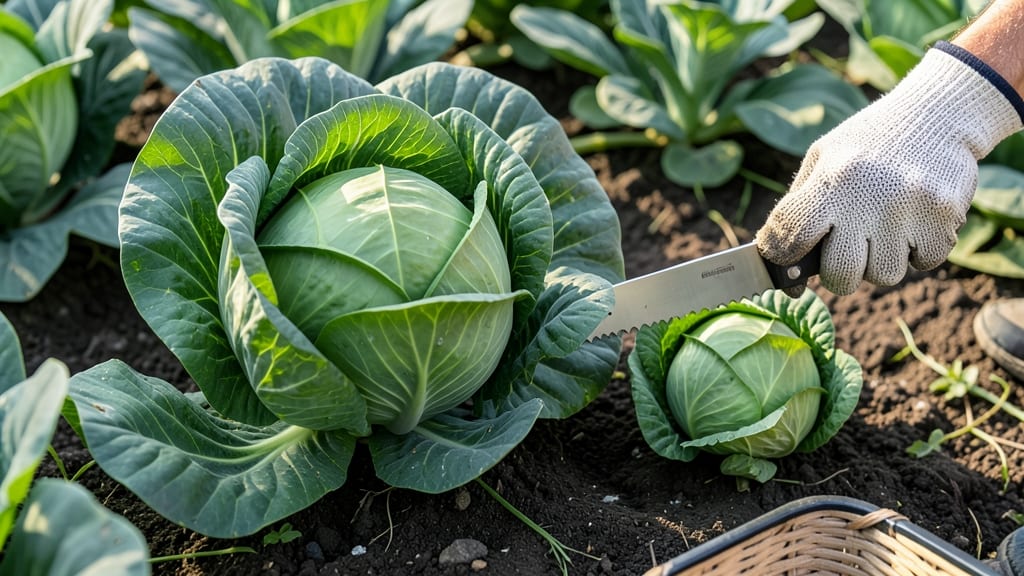
You know when to harvest cabbage by testing its firmness, size, and leaf tightness—these three cues tell you exactly when your 🥬 is ready to pick for peak flavor and texture.
Picking cabbage at the wrong time means sacrificing crisp texture and flavor—so how do you know when those perfect, tight heads are ready for harvest? The answer lies in a simple leaf snap test and these key visual cues.
Most home gardeners wait too long, letting heads grow loose or bitter, but the ideal moment arrives when the outer leaves stay upright and the head measures 6-8 inches across. A quick squeeze should feel solid, not soft.
Below, I’ll walk you through the exact steps to test your cabbage, plus how to adjust for your USDA Zone 6a planting schedule so you never miss the window between June and October.
The leaf snap test: how to check cabbage readiness in 3 simple steps
Harvesting cabbage at the perfect moment ensures crisp texture and maximum flavor. The leaf snap test is my go-to method because it’s foolproof—no guesswork involved. When you hear that satisfying crisp snap, you know your cabbage is ready.
But what if the leaf bends instead? That’s your cue to wait a few more days. Let’s break down this test and other key indicators for green, red, and savoy varieties.
Before grabbing your harvesting shears, always check the outer leaves first. These leaves hold the most reliable clues about the head’s readiness. A tight, upright leaf formation means the head is firming up, while loose or yellowing leaves signal it’s past its prime.
For savoy cabbage, look for crinkled, vibrant leaves—they’re ready when they snap crisply too, just like their smooth-leafed cousins.
Now, let’s focus on the leaf snap test itself. This quick check takes less than 10 seconds and can save you from harvesting too early or too late. Grab a middle outer leaf and gently pull it away from the head.
If it snaps cleanly with a sharp, crisp sound, your cabbage is ready. If it bends or tears without that satisfying crack, give it 5-7 more days of growth.
- Step 1: Select a middle outer leaf on the cabbage head.
- Step 2: Gently grasp the leaf near the stem and pull it away from the head at a 45-degree angle.
- Step 3: Listen for a crisp snap—if you hear it, the cabbage is ready to harvest!
Head size is another critical factor, though it varies slightly by cabbage variety. For most green cabbage varieties, aim for heads that are 6-8 inches wide. Red cabbage often matures slightly smaller, around 5-7 inches, while savoy cabbage can reach 8-10 inches before peaking.
Always measure the widest part of the head—this gives you the most accurate gauge of readiness.
Don’t ignore the color intensity either. A fully mature cabbage head will have vibrant, consistent coloring—whether it’s deep green, rich purple, or creamy white. If you notice yellowing or browning on the outer leaves, the head may have overmatured.
This often happens when cabbage sits too long in the garden, leading to bitter flavors and tougher textures. When in doubt, perform the leaf snap test again before deciding.
Timing matters beyond just the test and size. For spring cabbage, harvest in late spring to early summer (June-July), while fall cabbage should be picked in late fall (October-November). If you’re growing savoy cabbage, it often matures slightly later than smooth-leaf varieties, so plan accordingly.
Pro tip: Harvest on a cool, overcast day to preserve freshness longer after picking.
What if your cabbage head splits open before you’re ready to harvest? This usually happens when the head outgrows its leaf constraints due to rapid growth. To prevent this, ensure your plants have enough space (at least 18 inches apart) and consistent watering.
If splitting occurs, harvest immediately—split cabbage still tastes great but may not store as long.
Once you’ve confirmed readiness with the leaf snap test and checked all other indicators, it’s time to harvest. Use a sharp knife or pruners to cut the head about 1 inch above the base.
Leave the outer leaves intact if you want to encourage a smaller second harvest from the same plant. For storage, keep cabbage in a cool, dark place (like a root cellar) where it can last for weeks.
Remember, the leaf snap test is your best friend when it comes to cabbage harvesting. It’s quick, reliable, and works for every variety. The next time you’re eyeing those lush green (or purple!) heads, take 10 seconds to perform the test.
Your future salads, stir-fries, and braised dishes will thank you for that perfectly timed harvest! 🥬
Visual signs of perfectly timed cabbage harvests (beyond the snap test)
While the leaf snap test is your first clue, perfectly timed cabbage harvests rely on multiple visual cues that guarantee crisp texture and rich flavor. Beyond the satisfying crack, pay attention to these secondary indicators that confirm your cabbage is ready for harvest.
Start by examining the head firmness. A mature cabbage should feel solid and heavy for its size—press gently with your thumb. If it yields slightly, it needs more time.
For color intensity, vibrant hues (deep green, purple, or white) signal peak ripeness, while dull or yellowing leaves mean it's past its prime.
Leaf spacing is another game-changer: tightly packed outer leaves that don’t separate when touched indicate readiness. Loose or spreading leaves mean the head is overmature and will taste bitter. Even the head diameter matters—aim for 6-8 inches, though dwarf varieties may be smaller.
| Sign | Description | Action |
|---|---|---|
| Head Firmness | Solid, heavy, no give | Harvest now |
| Color Intensity | Vibrant, no yellowing | Harvest now |
| Leaf Spacing | Tightly packed, upright | Harvest now |
| Head Diameter | 6-8 inches (varies by type) | Harvest now |
| Temperature | 50-75°F (optimal) | Harvest in AM |
| Sunlight | 6+ hours daily | Harvest after sun |
Environmental factors like temperature and sunlight also play a role. Harvest when daytime temps hover around 50-75°F—extreme heat or cold can stress the plant and alter flavor. Morning harvests in full sun (6+ hours daily) ensure crispness, while afternoon heat may wilt the leaves.
For storage longevity, prioritize heads with minimal leaf yellowing or damage. These cabbages store best in cool (32-40°F) and humid conditions for up to 2 weeks.
If you’re unsure, harvest slightly early—cabbage continues maturing after picking, so a day or two early won’t hurt its quality.
Finally, trust your variety’s maturity timeline. Dwarf varieties like ‘Miniature Peanut’ mature in 50-60 days, while standard types like ‘Golden Acre’ take 70-90 days. Cross-check these timelines with your local frost dates to avoid losing your crop to cold.