
How To
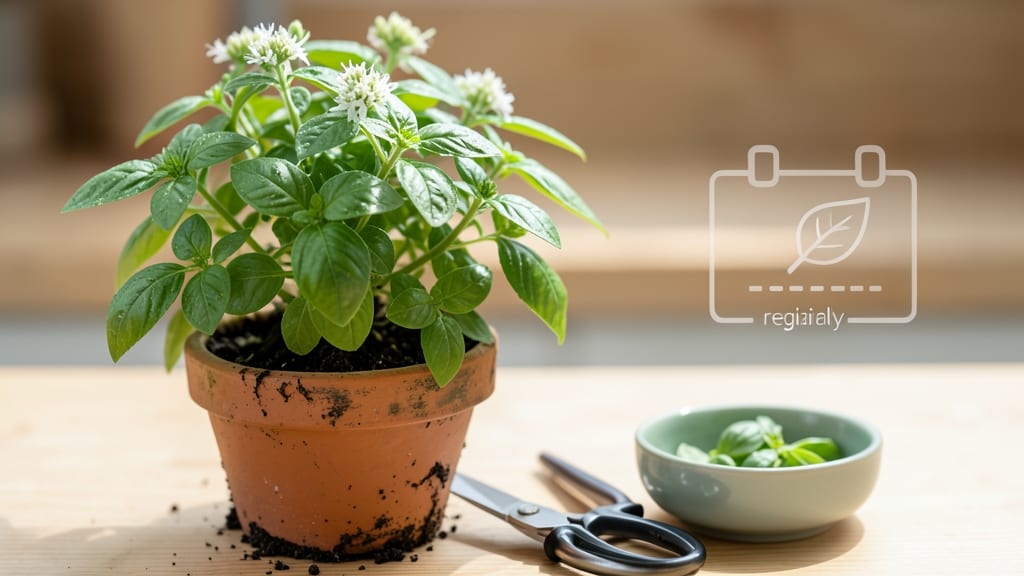
Harvesting basil often enough keeps it lush and productive—twice a week is the magic number for most plants once they’re established.
Here’s the catch: skip the schedule, and you’ll end up with bitter, woody stems and a plant that bolts too soon. I’ve turned my fair share of basil into a sad, flowering stick by ignoring the timing, and I’ll save you the same mistake.
Whether you’re growing 🌿 basil in pots or the garden, the key is picking the right leaves at the right time—never more than a third of the plant at once. Below, I’ll show you exactly how to do it without stunting growth or triggering that dreaded flower spike.
You’ll also learn how to spot when your basil is begging for a trim (hint: it’s when those leaves are big and vibrant) and what to do if it stops growing after harvests.
Trust me, these tricks make all the difference between a handful of leaves and a bushy, high-yielding plant all season.
Optimal basil harvesting frequency by plant growth stage
Timing your basil harvests correctly is the secret to a plant that keeps giving—literally. Unlike many herbs, basil responds dramatically to pruning, but only when done at the right growth stages. Start harvesting too early, and you stunt its development.
Wait too long, and you risk bolting (flowering), which turns those sweet leaves bitter and woody. The key? Science-backed timing based on your plant's age and size.
For young basil plants (under 6 inches tall), hold off on harvesting until they've developed at least 6-8 sets of true leaves. This usually takes 4-6 weeks after germination.
Early harvesting can shock tender seedlings, slowing their growth. Instead, focus on keeping them well-watered and in full sun during this critical phase.
Once your basil hits the 6-inch mark, it's time to start harvesting—but strategically. The ideal harvest frequency shifts as your plant matures. Young plants can handle a light harvest every 2-3 weeks, while mature plants (over 12 inches) can be harvested weekly without stress.
The goal? Encourage bushier growth by always cutting just above a leaf node, where new branches will sprout.
🌿 Pro Tip: Never remove more than 1/3 of the plant in a single session. This rule prevents stress and ensures your basil keeps producing those aromatic leaves you crave for pesto and salads.
| Growth Stage | Plant Height | Harvest Frequency | Leaves to Pick | Visual Cues |
|---|---|---|---|---|
| Seedling | Under 3 inches | None (wait) | None | Small leaves, sparse growth |
| Young Plant | 3-6 inches | Every 2-3 weeks | Outer leaves only | 6+ true leaves, firm stems |
| Mature Plant | 6-12 inches | Every 1-2 weeks | Top 1/3 of stems | Large, vibrant leaves |
| Established Bush | 12+ inches | Weekly | Outer stems + prune tips | Thick stems, dense foliage |
Identifying the perfect leaves to harvest is just as important as timing. Always target the largest, outermost leaves first—they're fully mature and won't hinder the plant's growth. Avoid cutting into the center of the plant, where new leaves form.
For Genovese basil or Sweet basil, focus on stems with at least 3-4 leaf pairs.
Here's how to spot ready-to-harvest basil: The leaves should be deep green, smooth-edged, and firm to the touch. If you pinch a stem and it snaps cleanly (not mushy), it's harvest-ready.
Soft or yellowing leaves? Leave them—they're past their prime and could signal overwatering or nutrient deficiency.
For container-grown basil, which often matures faster, you might harvest every 5-7 days during peak summer. The key is consistency: regular harvesting signals your plant to keep producing leaves instead of bolting.
Just watch for flower buds—if you see those tiny white flowers forming, it's time to prune aggressively or your plant will shift energy to seeds instead of leaves.
🌱 Science Note: Basil produces auxin hormones at leaf nodes, which stimulate branch growth. Cutting just above a node (where leaves meet the stem) triggers this natural response, creating a bushier plant with more harvestable foliage. Always use clean, sharp scissors to avoid crushing stems, which can spread disease.
In late summer, as daylight hours shorten, your basil's growth will naturally slow. This is when you should reduce harvest frequency to every 2-3 weeks. Over-harvesting stressed plants can lead to woody stems and poor flavor.
Instead, focus on keeping your basil healthy with balanced fertilizer and consistent moisture until the first frost.
✂️ Final Rule: If your basil looks leggy or sparse after harvesting, you're likely cutting too much. Aim to remove no more than 25% of the plant in any single session, and always leave at least half the foliage intact to support photosynthesis.
How to harvest basil without triggering bolting (common mistakes to avoid)
Harvesting basil correctly is the secret to a continuous harvest all season long. When done wrong, your plant will bolt prematurely, producing bitter flowers instead of flavorful leaves. The key lies in timing, technique, and knowing which leaves to avoid.
I’ve made my share of mistakes—like harvesting too much at once or picking the wrong leaves—that led to leggy, flower-filled basil. Let’s fix that together.
Start harvesting when your basil reaches 6-8 inches tall and has at least 6-8 sets of true leaves. This is when the plant has enough energy to recover. The first harvest is critical: remove just the top 2-3 sets of leaves using clean, sharp scissors or fingers.
This encourages branching, leading to a bushier plant with more leaves. Skipping this step often results in a single, tall stem with few leaves—perfect bolting conditions.
⚠️ callout-warning ⚠️
Basil needs time to recover between harvests. Never remove more than 1/3 of the plant in a single session, or you’ll shock the roots. For mature plants, harvest every 2-3 weeks during peak growth (June-August). Over-harvesting in hot summer months forces bolting as the plant tries to reproduce.
Focus on harvesting the larger, outer leaves first—they’re fully mature and won’t stunt growth. Avoid the inner, tender leaves near the center; these are the plant’s growth engine. If you snip these, you’ll slow down new leaf production.
Pro tip: Use your thumb and forefinger to pinch leaves just above a leaf node (where leaves meet the stem). This method promotes faster regrowth than cutting.
Three critical mistakes cause premature bolting: harvesting stem tips too early, removing too many leaves at once, or ignoring signs of stress like yellowing leaves. I once cut back my basil by half in one go, thinking it would encourage bushiness—it did, but the plant bolted within weeks.
Instead, space harvests 3-4 weeks apart and always leave at least half the foliage intact.
Pruning is your best friend for preventing bolting. After each harvest, inspect the plant for flower buds (tiny white or yellow flowers). Remove them immediately—they signal the plant to stop producing leaves.
Pinch off any stems that start flowering, even if it means sacrificing a few leaves. This redirection of energy keeps your basil focused on leaf growth for 8-12 more weeks of harvests.
For container-grown basil, harvest slightly more frequently—every 2 weeks—since roots have less room to recover. Water deeply after harvesting to reduce stress, and add a balanced fertilizer (like 10-10-10) every 4-6 weeks to support regrowth.
With the right technique, my container basil has produced harvests for 3 months straight without bolting—proof that patience and precision pay off.