
How To
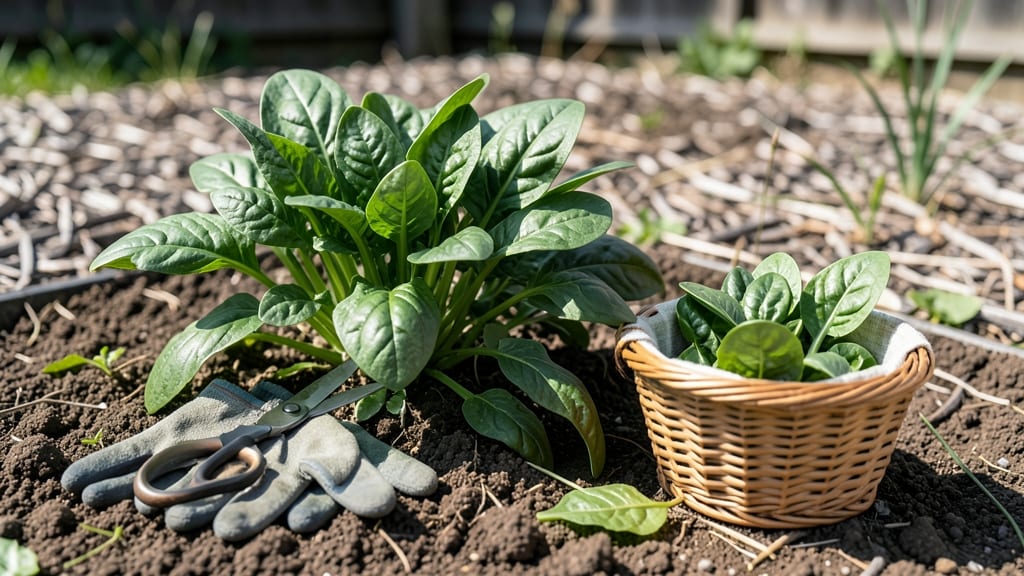
To know when to harvest spinach, watch for 4-6-inch leaves that snap cleanly at the stem—this is your cue for peak tenderness and flavor.
Harvesting spinach at the right time ensures tender leaves packed with nutrients—but wait too long, and your crop turns bitter or tough. Mastering the leaf color and stem snap test is your secret to perfect timing.
Bright green, crisp outer leaves are a clear sign it’s ready, but purple-tinged varieties need a closer look. The snap test—gently pulling a leaf—reveals the ideal moment: a clean break means it’s harvest-ready.
Below, I’ll break down the visual cues, tactile tricks, and seasonal factors that help you time your harvests for maximum yield—whether you’re a beginner or a seasoned gardener.
Spinach leaf color guide: green shades that signal harvest readiness
Your spinach leaves whisper secrets about their readiness to harvest—if you know what to listen for. The leaf color is your first clue, revealing maturity, flavor intensity, and even nutritional peaks. Darker greens often mean peak nutrients, while subtle shifts can signal it's time to act before quality declines.
Don't overlook the variety-specific hues that distinguish baby spinach from mature leaves. For example, Baby's Leaf Hybrid stays tender with bright green edges, while Bloomsdale Long Standing develops deeper purple veins as it matures. These visual cues help you time harvests for optimal texture and taste.
🌱 Did You Know? Spinach leaves contain lutein and zeaxanthin, antioxidants that peak when leaves are darkest green. Harvest at this stage for maximum nutritional value.
Here’s how to decode your spinach’s color signals for perfect harvest timing:
Watch for yellowing edges—this is your plant’s SOS for overmaturity. When you see this, act fast to avoid bitter flavors and tough textures. Even a single yellow leaf signals it's time to harvest before the whole plant declines.
For savoy spinach varieties, look for tightly curled leaves with deep green centers. These varieties often have higher oxalate levels when fully mature, so harvesting at the half-mature stage (when leaves are 3-4 inches long) balances texture and nutrition.
If your spinach develops purple hues, especially in cooler weather, it’s a sign of anthocyanin production—these antioxidants actually increase nutritional value. Harvest these leaves when they're 4-6 inches long for the best flavor and color intensity.
Never ignore leaf size alongside color. Even if leaves are dark green, if they’re smaller than 3 inches, they’re not yet ready. Pair color checks with the stem snap test (coming next!) for foolproof harvest timing.
Pro tip: Morning harvests yield the freshest spinach. Leaves are most hydrated and least wilted after a night’s rest, making them ideal for salads or cooking.
🌿 Remember, spinach is a cut-and-come-again crop. Harvest outer leaves first to encourage regrowth, and you’ll enjoy continuous harvests for weeks—just keep monitoring those leaf colors!
The stem snap test: how to check spinach stem toughness like a pro
One of the most reliable ways to determine if your spinach is ready for harvest is the stem snap test. This simple tactile method helps you avoid harvesting too early (when leaves are still tender) or too late (when they become tough and bitter).
The test works by assessing the stem's crispness—a key indicator of maturity and flavor.
To perform the test, select a healthy outer leaf from the base of the plant. Grip the stem firmly between your thumb and forefinger, about 1-2 inches from the leaf attachment point.
Apply gentle pressure—this is where most beginners make their first mistake by gripping too loosely or too tightly.
⚠️ WARNING: Common Mistakes That Ruin Your Harvest
- Gripping too high: Test near the leaf base, not the center stem (avoids false toughness signals).
- Ignoring leaf size: A 4-6 inch leaf with a crisp stem is ideal—don’t rely solely on the snap.
- Testing in heat: Spinach stems soften in hot afternoons (test in morning shade for accuracy).
- Overlooking regrowth: Cut leaves 1 inch above base to encourage new growth after harvest.
The ideal snap should produce a clean, crisp break—like snapping a carrot stalk or a celery rib. If the stem snaps easily with a satisfying crack, your spinach is ready.
Listen closely: a dull thud or mushy resistance means the leaves are still too young, while a hollow pop with fibrous strands indicates overmaturity.
For baby spinach varieties, aim for a slightly softer snap—these types are harvested earlier when leaves are just 2-3 inches long. In contrast, savoy spinach (with its crinkled leaves) often requires a firmer grip due to its thicker stems.
Always test multiple stems across the plant, as maturity can vary slightly between leaves.
Pro tip: Combine the snap test with a visual check. Look for deep green leaves with prominent veins—they should feel firm but not leathery. Avoid harvesting when leaves develop yellow edges or purple tinges, as these signal stress or bolting (flowering), which ruins flavor.
Mastering the snap test takes practice, but once you recognize the perfect crisp break, you’ll never overlook a perfect harvest again.
Remember: the earlier you harvest, the more tender (and productive) your spinach will stay—so test regularly, especially during peak growth periods like spring and fall when spinach thrives. 🌱