
Picking
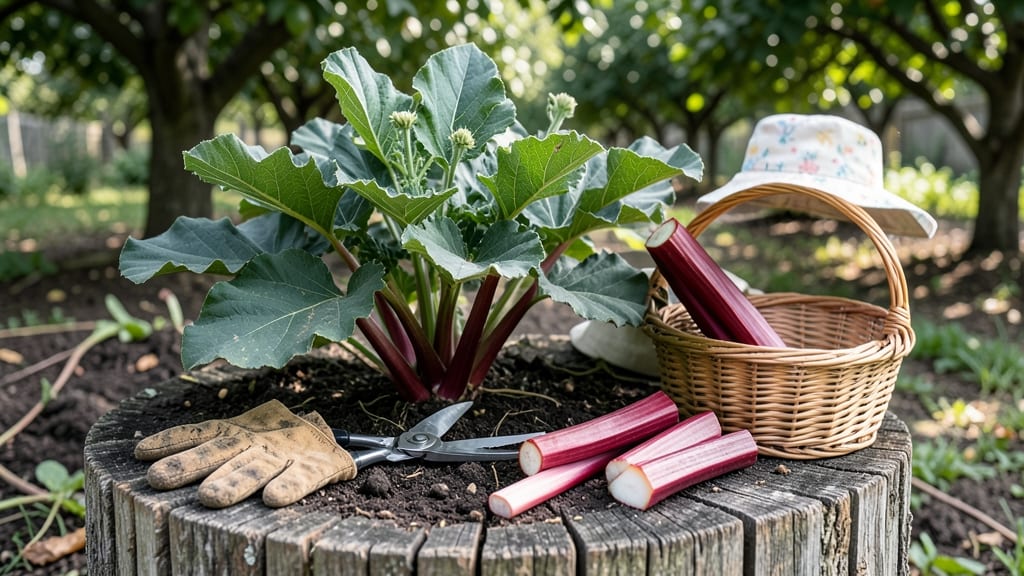
Harvesting rhubarb all summer is possible—but only if you follow the right seasonal rules to protect your 🌱 plant’s health.
Rhubarb lovers often wonder: Can you keep harvesting rhubarb all summer long? The answer isn’t as simple as ‘yes’ or ‘no’—it depends on when you plant, how you cut, and what your climate allows. Follow these seasonal rules to maximize yields without harming your plants.
In USDA Zone 6a, the prime harvest window runs from late spring to early summer, when stalks are firm and crisp. Pushing cuts into late summer risks weakening the plant, reducing next year’s crop. But with the right techniques, you can extend yields just a little longer.
Below, I’ll show you how to cut rhubarb properly, spot signs of over-harvesting, and adjust for cooler climates where fall harvests are possible. Ready to keep your rhubarb thriving?
When to harvest rhubarb for continuous summer yields
Rhubarb thrives on a seasonal harvest schedule that balances yield and plant health. The primary harvest window runs from late spring to early summer (May-June in most USDA zones), when stalks reach 10+ inches long and 1-inch diameter.
This timing ensures your plant stores energy for next year’s growth while providing your kitchen with fresh stalks.
Many gardeners mistakenly believe they can harvest rhubarb all summer, but over-cutting in late summer risks depleting the plant’s energy reserves. By August or September, rhubarb shifts focus to root and crown development for winter survival.
Pushing for more stalks now weakens the plant, leading to smaller yields next spring and potential dieback.
Your USDA zone plays a critical role in harvest timing. Cooler climates (zones 3-5) may extend harvests into late June or early July due to slower growth, while warmer zones (zones 6-8) should stop harvesting by late June to avoid stress.
Always prioritize plant health over quantity—a strong rhubarb plant will reward you for years.
| Harvest Window | USDA Zones | Climate Notes | Stalk Maturity |
|---|---|---|---|
| Late Spring (May) | 3-8 | Cool, moist soil ideal | 10"+ length, 1" diameter |
| Early Summer (June) | All zones | Peak growth phase | Firm, crisp texture |
| Late Summer (July-Aug) | 3-5 only | Risk of heat stress | Thin, rubbery stalks |
| Post-Labor Day | All zones | Stop harvesting | Focus on roots |
To extend your harvest season, focus on selective cutting—always remove outer stalks first and avoid the center crown. This method preserves the plant’s energy while giving you a steady supply for 4-6 weeks.
In my Zone 6a garden, I’ve found that harvesting every 2 weeks in May-June keeps the plant productive without stress.
One common mistake is harvesting immature stalks (under 8 inches long) or overly thick cuts that damage the crown. Always use a sharp knife or pruners to cut stalks at a 45-degree angle, about 1 inch above the ground. This minimizes injury and encourages new growth.
If you’re in a warmer climate (zones 7-10), heat can accelerate the plant’s shift to dormancy. Watch for yellowing leaves or stunted growth—these are signs to stop harvesting immediately.
In these zones, the harvest window shrinks to just 3-4 weeks, so plan accordingly. Mulching with straw or compost helps regulate soil temperature and may extend harvest by 1-2 weeks.
For year-round rhubarb lovers, consider planting two varieties with staggered maturity dates, like ‘Victoria’ (early) and ‘Champagne’ (late). This strategy lets you harvest early stalks in May while later varieties mature in June-July.
Just remember: even with two plants, never harvest after mid-summer—the rules still apply!
After your final harvest, let the plant photosynthesize until frost to build root reserves. In Zone 5 and colder, apply a 4-inch layer of mulch to protect crowns through winter. This simple step ensures your rhubarb returns stronger next spring, ready for another abundant harvest season.
Pro tip: Mark your last harvest date on your calendar! I use a bright garden flag near my rhubarb patch as a visual reminder. This small habit has doubled my plant’s lifespan and kept my yields consistent for over 10 years.
How to cut rhubarb stems properly to extend the season
To harvest rhubarb all summer without harming your plants, you must follow a precise cutting method. The key is to always remove outer stems first—never the center stalks. This preserves the plant’s energy reserves for next year’s growth.
Think of your rhubarb plant like a pie: you wouldn’t take the biggest slice first, right? The same logic applies here!
When selecting stems, look for ones that are at least 10 inches long and 1 inch in diameter. These mature stalks are ready for harvest, while thinner or shorter ones should stay on the plant. Immature stems won’t store well and won’t provide the best flavor.
Always cut just above the leaf crown—this prevents damage to the plant’s growing point.
Timing matters too. Early morning is the best time to harvest because the stalks are crisp and full of moisture. Avoid cutting after heavy rain, as wet stems bruise easily. Use a sharp knife or pruners to make clean cuts—never tear the stems, as this invites disease. Pro tip: Wear gloves when handling rhubarb leaves, as they contain oxalic acid, which can irritate skin.
Step-by-Step Guide to Cutting Rhubarb Stems
-
Step 1: Identify Mature Stalks
Look for 10-inch-long stems with a 1-inch diameter. These are ready for harvest.
-
Step 2: Cut Outer Stalks First
Always harvest from the outer edges of the plant, leaving the center stalks intact.
-
Step 3: Use Clean Cuts
Cut 1 inch above the leaf crown with a sharp knife to avoid damaging the plant.
-
Step 4: Space Harvests
Wait 2-3 weeks between harvests to allow new stalks to mature.
-
Step 5: Avoid Late-Season Cuts
Stop harvesting by late July to let the plant store energy for next year.
After harvesting, store your rhubarb in the fridge for up to 2 weeks. Wrap the stems loosely in a damp paper towel and place them in a plastic bag. This keeps them crisp and ready for your next baking project—or whatever delicious recipe you’re planning!
Remember, over-harvesting weakens the plant, so always leave at least half the stalks uncut to ensure a bountiful harvest next season.
If you live in a cooler climate, you might extend the harvest into early fall, but avoid cutting after the first frost. In warmer zones, focus on early-season harvests and let the plant rest in summer heat.
With these techniques, you’ll enjoy fresh rhubarb for months without sacrificing next year’s crop!
Pro tip: Mark your harvest dates on a calendar to track growth patterns. Over time, you’ll learn which stalks mature fastest in your specific climate. Happy harvesting! 🌱