
Picking
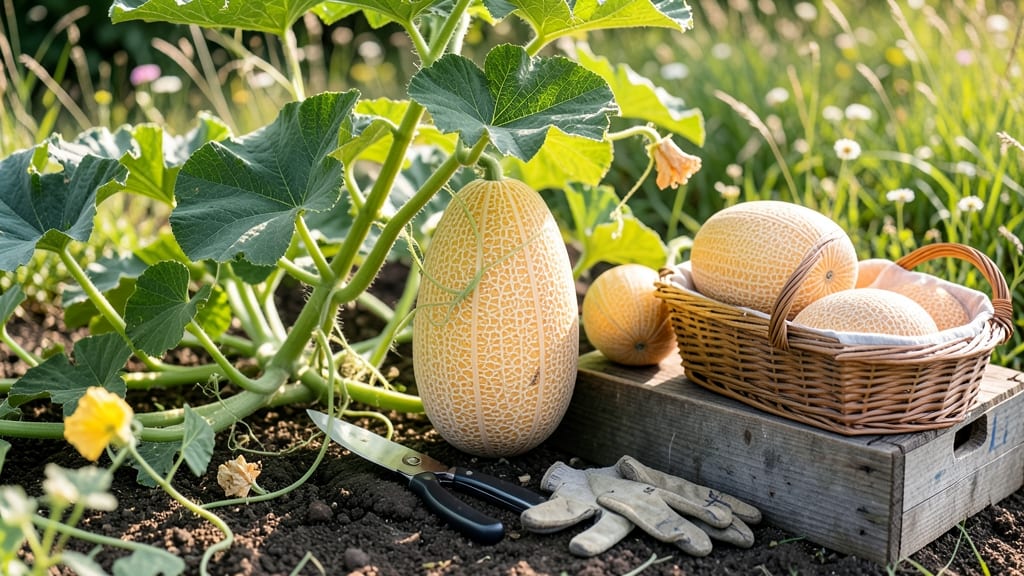
Timing the cantaloupe harvest time means the difference between a sweet, juicy reward and a bland, underripe disappointment.
If you’ve ever plucked a melon too soon—only to find it tasteless and seedy—you know how frustrating it can be. But don’t worry: with the right cues, you’ll never miss the perfect moment again.
Cantaloupes typically ripen between July and August in USDA Zone 6a, but the real secret lies in three simple signs: color change, stem separation, and a sweet aroma near the blossom end.
Below, I’ll walk you through each clue—plus how to avoid common mistakes—so you can pick your cantaloupes at peak flavor every time.


3 Unmistakable signs your cantaloupe is harvest-ready
Nothing beats the moment you pick a cantaloupe at just the right time—when it’s bursting with sweetness and ready to slice into refreshing summer treats.
But how do you know when your melons are truly ripe? Cantaloupes don’t give obvious signals like tomatoes or peppers, so you’ll need to rely on three key visual and tactile cues. These signs will help you avoid the disappointment of underripe fruit or the waste of overripe melons.
First, let’s talk about the slip test, a foolproof method that tells you whether the melon is ready to come off the vine. This simple check involves a gentle tug and a bit of give—something you’ll want to test daily once your cantaloupes start maturing.
Next, we’ll look at the stem separation, where the fruit’s connection to the vine changes dramatically as it ripens. Finally, the color transformation of the rind is your third clue, shifting from pale green to a creamy yellow with a distinctive net-like pattern.
🌱 Numbered Highlights: Cantaloupe Harvest Cues
- 1. Slip Test: Gently grasp the melon and try to wiggle it at the stem. If it slips easily from the vine (like a loose tooth), it’s ready to pick. A firm attachment means it needs more time.
- 2. Stem Separation: Look for the stem end to detach slightly when you twist it gently. If it snaps off cleanly, that’s your green light. A stubborn stem means the fruit isn’t ripe yet.
- 3. Rind Color: Check for a creamy yellow or beige hue on the blossom end (near the stem). The net-like pattern should be well-defined, and the rind should feel slightly tougher when pressed.
The slip test is my go-to method because it’s quick and reliable. I always start by inspecting the melon’s attachment to the vine—if it moves even a little, I know it’s close to harvest time.
For example, a cantaloupe that slips with just a few seconds of wiggling is almost always at peak ripeness. This test works best in the morning when the fruit is cooler and firmer, giving you a more accurate reading.
Next, pay close attention to the stem separation. When cantaloupes are ripe, the stem will often detach partially or even fall off entirely. This happens because the fruit’s sugars break down the connection to the vine.
If you notice the stem shriveling or drying, that’s another clear sign. I’ve found that twisting the stem gently while holding the melon is the best way to test this—no need to pull hard!
The color change is the most visual cue and often the easiest to spot. A ripe cantaloupe’s rind will shift from a pale green or white to a creamy yellow or tan, especially near the blossom end.
The net-like pattern (called the reticulation) will also darken and become more pronounced. Pro tip: Avoid picking based on color alone—always combine it with the slip test and stem check for the best results.
One mistake I see gardeners make is picking cantaloupes too early because they’re impatient. An underripe melon will have a hard, pale rind and little to no scent. On the flip side, overripe cantaloupes can develop soft spots, a fermented smell, and a mushy texture.
To avoid these pitfalls, I recommend checking your melons every 2-3 days once they start showing signs of ripening.
Regional variations can also play a role in cantaloupe ripeness. In hotter climates, melons may ripen faster and develop a deeper yellow color. Conversely, in cooler areas, the rind might stay slightly paler but still be perfectly sweet inside.
If you’re growing cantaloupes in containers, be extra vigilant—container-grown melons often ripen slightly earlier than in-ground varieties due to faster heat absorption.
Finally, don’t overlook the scent test, which is a bonus indicator. A ripe cantaloupe will emit a sweet, musky aroma near the stem when gently sniffed. This fragrance is a dead giveaway that the sugars are fully developed.
If your melon passes the slip test, stem check, color change, and smells delightful, you’re ready to harvest!
With these three signs—slip test, stem separation, and color transformation—you’ll never second-guess your cantaloupe harvest again. Next time you’re in your garden, grab a melon and give it a wiggle. If it’s ready, you’re in for a treat! 🍈
How to test cantaloupe ripeness beyond the basics
Once you've mastered the basics of cantaloupe ripeness, it's time to elevate your harvest game with advanced testing techniques that eliminate guesswork. While the slip test and rind color are reliable, these extra methods ensure you never miss peak sweetness again.
I’ve used these tricks in my own garden to consistently pick cantaloupes at their absolute best—sweet, juicy, and flavor-packed every time.
Start with the aroma test, which is one of the most accurate indicators of ripeness. A ripe cantaloupe emits a strong, sweet, musky scent near the stem when gently sniffed. This fragrance comes from natural sugars developing inside the fruit.
If you detect even a faint sweetness, that’s your green light to harvest within the next 24 hours—they won’t get sweeter once picked.
⚠️ Avoid These Harvest Mistakes
- Harvesting too early based on size alone—some varieties stay small but ripen fully.
- Ignoring the stem—a firm attachment means the fruit isn’t ready, no matter the color.
- Using the 'thump test' on hard rinds—this can bruise unripe melons and speed up spoilage.
Pro Tip: Never cut cantaloupes to check ripeness—always use non-destructive tests first!
The weight test is another foolproof method I swear by. A ripe cantaloupe feels surprisingly heavy for its size due to concentrated sugars and water content. Lift a candidate melon in your hand—if it feels light for its size, it’s underripe.
For comparison, hold it against another cantaloupe you’ve already harvested. The difference in weight is often shocking!
Next, try the thump test—but only on melons that pass the aroma and weight checks. Gently tap the blossom end (opposite the stem) with your knuckle. A ripe cantaloupe produces a deep, hollow sound, like knocking on a wooden door.
If it sounds dull or flat, it’s not ready. This test works best when the rind is slightly soft to the touch, not rock-hard or mushy.
Don’t overlook the blossom end color. While the main rind turns cream-colored, the blossom end (where the stem was attached) should develop a yellowish-brown hue with a slight softening. This area often ripens first, so check it daily.
If you see cracking or weeping near the blossom end, harvest immediately—the sugars are at their peak, and the melon may overripe quickly.
Timing matters too! Cantaloupes ripen fastest in hot, dry weather (75–90°F). If your summer is unusually cool or rainy, extend your testing window by 3–5 days—the fruit may take longer to develop its signature sweetness.
Keep a harvest journal to track patterns in your climate, and adjust your methods accordingly for next season.