
Container Gardens
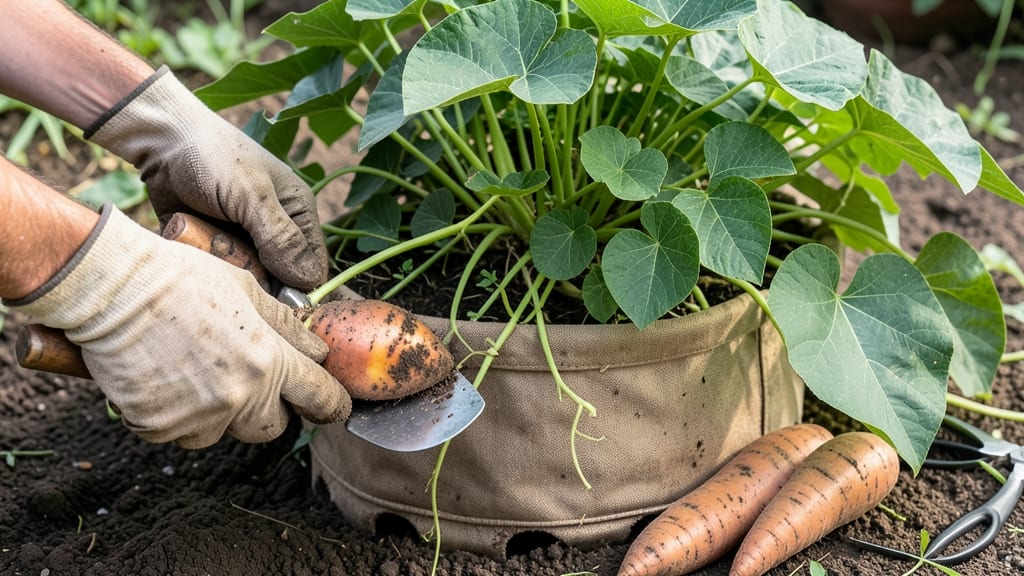
Harvesting sweet potatoes in containers at the right time ensures perfectly sweet, flavorful tubers instead of tough, woody ones.
Picture this: you’ve nurtured your 🍠 plants all summer, only to dig up small, underdeveloped tubers—or worse, ones that’ve split or rotted in the pot. The key to avoiding this frustration? Knowing when soil temps, leaf color, and tuber size align for the ideal harvest window.
Unlike in-ground sweet potatoes, container-grown ones mature faster but also signal readiness differently. A soil thermometer reading of 85–90°F is your first clue, but you’ll also spot yellowing vines and dull skin—classic signs that tubers are ready to pull.
In this guide, I’ll walk you through the exact cues to watch for, container-specific tricks to check tuber size without damaging plants, and how to cure your harvest for maximum storage life. No more guesswork—just perfectly timed sweet potatoes every time.
How to use a soil thermometer to determine perfect sweet potato harvest time
Timing the harvest of container-grown sweet potatoes is all about soil temperature and plant signals working together. A soil thermometer becomes your most reliable tool when the ideal harvest window of 85-90°F arrives.
This range signals tubers have reached peak sweetness and storage potential, especially in containers where roots develop differently than in-ground.
I’ve learned the hard way that harvesting too early gives you small, fibrous tubers, while waiting too late risks frost damage or tough skins. The secret is combining soil temperature readings with visual cues from the plant itself.
Let’s break down exactly how to use that thermometer—and what else to watch for—to nail your harvest timing every time.
✅ Step-by-Step Soil Thermometer Test for Sweet Potatoes
- Morning Check: Insert thermometer 2-3 inches deep in soil (where tubers form) and wait 30 seconds for accurate reading.
- Ideal Range: Harvest when soil temps consistently hit 85-90°F for 3+ days—this triggers tuber maturation.
- Container Adjustment: Check temps in multiple spots since container soil heats unevenly. Prioritize the center of the pot.
- Time of Day: Always test mid-morning (10 AM) when soil temps are stable, not fluctuating from sun exposure.
- Cross-Verify: Confirm with leaf yellowing (70-80% of vines) and toughened skin on a sample tuber.
Pro tip: If your container soil hits 90°F but the vines aren’t yellowing, wait 2-3 more days. Container-grown sweet potatoes often lag slightly behind in-ground plants due to limited root zone expansion. The thermometer reading is your final authority—trust it over visual cues alone.
False signals are common with container sweet potatoes. For example, vines might yellow prematurely if the container is overcrowded or underwatered. Always double-check soil moisture—it should be evenly damp but not soggy at this stage.
I once harvested based on yellow leaves only to find tiny, underdeveloped tubers because the plant was stressed from dry soil.
Once your soil thermometer confirms the 85-90°F sweet spot, combine that with a quick tuber check. Gently brush away soil from one vine to expose a tuber. If it’s 3+ inches long with dull (not shiny) skin, you’re ready.
For container plants, this check is especially important since roots can’t expand as freely as in-ground crops.
Container size plays a hidden role here. In 5-gallon pots, sweet potatoes mature faster (90-100 days) than in 10-gallon containers (110-120 days). Adjust your thermometer monitoring schedule accordingly—smaller pots hit the ideal range sooner.
I’ve found that black containers absorb heat fastest, so they may reach harvest temps 3-5 days earlier than white or fabric pots.
Don’t let frost trick you into harvesting early. Even if your thermometer shows 85°F, check your local first frost date. Sweet potatoes can tolerate light frosts (28-32°F) for 1-2 days post-harvest, but tubers left in containers will spoil quickly.
In my Zone 6a garden, I harvest by October 15th regardless of soil temps to avoid frost risk.
After confirming the perfect harvest window, act quickly. Sweet potatoes in containers are most perishable right after harvest because their roots can’t replenish moisture. Cure them immediately by placing in a warm (80-85°F), humid (80-85%) space for 5-10 days.
This step develops their sweetness and extends storage life—something I learned the hard way after storing un-cured tubers that sprouted within weeks.
Remember: The soil thermometer isn’t just a tool—it’s your harvest insurance. When you combine its data with leaf color, tuber size, and container conditions, you’ll consistently harvest sweet potatoes at their peak.
Next time you’re tempted to guess, reach for that thermometer—your future taste buds will thank you.
Container-specific signs your sweet potatoes are ready for harvesting (beyond soil temp)
Container-grown sweet potatoes offer unique harvesting cues that differ from in-ground plants. Unlike traditional beds, containers restrict root spread, creating crowding signals you must watch for. The first clue?
Your 5-gallon pots suddenly feel heavier than expected—a sign tubers have filled available space. This happens 2-3 weeks earlier than in-ground plants due to limited soil volume.
Look for yellowing vines paired with dull tuber skin as your primary indicators. In containers, vines often die back faster because roots can't expand laterally. Check for 3-inch tubers by gently pressing soil near the base—if resistance meets your fingers, harvest soon.
Smaller containers (<3 gallons) may produce earlier but smaller tubers compared to 5+ gallon pots.
Root crowding manifests as stunted vine growth despite adequate sunlight. If your plants stop spreading after 4-6 weeks, tubers are likely mature. Another trick: Lift the container slightly—if it feels unusually heavy for its size, roots have filled the space. This method works best with fabric grow bags where roots spread evenly.
| Container Size | Harvest Window | Key Signs | Tuber Size |
|---|---|---|---|
| 3-gallon pots | 90-100 days | Vines yellow, pot feels heavy | 2-3 inches |
| 5-gallon pots | 105-120 days | Dull skin, stunted growth | 3-5 inches |
| Fabric grow bags | 95-110 days | Root matting visible | 2.5-4 inches |
To check tuber size without damaging plants, use the "finger test": Gently press soil near the base with your thumb. If you feel resistance at 2-3 inches deep, tubers are ready.
For 5-gallon containers, aim for 3+ inches—smaller tubers stay sweet but may be fibrous. In 3-gallon pots, harvest at 2-3 inches to prevent overcrowding.
Container size dramatically affects maturity timing. A 5-gallon pot gives you 2-3 weeks longer to harvest than a 3-gallon pot. Fabric grow bags often mature 5-7 days faster due to better root aeration.
Monitor your plants' growth rate—if vines yellow before 90 days in small containers, harvest immediately to avoid rot from overripe tubers.
Never wait for full vine dieback in containers—this signals tubers may have started rotting from lack of space. Instead, harvest when you see 50% vine yellowing combined with any two other signs: heavy pot, dull skin, or finger resistance.
This container-specific approach ensures sweet, flavorful tubers every time. 🍠