
How To
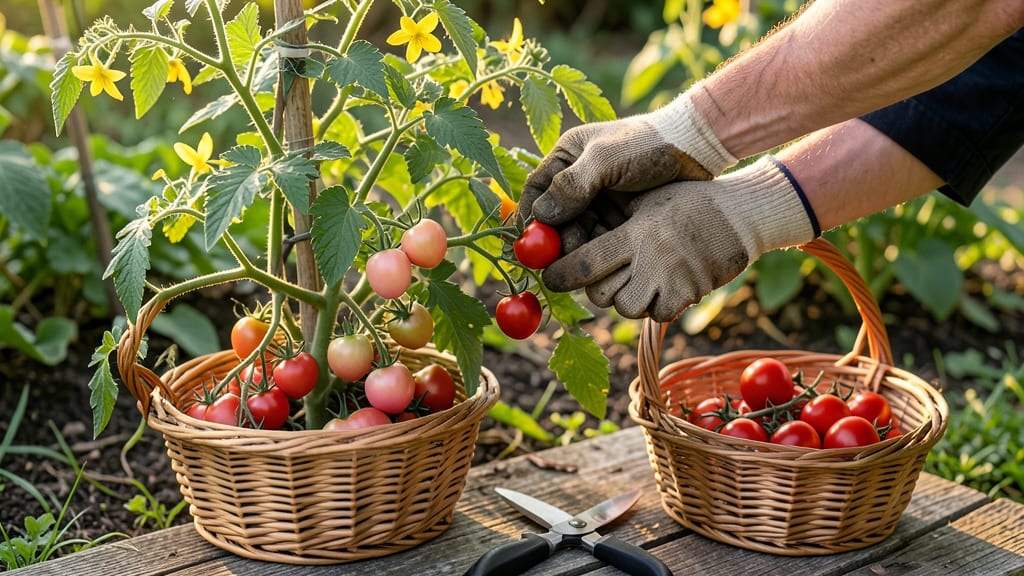
Knowing the exact cherry tomato harvest time is the secret to sweet, flavorful fruit that doesn’t rot on the vine.
Picture this: you’ve been waiting weeks for your 🍅 cherry tomatoes to ripen, only to pick them too early and end up with bland, mealy tomatoes—or too late, and they crack or split. Timing matters more than you think, especially in Zone 6a where summer heat speeds up ripening.
Harvesting at the right stage isn’t just about color—it’s about firmness, size, and even the way the fruit feels when you gently squeeze it. Miss the window, and you risk losing flavor or inviting disease into your garden.
But get it right, and you’ll enjoy tomatoes that burst with sweetness and resist common problems like blight.
In this guide, I’ll walk you through the visual cues to watch for, how climate affects ripening speed, and why some varieties need a little extra attention. By the end, you’ll know exactly when to pick for the best-tasting tomatoes—and how to stretch your harvest season for weeks longer.


Optimal cherry tomato harvest time by ripeness stage and color
Harvesting cherry tomatoes at the right time maximizes flavor and prevents disease. The color, size, and firmness all signal ripeness, but temperature and sunlight speed up or slow down the process.
For example, hotter days can cause tomatoes to ripen faster, while cooler weather may delay ripening. Understanding these cues ensures you pick tomatoes when they're at peak sweetness.
Most cherry tomato varieties ripen in 50-70 days after transplanting, but exact timing depends on the variety. Red varieties like 'Sweet 100' or 'Sun Gold' (yellow) mature faster than heirlooms.
Pay attention to the stem end—if it's still green, the tomato needs more time. Once fully colored and slightly soft, it's ready for harvest.
| Ripeness Stage | Color | Size | Firmness | Harvest Time | Notes |
|---|---|---|---|---|---|
| Green | Pale green | 1 inch or less | Very firm | Not ready | Wait 1-2 weeks for color change |
| Breaker | Pink/yellow blush | 1-1.5 inches | Firm but yielding | Early harvest | Can ripen off plant if needed |
| Mature | Deep red/yellow/orange | 1.5-2 inches | Slightly soft | Optimal harvest | Peak flavor and texture |
| Overripe | Dull or streaked | Soft or cracking | Mushy | Avoid | Risk of disease and poor taste |
Temperature plays a critical role in ripening speed. Warmer climates (above 85°F) can cause tomatoes to ripen in as little as 3-5 days, while cooler weather (below 70°F) may extend ripening to 10-14 days.
If your tomatoes aren't ripening quickly enough, consider using a black plastic mulch to absorb heat or harvesting them at the breaker stage (pink/yellow blush) to ripen indoors.
Sunlight exposure also affects ripening. Tomatoes need 6-8+ hours of direct sun daily for optimal growth. If your plants are in partial shade, ripening may slow down. Monitor the fruit's color change—shady spots often result in uneven coloring or green shoulders.
Prune lower leaves to improve airflow and sunlight penetration, which speeds up ripening.
Size is another key indicator. Cherry tomatoes typically reach harvest size between 1-2 inches in diameter. Smaller tomatoes (under 1 inch) are usually underripe, while oversized ones (over 2 inches) may crack or develop poor flavor. Use a ruler to check size if you're unsure—consistency is key for quality harvests.
Firmness is often overlooked but crucial. A ripe cherry tomato should be slightly soft when gently squeezed—like a ripe peach. If it feels rock-hard, it's not ready. If it's mushy or leaks, it's overripe.
Twist the tomato gently at the stem; if it snaps cleanly, it's ready to pick. This simple test saves time and ensures you harvest at the perfect moment.
Harvesting at the right time also prevents disease. Overripe tomatoes attract pests and spread fungal infections like blight or powdery mildew. Regularly check your plants every 2-3 days during peak season (June-October) to avoid missing the optimal window.
Use sharp scissors or pruners to avoid damaging the plant, and harvest in the morning when tomatoes are cool and firm.
Pro tip: If you're dealing with a late-season harvest and frost threatens, pick green tomatoes and ripen them indoors. Place them in a paper bag with a banana (which releases ethylene gas) to speed up ripening. This trick works for most varieties and extends your harvest by weeks.
Remember, every cherry tomato variety has slight variations. Heirlooms like 'Black Cherry' may take longer to ripen than hybrids like 'Tiny Tim.' Always check the seed packet or plant tag for specific days to maturity guidelines.
With practice, you'll develop an eye for the perfect harvest time—leading to sweeter, healthier tomatoes all season long.
Signs your cherry tomatoes are overripe vs. perfectly ripe (and why it matters)
Knowing exactly when to harvest your cherry tomatoes ensures peak flavor and prevents common issues like cracking or disease spread. Overripe tomatoes lose sweetness and become mealy, while underripe ones lack full flavor potential. The key lies in visual cues and tactile tests that reveal the perfect moment to pick.
Perfectly ripe cherry tomatoes typically reach their variety-specific color—deep red, yellow, or orange—while maintaining a firm yet slightly yielding texture. Their size usually falls between 1 to 2 inches in diameter, and the stem should snap cleanly when twisted.
Ignoring these signs can lead to flavor degradation or even plant stress.
Perfectly Ripe vs. Overripe Cherry Tomatoes
Perfectly Ripe
- ✅ Deep, uniform color (no green stem end)
- ✅ Firm but yielding when gently squeezed
- ✅ 1-2 inches in diameter
- ✅ Sweet, balanced flavor with minimal acidity
- ✅ Stem snaps cleanly when twisted
Overripe
- ❌ Soft, mushy texture (easily dented)
- ❌ Dull, uneven color with possible bruising
- ❌ Mealy, bland flavor with excess sugar
- ❌ Risk of cracking or splitting
- ❌ Attracts pests like fruit flies and rodents
Harvest at perfect ripeness to avoid flavor loss and plant disease.
Harvesting too early—when tomatoes are still green or partially colored—results in underdeveloped flavor and a higher risk of blossom end rot. These tomatoes often remain firm and hard, lacking the natural sweetness that develops during full ripening.
On the other hand, leaving them on the vine past their prime leads to overripe fruit that splits easily and invites pests.
Temperature plays a crucial role in ripening speed. In hot climates (above 90°F), cherry tomatoes may ripen in as little as 50 days, while cooler conditions can extend this to 70 days.
Always check for uniform color and gentle softness—these are your best indicators of readiness. Ignoring these signs can turn your harvest into a bitter, seedy disappointment.
Pro tip: If you’re unsure, pick a few tomatoes and let them ripen indoors on a sunny windowsill. This gives you a chance to monitor their progress without risking overripening on the plant. Remember, consistent harvesting encourages more fruit production, so don’t wait until the entire cluster is overripe!
By mastering these visual and tactile cues, you’ll enjoy sweet, juicy cherry tomatoes at their peak while keeping your plants healthy and productive. Happy harvesting! 🍅