
Vegetables
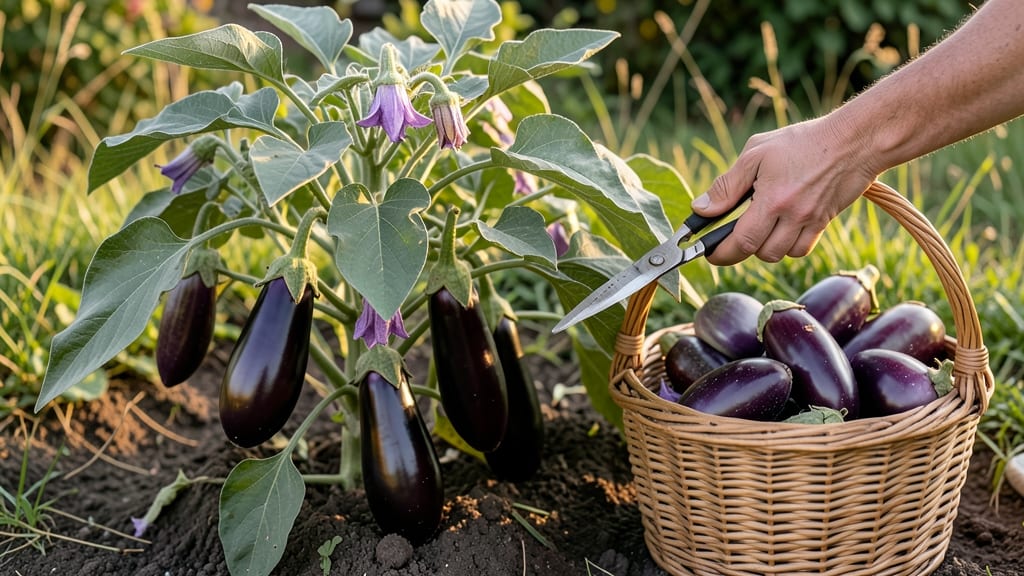
Harvesting eggplants at the right time ensures they're packed with flavor and ready for your kitchen 🍆—and missing that window means bitter, seedy, or tough fruit.
Timing your eggplant harvest perfectly ensures juicy, flavorful fruits—but pick too early or late, and you’ll miss out on peak taste and yield. Whether you’re growing Black Beauty or a smaller variety, knowing when to harvest can make the difference between a disappointing meal and a standout dish.
Most eggplants reach harvest time between 70 and 100 days after planting, but the real clues are in the fruit itself: glossy skin, deep color, and a firm but yielding texture.
In USDA Zone 6, that usually lands in July or August, but heat waves or cool snaps can shift the schedule.
Below, I’ll walk you through the exact signs to look for, how to handle different varieties, and what happens if you wait too long—or pick too soon. By the end, you’ll know exactly when to snip for the best results.
How to tell when eggplants are ready for harvest (key signs)
Harvesting eggplants at the right moment ensures they’re packed with flavor and texture. Miss the window, and you’ll end up with bitter, seedy, or woody fruits.
The key is watching for visual and physical cues that signal peak ripeness. Unlike some vegetables, eggplants don’t ripen further after picking, so timing is everything.
Start by checking the fruit’s color, which varies by variety but should be deep and consistent. For classic purple eggplants, this means a rich, glossy hue. Size matters too—most varieties reach maturity between 6-8 inches long, though some heirlooms can grow larger.
Ignoring these signs often leads to harvesting too early, leaving you with underdeveloped fruits.
| Indicator | Ready Eggplant | Not Ready |
|---|---|---|
| Color | Deep, glossy, and vibrant (purple, white, or variety-specific) | Dull, pale, or patchy |
| Size | 6-8 inches (varies by type) | Small and still growing |
| Skin Firmness | Firm but yields slightly when pressed | Soft, spongy, or wrinkled |
| Weight | Feels heavy for its size | Light and hollow-sounding |
| Stem Test | Snaps easily when twisted | Resists or pulls away cleanly |
| Seed Development | Seeds are small and soft | Seeds are large and hard |
A glossy skin is another telltale sign of readiness. When eggplants are ripe, their skin should feel slightly slick to the touch, almost like a fresh apple.
If the skin feels dry or matte, the fruit isn’t ready yet. Press gently—ripe eggplants yield slightly under pressure but don’t feel mushy. Overripe ones will feel soft or even wrinkled, indicating they’ve passed their prime.
Pay attention to the fruit’s weight. A ripe eggplant feels surprisingly heavy for its size, almost as if it’s packed with dense flesh.
If you pick one that feels light or hollow when lifted, it’s likely underdeveloped. Twist the stem gently—if it snaps cleanly, that’s your cue to harvest. If it resists or pulls away without breaking, the fruit needs more time on the vine.
Many gardeners overlook the seed development stage, but it’s a critical clue. At peak ripeness, the seeds inside should be small and soft.
If you cut one open and find large, hard seeds, the eggplant has overripe and lost its tender texture. Harvest before seeds mature to avoid bitter, fibrous fruits that spoil quickly.
Common mistakes include harvesting based on calendar dates rather than visual cues. Eggplants mature at different rates depending on variety and climate. For example, Black Beauty typically ripens in 70-80 days, while Ichiban may take 60-70 days.
Always check the plant’s signals rather than relying on a fixed timeline.
Another pitfall is waiting too long for perfect color. Some varieties, like Rosa Bianca, turn a pale pink when ripe, while others stay deep purple. Don’t assume—always verify with the other indicators. Overripe eggplants develop a woody texture and lose their sweetness, making them unappealing for cooking.
For container gardeners, size limitations can complicate harvesting. Dwarf varieties like Fairy Tale stay smaller but still follow the same ripeness rules. Check regularly, as potted eggplants may ripen faster due to limited root space.
If you’re unsure, harvest a test fruit—you can always use it in recipes like eggplant parmesan or grilled eggplant.
Once you’ve mastered these signs, harvesting becomes second nature. Use a sharp knife or pruners to avoid damaging the plant, and leave a small stem attached to prolong shelf life. Store ripe eggplants in a cool, dark place for up to a week, or refrigerate for longer storage.
With practice, you’ll consistently pick eggplants at their peak—flavorful, tender, and ready for your favorite dishes.
Optimal eggplant harvest time by variety (from purple to white)
Not all eggplants ripen on the same schedule, and their flavor profiles shift dramatically based on variety and growing conditions. Black Beauty, the classic purple variety, typically reaches harvest in 70-85 days, while Ichiban—a Japanese heirloom—may take 60-70 days to mature.
Environmental factors like high humidity or consistent heat can accelerate ripening by 10-15 days, so always monitor your plants closely. For white varieties like Rosa Bianca, harvest timing is slightly earlier, often 65-75 days, but their flavor peaks when the skin turns creamy and firm.
Understanding these variety-specific windows ensures you don’t miss the peak flavor window. For example, Black Beauty eggplants develop a richer, deeper taste when harvested at 7-8 inches, while Ichiban shines when slightly smaller—around 6 inches—to avoid bitterness.
Humid climates can also make eggplants softer and more prone to cracking, so adjust your harvest timing accordingly. Let’s break down the best times to pick each variety and how environmental factors influence ripening.
If you’re growing eggplants in a hot, dry climate, they may ripen faster than expected, so check for readiness every 3-4 days. Look for a glossy skin and a heavy weight—these are your best indicators.
For example, Rosa Bianca eggplants lose their creamy texture if left on the vine too long, while Black Beauty can become woody and bitter if harvested late. Always prioritize firmness over size, as overripe eggplants are far less enjoyable to eat.
Harvesting at the right time also maximizes your yield potential. If you notice new flowers forming while old fruits are still small, it’s a sign to harvest immediately to encourage more production.
For Ichiban and Fairy Tale varieties, which are smaller, frequent harvesting—every 2-3 days—can stimulate the plant to produce more fruits. This is especially useful in short-season climates where you want to squeeze in as many harvests as possible before the first frost.
Environmental factors like humidity levels and temperature swings play a huge role in ripening. In humid regions, eggplants may soften quickly, requiring you to harvest earlier than usual. Conversely, in arid climates, they might take longer to reach maturity.
Always adjust your expectations based on your local conditions. For instance, if you’re in Zone 9 or 10, you can extend your harvest season well into November, while gardeners in Zone 5 should aim to harvest by early October.
Pro tip: Use a sharp knife or pruning shears to harvest eggplants, cutting the stem about 1 inch above the fruit. This minimizes damage to the plant and encourages more growth. Store harvested eggplants in a cool, dark place for up to 5 days to preserve freshness.
If you’re unsure whether an eggplant is ready, go ahead and pick it—it’s better to harvest slightly early than risk missing the peak flavor window entirely.