
Picking
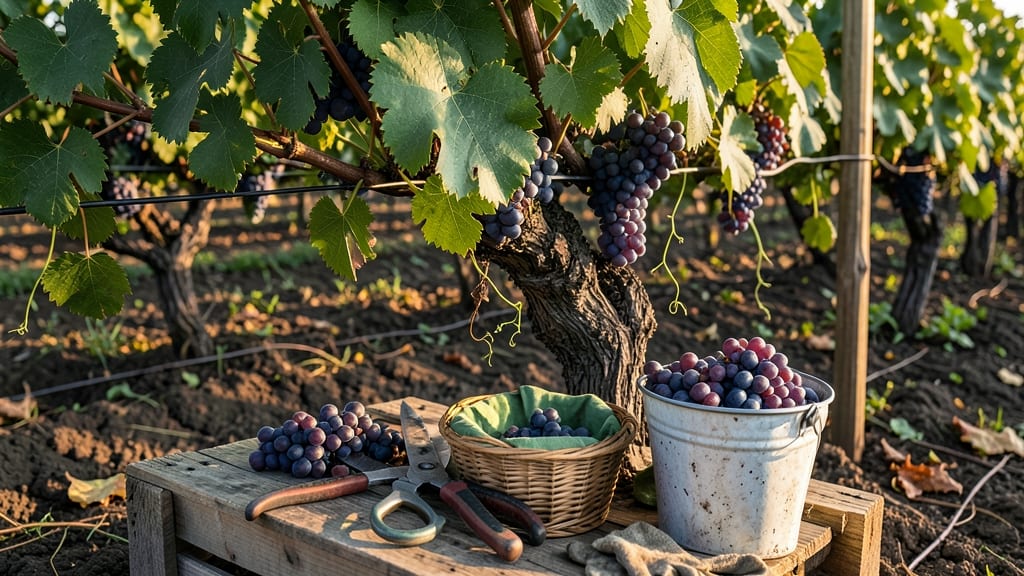
The grape harvest season in General (USDA Zone 6) runs from August to October, but timing everything right ensures you get the sweetest, most flavorful fruit—or risk ending up with tart, underripe clusters.
Picture this: you’ve spent months tending to your 🍇 grapevines, and now the moment of truth arrives. One wrong move, and those perfect grapes could turn into something barely worth eating—or worse, ruin your wine batch.
The difference between success and disappointment often boils down to knowing exactly when to pick.
Harvest timing depends on more than just the calendar—grape variety, sugar levels (measured in Brix), acidity, and even weather play a role. Some grapes, like Concord, ripen earlier than Cabernet Sauvignon, while climate shifts can push harvests weeks earlier or later.
Miss the window, and you’re left with grapes that lack depth or balance.
In this guide, I’ll walk you through how to test for ripeness, avoid common mistakes, and prepare your vines for harvest—so you can enjoy grapes at their peak, whether you’re snacking on them fresh or fermenting them into wine.
How to determine the best grape harvest season for your variety
Timing your grape harvest is an art that balances science and patience. The ideal harvest window ensures your grapes reach peak flavor, sugar levels, and acidity balance—critical for both fresh eating and wine-making.
Since varieties ripen at different times, understanding your specific grape type and climate zone is essential. For example, Concord grapes often ripen in late summer, while Cabernet Sauvignon may need until early fall. Even within the same vineyard, microclimates can shift ripening by weeks.
Beyond variety, regional climate plays a massive role.
Cooler climates like the Pacific Northwest may harvest as early as August, while hotter regions like California’s Central Valley often extend into October. Frost risks also dictate urgency—early-maturing varieties like Thompson Seedless must be picked before the first fall frost to avoid damage.
Even a single night below 32°F can turn sweet grapes into mushy pulp overnight.
Now let’s break down the key factors that determine your harvest window, from color changes to sugar readings. Each clue helps you fine-tune the perfect moment to pick, whether you’re growing red wine grapes, white table grapes, or hybrid varieties.
| Grape Type | Typical Harvest Window | Key Ripeness Indicators | Ideal Brix Range | Climate Notes |
|---|---|---|---|---|
| Red Wine (Cabernet, Merlot) | Late September–October | Deep purple skin, brown seeds, firm but yielding | 22–26° Brix | Warmer regions ripen earlier; cooler areas may need until frost |
| White Wine (Chardonnay, Sauvignon Blanc) | Mid-August–September | Pale yellow/green, seeds brown, slight softness | 20–24° Brix | Early ripeners; avoid overripening for acidity |
| Table Grapes (Thompson Seedless, Concord) | August–early September | Uniform color, plump, detaches easily | 16–20° Brix | Early frost risk; harvest before clusters shatter |
| Hybrids (Marquette, Frontenac) | Late August–October | Deep color, firm berries, seeds fully brown | 20–24° Brix | Cold-hardy; extend harvest into fall if frost-free |
One of the most reliable indicators of grape ripeness is the Brix level, which measures sugar content. Use a refractometer to test juice from crushed grapes—most wine grapes need 22–26° Brix, while table grapes typically target 16–20° Brix.
However, don’t rely solely on numbers. Acidity levels also matter: overripe grapes lose their crisp, bright flavor, becoming flabby and less aromatic. A simple taste test can reveal if the acid-sugar balance is perfect or off.
Seed color is another underutilized clue. Fully ripe grapes have brown, hard seeds that won’t crush between your fingers. If seeds are still green or white, the fruit needs more time on the vine.
This is especially critical for wine grapes, where underripe seeds can impart bitter flavors to the final product. Pro tip: Cut open a grape and check the seed—if it’s not fully brown, wait 3–5 days before testing again.
Your local climate can shift harvest timing by weeks. Coastal regions with marine influences (like Oregon’s Willamette Valley) often have cooler nights, slowing sugar accumulation and extending the harvest. In contrast, inland areas like California’s Central Valley experience hotter days, accelerating ripening. To adapt, monitor <
Step-by-step guide to testing grape ripeness before harvest
Knowing exactly when to harvest your grapes ensures you get the sweetest, most flavorful fruit possible. Different varieties ripen at different rates, and even within a single cluster, grapes can vary in readiness.
To avoid picking too early or too late, I rely on a combination of visual cues, taste tests, and scientific tools like a Brix refractometer.
The ideal harvest time depends on your grape variety—early ripening types like Concord or Niagara may be ready in late summer, while late varieties like Cabernet Sauvignon or Merlot peak in early fall.
Even within the same season, factors like sun exposure, rainfall, and vine health can shift the timing by a week or more.
How to Test Grape Ripeness
- 1 Check skin color: Fully ripe grapes will have a deep, consistent color—no green or pale spots. For red grapes, look for a rich purple hue, while white grapes should be a golden yellow.
- 2 Test seed color: Cut open a grape and check the seeds. They should be fully brown, not white or partially colored. White seeds mean the grape isn’t ripe yet.
- 3 Use a Brix refractometer: This tool measures sugar content. Most table grapes should read between 18-22 Brix, while wine grapes typically need 22-26 Brix for optimal flavor and fermentation.
- 4 Do a taste test: Pop a grape into your mouth and let it sit for a moment. It should taste sweet with balanced acidity. If it’s overly tart or bland, it’s not ready yet.
- 5 Gently pull the cluster: A ripe grape should detach easily from the stem when you give it a light tug. If it resists, it’s not fully mature.
For early ripening varieties, like Thompson Seedless or Catawba, I start testing in early August. These grapes can overripen quickly, so I harvest them as soon as they meet the criteria above.
Late varieties, such as Syrah or Pinot Noir, often need to stay on the vine until late September or October to reach peak sugar levels.
If your grapes are running late due to cool weather, don’t rush the harvest. Underripe grapes will lack flavor and may not store well. Instead, monitor them closely and adjust your harvest window by checking seed color and Brix levels every few days.
Patience pays off with richer, more complex flavors.
Once you’ve confirmed ripeness, harvest your grapes early in the morning when temperatures are cool. This helps preserve their freshness and sugar content. Store them in a cool, shaded place until you’re ready to enjoy or process them—whether for fresh eating, juicing, or winemaking. 🍇