
How To
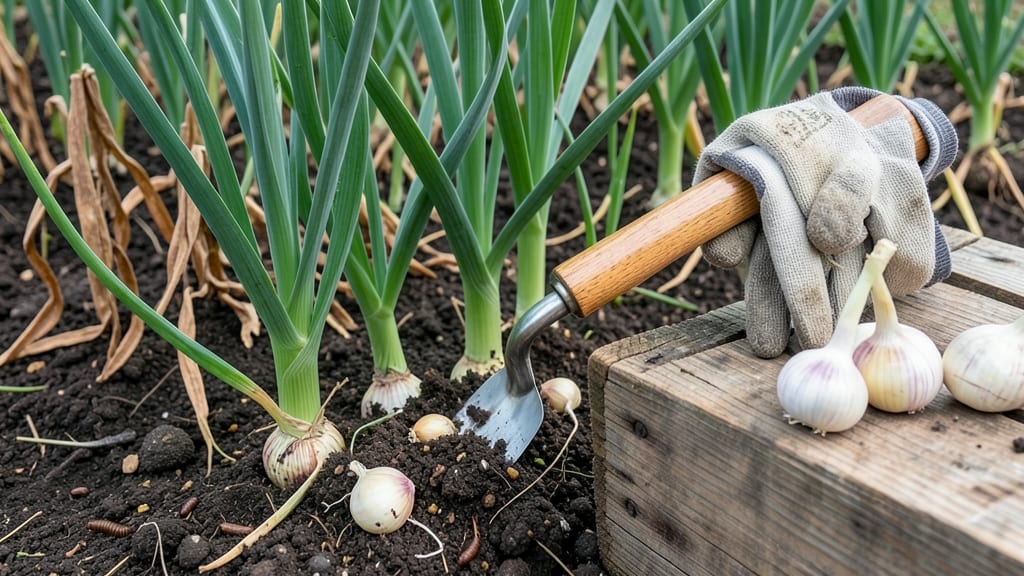
Knowing when to harvest your garlic 🧄 is all about watching for three key signs: leaf browning, bulb firmness, and stem flexibility—each one a clue that your crop is ready to pull.
Harvesting garlic at the wrong time can mean the difference between plump, flavorful bulbs and shriveled cloves—so knowing exactly when to dig is a gardener’s secret weapon.
If you’ve ever pulled garlic too early and ended up with small, underdeveloped bulbs, or waited too long and lost flavor, you know how critical timing is. The good news? With just a few simple checks, you can master the art of harvesting at the perfect moment.
Below, I’ll walk you through the three tactile tests that take the guesswork out of harvest time, plus how to adjust for your climate zone so your garlic stores beautifully all winter long.
3 Tactile tests to determine garlic harvest readiness
Knowing when to harvest garlic isn't just about guessing—it's about reading the plant's signals. The best garlic bulbs develop when the plant signals maturity through visual and physical cues.
These three simple tests will help you determine if your garlic is ready to dig, ensuring you get plump, flavorful bulbs that store well.
Garlic doesn't ripen like fruits—it matures when the plant redirects energy from leaves to bulbs. This shift creates tactile changes you can feel and see. Mastering these tests means you'll never harvest too early (and waste your efforts) or too late (and risk shriveling).
Let's explore how to use your hands and eyes to make the perfect call.
Focus on the bottom 1/3 of leaves—they should turn straw-colored and crispy. If 50% of lower leaves are brown but upper leaves remain green, it's time to harvest.
Gently loosen soil around plants—if 1/2-inch of roots are visible and bulbs feel firm when pressed, they're ready. Soft bulbs mean you're too early.
Bend the main stem near the bulb—if it snaps easily (not bends), the bulb is mature. A flexible stem means more growth time is needed.
Start with the leaf browning test first—it's the most reliable visual cue. I always check my garlic plants weekly starting in late spring because the transition from green to brown happens quickly. Pay special attention to hardneck varieties, which mature faster than softneck types.
For the root exposure test, use a small garden fork to gently lift a corner of soil. If you see white roots curling around the bulb, that's a clear sign of maturity.
This test is especially useful if you're growing garlic in heavy clay soil, where visual cues might be harder to spot.
Don't overlook the stem flexibility test—it's often the most overlooked but gives the most immediate feedback. I've learned that if the stem feels woody and dry, the bulb is ready. This test works best in the morning when stems are firm from overnight drying.
Combine all three tests for the most accurate reading. For example, if your garlic passes the leaf test but fails the stem test, wait another 3-5 days before digging. This layered approach ensures you're making the best possible harvest decision every time.
Remember that harvest timing varies by variety. Hardneck garlic typically matures 2-3 weeks earlier than softneck varieties. If you're growing multiple types, check each group separately using these tactile tests to avoid missing the optimal harvest window for any variety.
Once you've confirmed your garlic is ready, act quickly. The best bulbs develop when harvested within 24 hours of passing these tests. Waiting too long can lead to skin splitting or clove separation, which reduces storage life.
Pro tip: Mark your calendar when you first notice 50% leaf browning—this is your harvest countdown. Most garlic varieties will be ready to dig within 7-14 days after this milestone appears.
With these tactile tests in your gardening toolkit, you'll never second-guess your garlic harvest timing again. The key is consistent checking and trusting your senses—your hands and eyes know best when it comes to garlic maturity.
When to harvest garlic by climate Zone: northern vs. southern growing conditions
Garlic thrives in cool climates but hates summer heat, which is why harvest timing varies dramatically between northern and southern zones. In USDA zones 3-5, garlic needs 10-12 months to mature, while zones 8-10 may only have 6-8 months before summer stress sets in.
Understanding your frost dates is key—harvest too early, and bulbs stay small; too late, and they split or rot.
For northern gardeners, the window is tight: harvest between late June and mid-July before summer heat triggers bolting. Southern growers, however, must act even faster—April to early May—to avoid the 90°F+ temperatures that turn garlic bitter and pithy.
Adjusting for early or late planting can shift your harvest by 2-4 weeks, so pay attention to your local first frost dates.
| Climate Zone | Ideal Harvest Month | Key Cues | Adjustment Tips |
|---|---|---|---|
| Zones 3-5 (Cold Winters) | Late June - Mid-July | Lower leaves brown; bulbs firm when pressed | Plant in October; harvest before July 4th heatwave |
| Zones 6-7 (Moderate) | Early June - Early July | 50% leaves brown; paper skin tight | Plant September-November; avoid 85°F+ soil temps |
| Zones 8-10 (Warm Winters) | March - Early April | Leaves yellow; bulbs 1.5" wide | Plant in November-December; harvest before April showers |
If you planted early (e.g., September in Zone 6), your garlic may mature 2-3 weeks sooner than the average. Conversely, late plantings (e.g., December in Zone 8) push harvest back by 3-4 weeks.
Use a planting calendar to track your 100-day count from sprouting—most garlic varieties need 240-300 days total.
Southern gardeners face extra challenges: heat stress after 90°F causes bulbs to split or develop soft necks. To combat this, mulch heavily with straw to keep soil temps below 85°F and consider shade cloth in peak summer.
Northern growers, meanwhile, must watch for early summer droughts, which stunt bulb growth—consistent moisture is critical until harvest.
Pro tip: Mark your calendar based on your zone’s average last frost. For example, in Zone 5, count back 10 months from your first frost date to estimate harvest time.
In Zone 9, aim for harvest 60 days after sprouting to avoid bolting. Adjust yearly based on actual weather patterns, not just averages.
Remember, harvesting early gives smaller bulbs, while harvesting late risks mold or split cloves. The golden window is when 50-70% of leaves have browned—but never wait until all leaves die back. Timing is everything, so stay vigilant and harvest at the peak! 🌱