
How To
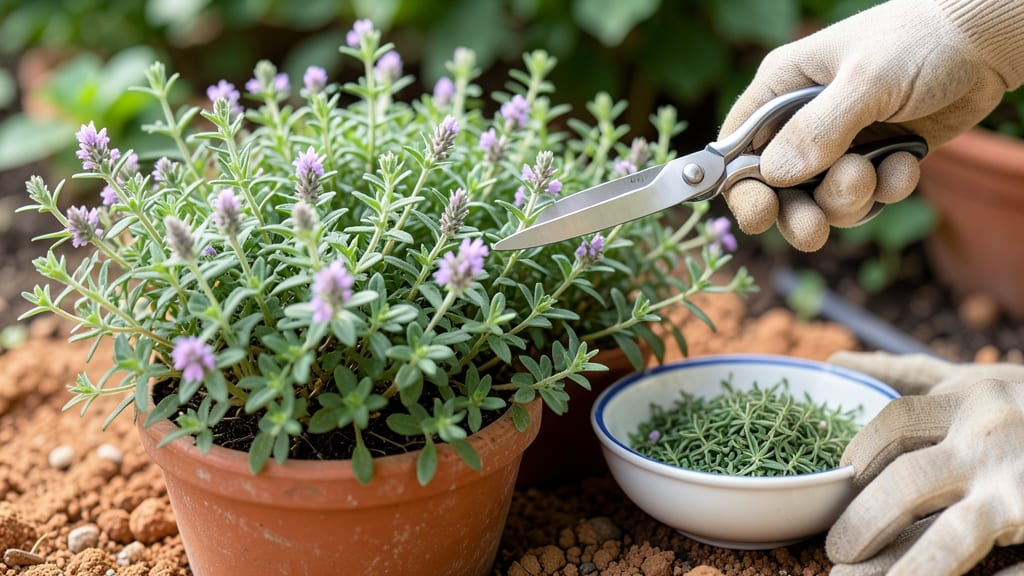
Harvesting fresh thyme by cutting stems just above a leaf node keeps your 🌿 plant lush and flavorful year after year.
There’s nothing worse than reaching for thyme only to find woody stems and sparse leaves—yet that’s exactly what happens when you harvest at the wrong time or use the wrong technique.
Timing matters most: snip stems just before flowering when they’re 6-12 inches tall and leaves are fragrant, but never cut more than one-third of the plant at once.
Below, I’ll walk you through the exact steps to harvest, dry, and store thyme—plus how to revive a struggling plant and use your harvest in cooking or remedies.
When and how to harvest thyme for maximum flavor and plant health
Harvesting thyme at the right time is key to unlocking its boldest flavor while ensuring your plant stays healthy and productive. When you wait too long, those delicate leaves turn bitter, and the stems become woody—completely ruining your harvest.
The secret lies in timing your cuts just before flowering, when the plant is at its peak aroma and vigor.
Thyme thrives when you follow a simple 1/3 rule: never remove more than one-third of the plant at once. This rule prevents over-stressing your thyme, allowing it to bounce back with fresh, flavorful growth.
Over-harvesting leads to yellowing leaves, stunted growth, and even death—so patience is your best friend in the garden.
🌿 How Do You Harvest Fresh Thyme? Step-by-Step Highlights
- Timing: Harvest just before flowering (late spring to early summer) when stems feel slightly woody but still bendable.
- Tools: Use sharp pruning shears or scissors to avoid crushing stems.
- Cutting Technique: Snip 1/3 of the plant at a 45-degree angle, 1-2 inches above a leaf node.
- Avoid: Never cut into old, woody stems—focus on new growth for best flavor.
- Frequency: Harvest every 4-6 weeks during the growing season to encourage bushier growth.
- Signs of Over-Harvesting: Watch for yellow leaves, bare stems, or slow regrowth.
Start harvesting thyme when the plant reaches 6-12 inches tall with dense foliage. The best time is in the morning after dew dries, when essential oils are at their peak concentration.
Pinch off the top sets of leaves first to encourage branching, creating a fuller, more productive plant over time.
When cutting, always aim for the outer stems first. This allows sunlight to reach the inner growth, keeping the plant lush and vibrant. If you notice flower buds forming, harvest immediately—the flavor weakens once flowers open. Save those blooms for bees and pollinators instead!
One common mistake is cutting too close to the base, which can damage the plant’s growing points. Always leave at least 1-2 inches of stem above a leaf node to promote new shoots. This simple habit ensures your thyme stays healthy and productive for years.
After harvesting, let the stems air-dry for 1-2 hours in a shaded area before storing. Bundle them with a rubber band and hang upside down in a dark, dry place for 1-2 weeks. Proper drying preserves the aromatic oils that give thyme its signature flavor.
If you notice your thyme plant slowing down after harvests, it might need a light fertilizer (5-10-10 NPK) to recover. Over-harvesting depletes nutrients, so balance your cuts with occasional feeding. A mulch layer also helps retain moisture and protect roots during hot summers.
For container-grown thyme, harvest more frequently to prevent root-bound stress. These plants often grow slower due to limited space, so trim lightly every 3-4 weeks. Always use well-draining soil to avoid root rot, which can kill your plant quickly.
Remember, thyme is a perennial herb, meaning it comes back year after year with proper care. By mastering the art of timely harvesting, you’ll enjoy a steady supply of fragrant leaves for cooking, teas, and even homemade remedies—all while keeping your plant thriving.
Step-by-step guide: cutting thyme like a pro to encourage regrowth
Harvesting thyme correctly isn’t just about collecting leaves—it’s about encouraging your plant to grow denser, bushier, and more flavorful. When you cut thyme properly, you trigger new growth at the base, ensuring a continuous supply of aromatic leaves.
The key? Timing, technique, and knowing when to stop before you stress the plant.
Start by gathering your tools: sharp pruning shears or scissors (dull tools crush stems and damage leaves). Avoid kitchen scissors—they’re too blunt. Next, choose a bright, dry morning for harvesting.
This ensures your thyme has time to recover before the heat of the day, and the leaves will be moisture-rich and vibrant.
How to Harvest Fresh Thyme for Regrowth
- 1 Locate new growth: Identify the youngest stems (about 3-4 inches tall) near the base. These are where regrowth will happen.
- 2 Cut at a 45-degree angle: Use your sharp scissors to make a clean cut just above a leaf node (where leaves meet the stem). This encourages new shoots to grow from that spot.
- 3 Never cut more than 1/3 of the plant: Remove only outer stems to avoid exposing the center to harsh sunlight. This keeps your thyme compact and healthy.
- 4 Avoid cutting into woody stems: If stems feel hard and woody, stop cutting there. Focus on softer, green growth for the best regrowth.
- 5 Harvest before flowering: Once flower buds appear, the leaves lose flavor. Cut flowers off to redirect energy to leaf production.
After harvesting, decide how to preserve your thyme. For long-term storage, air-drying is simplest: bundle stems with a rubber band and hang upside down in a dark, dry, well-ventilated space for 1-2 weeks. Once dry, strip leaves and store in an airtight container away from light.
If you prefer oven-drying, spread stems on a baking sheet at 200°F (95°C) for 1-2 hours. Check frequently to avoid burning. Oven-dried thyme loses some aroma, so air-drying is often better for culinary use.
Store dried thyme in the fridge for up to 6 months or freeze it for 1 year.
Finally, give your thyme a light watering after harvesting to help it recover. Within 2-3 weeks, you’ll see new growth at the base—proof your pruning paid off! Repeat this process every 4-6 weeks during the growing season for a bountiful, flavorful harvest all year.