
How To
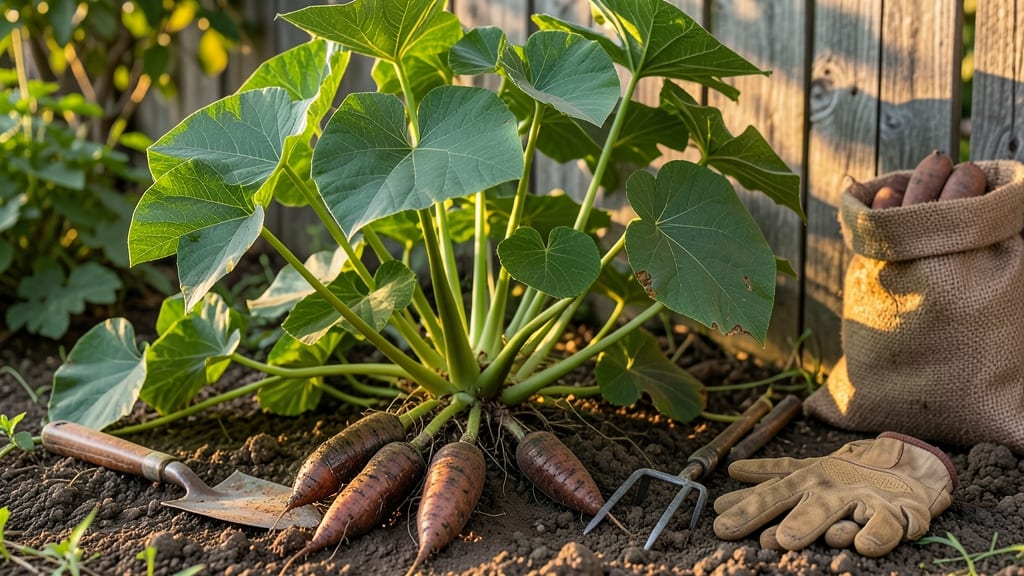
Harvesting sweet potatoes takes 90 to 150 days after planting, depending on the variety and growing conditions, but timing it right means the difference between starchy tubers and sweet, flavorful ones.
If you’ve ever dug up your 🍠 crop too early and found underdeveloped roots—or waited too long and ended up with woody, dry tubers—you know how critical the harvest window is.
Most gardeners in USDA Zone 6a plant slips in April or May, so the ideal harvest falls between late summer and fall, when vines yellow and soil temperatures stay warm.
Below, I’ll break down the exact days to maturity for popular varieties, the key signs your sweet potatoes are ready, and how to cure them for maximum sweetness and storage life.
Sweet potato harvest timeline: days to maturity by variety and growing conditions
Sweet potatoes are one of the most rewarding crops to grow, but their harvest timing varies dramatically based on variety and growing conditions.
While most gardeners expect a 90- to 120-day window, some fast-maturing varieties can be ready in as few as 60 days, while heirloom types may take up to 150 days.
Understanding these differences helps you plan your garden layout and avoid early or late harvests that compromise flavor and storage life.
Soil temperature plays a critical role in maturity speed. Sweet potatoes thrive in warm soil (60°F+), and cooler temperatures slow their growth. In northern climates, this means a longer harvest window, while southern gardeners may see faster maturity.
Daylight hours also matter—longer summer days accelerate growth, while shorter fall days can extend the timeline. Finally, frost risk forces early harvesting in cooler regions, often before tubers reach peak sweetness.
The variety you choose is the biggest factor in harvest timing. Fast-maturing types like 'Georgia Jet' (60-70 days) are perfect for short seasons, while 'Beauregard' (90-100 days) and 'Jewel' (100-120 days) are staples for most gardeners.
Heirloom varieties like 'Purple' or 'Bonita' often take 120-150 days, rewarding patience with exceptional flavor and color.
Here’s how growing conditions affect maturity:
- Warm soil (>70°F): Speeds up growth by 10-20%
- Cooler soil (<60°F): Delays maturity by 2-3 weeks
- Long daylight (>14 hours): Accelerates vine and tuber development
- Frost risk: Forces early harvest, often before full maturity
| Variety | Days to Maturity | Best For | Growing Conditions |
|---|---|---|---|
| Georgia Jet | 60-70 days | Short seasons, early harvests | Warm soil, full sun |
| Beauregard | 90-100 days | Standard gardens, storage | Moderate heat, well-drained soil |
| Jewel | 100-120 days | Longer seasons, sweet flavor | Warm climate, rich soil |
| Purple | 120-140 days | Heirloom, specialty markets | Hot summers, loose soil |
| Bonita | 130-150 days | Long seasons, storage | Warmth, consistent moisture |
🌱 Fastest: Georgia Jet | Slowest: Bonita
If you’re growing in containers or raised beds, expect slightly faster maturity—10-15 days earlier—because soil warms up quicker. However, container-grown sweet potatoes often produce smaller tubers, so prioritize varieties like 'Georgia Jet' or 'Centennial' (80-90 days) for best results.
In-ground planting yields larger harvests but may take 5-10 days longer to mature, especially in cooler climates.
One common mistake gardeners make is harvesting too early to avoid frost, which leads to small, starchy tubers with poor storage life. Conversely, waiting too long—until vines are completely dead—can cause skin toughening and reduced sweetness.
The sweet spot is when 50-70% of vines yellow and tubers are golf-ball sized. In frost-prone areas, use row covers to extend the season by 2-3 weeks and let tubers mature fully.
To maximize sweetness, reduce watering 2 weeks before harvest. This signals the plant to stop producing foliage and redirect energy to tuber development. Stop fertilizing 4-6 weeks before harvest to avoid excess nitrogen, which promotes leafy growth at the expense of tubers.
Instead, focus on potassium-rich fertilizers early in the season to encourage root growth.
In regions with short growing seasons (USDA Zones 1-5), opt for early-maturing varieties like 'Georgia Jet' or 'Centennial' and plant slips as soon as soil warms to 60°F. Use black plastic mulch to warm soil faster and extend the season by 10-14 days.
In warmer climates (Zones 8-10), you can plant two crops per year: an early spring crop and a fall crop, with harvests spaced 6-8 weeks apart.
Pro tip: Keep a harvest journal for your first few years of growing sweet potatoes. Note the planting date, variety, so
5 Key signs your sweet potatoes are ready to harvest (before checking the calendar)
Sweet potatoes thrive when you harvest them at the perfect moment—not too early (when they’re still starchy) and not too late (when they shrivel in the ground).
The calendar gives a rough estimate, but your plants will tell you exactly when it’s time. Look for these five foolproof signs instead of guessing by days.
First, pay attention to the vines. When they start turning yellow-brown and drooping, it’s your first clue. This isn’t just wilting—it’s a natural signal that the plant is redirecting energy to the tubers underground.
If you see 50% of the leaves changing color, grab your gloves and start checking for other signs.
Next, test the skin toughness. Gently press a fingernail into the skin of a tuber. If it doesn’t puncture easily and feels firm (not mushy), the sweet potatoes are ready.
Soft skin means they need more time, while overly tough skin could indicate they’ve been in the ground too long and are drying out.
🌱 Numbered Highlights: 5 Signs Your Sweet Potatoes Are Ready
- 1. Vines yellow and die back: 50%+ of leaves turn brown and wilt naturally.
- 2. Skin resists fingernail: Press a tuber—if skin doesn’t puncture, it’s ready.
- 3. Tubers reach golf-ball size: At least 3–4 inches long, firm, and fully formed.
- 4. Leaves drop completely: Full vine collapse signals peak sweetness underground.
- 5. Soil is dry around roots: Reduced watering + dry soil = ideal harvest conditions.
⚠️ Pro Tip: Harvest within 1–2 weeks after these signs appear—waiting too long shrinks tubers and reduces storage life.
Don’t ignore the size of the tubers. Aim for roots that are at least the size of a golf ball (3–4 inches long). Smaller tubers won’t store well and often lack the deep sweetness you crave.
Dig up one or two to check—if they’re undersized, give them another week or two.
Finally, watch the weather and soil. A few days before harvest, let the soil dry out slightly—this makes the tubers easier to dig and reduces bruising. Avoid harvesting after heavy rain, as wet soil can damage the skin and invite rot.
If frost is on the horizon, harvest immediately, even if the vines aren’t fully yellow.
Harvesting too early? Your sweet potatoes will be small, watery, and bland. Waiting too long? They’ll shrink, toughen, and lose flavor. Trust these signs, and you’ll enjoy sweet potatoes that are perfectly sweet, storable, and packed with flavor. 🍠