
How To
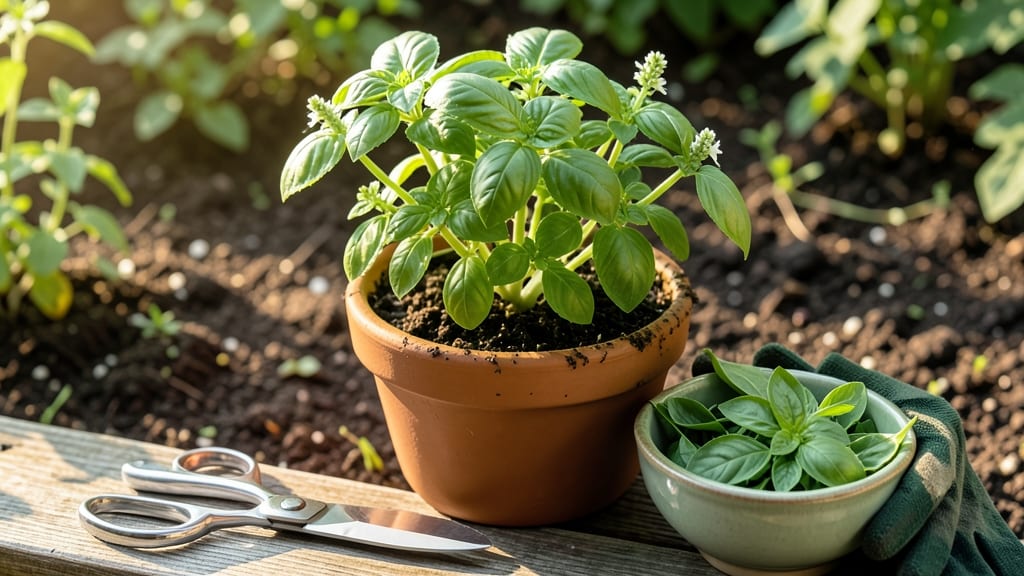
To harvest basil so it keeps growing, focus on cutting just above leaf pairs and never taking more than one-third of the plant at once—this trick keeps your 🌿 thriving for months.
Struggling to keep your basil thriving after harvest? Many gardeners unknowingly stunt their plant’s growth by cutting too much—or in the wrong way—leaving you with sparse, leggy stems instead of lush, continuous regrowth.
Basil isn’t just a one-and-done herb—it rewards the right technique. A well-timed pinch or prune signals the plant to branch out, creating a bushier, more productive harvest. The key is patience: wait until your basil has at least 6-8 pairs of leaves before making your first cut.
In this guide, I’ll walk you through the exact pinch-and-prune schedule that keeps basil growing strong, from your first harvest in June to the last flush in September. You’ll also learn how to spot over-harvesting early and fix it before your plant gives up.
The perfect pinch-and-prune technique for basil regrowth
Harvesting basil the right way is the secret to a nonstop supply of fresh leaves all season long. When you cut too much or in the wrong places, your plant sends all its energy into recovery instead of producing new growth.
The key is using a pinch-and-prune method that encourages bushier stems while keeping your plant healthy and productive.
I’ve learned through years of growing basil that timing and technique matter just as much as how often you harvest. A well-timed pinch can double your yield by stimulating new side shoots, while a single wrong cut can leave your plant looking sad and sparse.
Let’s dive into the exact steps to keep your basil thriving after every harvest.
How to Harvest Basil So It Keeps Growing
- 1 Wait until your basil reaches 6-8 inches tall with at least 6-8 pairs of leaves. This ensures the plant has enough energy to recover and regrow.
- 2 Use clean pruning shears or fingers to pinch off the top set of leaves just above a leaf node (the point where leaves grow out). This encourages new branches to form.
- 3 Never cut more than one-third of the plant at once. For a 6-inch plant, limit cuts to 2-3 leaves per harvest to avoid shocking the plant.
- 4 Focus on the topmost stems first. These are the fastest-growing parts of the plant, and cutting them redirects energy to lower branches, creating a fuller bush.
- 5 Harvest in the morning when leaves are fully hydrated and flavors are at their peak. Avoid harvesting after rain or late in the day, as this can stress the plant.
- 6 Fertilize lightly after harvesting with a balanced 10-10-10 fertilizer to replenish nutrients. Apply it to the soil, not the leaves, to avoid burning.
- 7 Space harvests 2-3 weeks apart during active growth (spring to summer). In fall or winter, reduce frequency to every 4-6 weeks as growth slows.
One of the biggest mistakes I see gardeners make is cutting the main stem too low or removing too many leaves at once. Basil is a fast regrower, but it needs time to recover.
By sticking to the one-third rule and always cutting above a leaf node, you’ll encourage your plant to branch out and produce even more leaves than before.
For container-grown basil, the same rules apply, but you’ll need to harvest slightly more frequently since pots dry out faster.
I’ve found that dwarf varieties like 'Spicy Globe' respond best to weekly pinching to maintain their compact shape, while taller types like 'Genovese' can handle slightly longer intervals between harvests.
If your basil starts to look leggy or sparse after harvesting, it’s a sign you’re cutting too much or not providing enough light. Move your plant to a sunnier spot (at least 6 hours of direct sun) and reduce harvest frequency for a few weeks to let it recover.
With the right technique, your basil will keep producing lush, flavorful leaves all season long.
Pro tip: Save the stem cuttings from your harvests! Place them in a glass of water, and within a week, you’ll have new basil plants ready to transplant. It’s a great way to propagate your harvest and ensure you never run out of fresh basil.
Remember, the goal is to encourage growth, not depletion. With these steps, your basil will stay healthy, bushy, and productive for months to come—giving you a steady supply of leaves for cooking, garnishes, and even pest-repellent sprays.
Basil harvesting schedule by growth stage: weekly plan for nonstop yield
Harvesting basil at the right time and frequency is the secret to keeping your plants lush and productive all season. Unlike many herbs, basil responds beautifully to regular pruning—when done correctly, it rewards you with bushier growth and more leaves.
The key lies in understanding its three distinct growth stages: seedling, vegetative, and flowering. Each stage demands a different approach to harvesting, especially when adjusting for your climate zone and sunlight exposure.
In Zone 5 (colder climates), basil’s growing season is shorter, so you’ll need to focus on early, aggressive pinching to maximize yield before frost. Meanwhile, in Zone 10 (warm climates), you can harvest more frequently year-round, but watch for flowering signals that slow regrowth.
Below is a tailored weekly schedule that aligns with basil’s natural growth rhythm, ensuring you never overharvest or stunt its potential.
| Growth Stage | Harvest Frequency | What to Cut | Zone 5 Adjustments | Zone 10 Adjustments |
|---|---|---|---|---|
| Seedling (0-4 weeks) | None (Pinch only) | Top 2-3 leaves when 4-6" tall | Delay pinching until after last frost | Pinch earlier to encourage bushiness |
| Vegetative (4-8 weeks) | Weekly (20-30% of plant) | Outer leaves/stems, 1/3 of plant | Reduce to bi-weekly in late summer | Harvest daily in peak heat |
| Flowering (8+ weeks) | Immediate removal | Cut flower buds/stems to base | Stop harvesting 6 weeks before frost | Prune flowers to extend harvest |
| Post-Harvest Care | Always | Water deeply, fertilize lightly | Use row covers for late-season protection | Mulch to retain moisture |
During the seedling stage, your basil is still establishing roots, so focus on pinching (removing the top set of leaves) rather than harvesting. This encourages the plant to branch out, creating a fuller base for future growth.
In Zone 5, wait until after the last frost before starting—cold snaps can shock young plants. For Zone 10 gardeners, begin pinching as soon as the plant reaches 4-6 inches tall to take advantage of the longer growing season.
Once your basil enters the vegetative stage (typically 4-8 weeks after planting), you can start harvesting 20-30% of the plant weekly. Always cut just above a leaf node (where leaves meet the stem) to stimulate new growth.
In Zone 5, reduce harvesting frequency to bi-weekly in late summer to avoid stressing the plant before frost. Meanwhile, Zone 10 growers can harvest daily during peak heat, but ensure the plant receives consistent watering to prevent stress.
The flowering stage is your final chance to maximize yield before the plant shifts energy to seed production. As soon as you spot flower buds, remove them immediately by cutting the stem down to the base. This redirects the plant’s energy back to leaf production.
In Zone 5, stop harvesting entirely 6 weeks before the first frost to harden off the plant. In Zone 10, pruning flowers can extend your harvest well into fall, but monitor for pests that thrive in warm, humid conditions.
After every harvest, give your basil a deep watering and a light fertilizer application (like a balanced 10-10-10 mix) to replenish nutrients. In Zone 5, use row covers in late summer to protect plants from unexpected cold snaps, which can stunt regrowth.
For Zone 10 growers, mulching helps retain moisture and regulate soil temperature, ensuring your basil stays productive even during heatwaves.
By following this stage-specific schedule, you’ll enjoy a continuous harvest of basil all season long—whether you’re in a cooler climate like Zone 5 or a warm one like