
How To
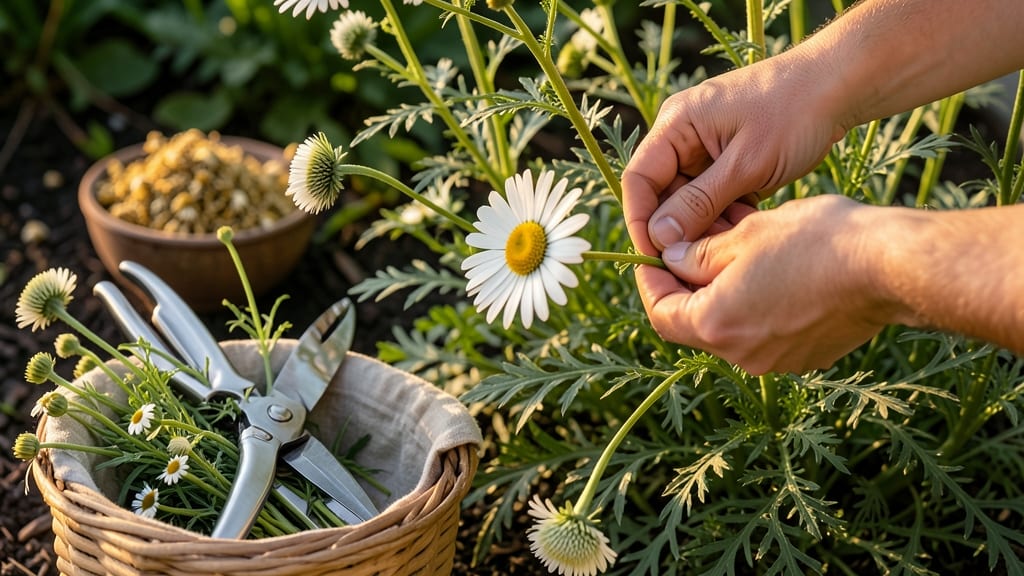
To harvest chamomile at its peak flavor and potency, you need to know the exact moment those delicate 🌼 flowers are ready—before they wilt or lose their signature sweetness.
Picture this: you’re strolling through your garden in July or August, and the chamomile blooms are wide open, their petals flat and dry to the touch. That’s your cue—harvesting at the wrong time means bitter tea or weak medicinal properties.
Below, I’ll walk you through the best practices for timing, tools, and drying to maximize every flower’s potential.
Why does timing matter so much? Chamomile’s essential oils, which give it that soothing aroma and flavor, peak when the flowers are fully open but haven’t yet started to brown. Miss this window, and you’re left with a harvest that’s less effective for teas, remedies, or even culinary uses.
From morning dew checks to proper drying techniques, you’ll discover how to turn your chamomile into a high-quality staple—whether you’re brewing a cup of tea or stocking your herbal first-aid kit.
When to harvest chamomile for optimal flavor and potency
Timing your chamomile harvest is everything when you want to capture its peak flavor and medicinal potency. These delicate white daisy-like flowers contain the highest concentration of essential oils and beneficial compounds right after they fully open but before they start wilting.
Missing this window means weaker tea, less aromatic oils, and diminished healing properties.
Most gardeners make the mistake of harvesting at the wrong time—either too early when buds are still closed or too late when petals brown. The ideal harvest window is just a few hours after sunrise, when the dew has evaporated but the morning coolness preserves oil potency.
This precise timing ensures you get the most flavorful chamomile for your herbal teas, tinctures, or culinary uses.
🌼
- 1 Morning Harvest: Cut flowers between 8-10 AM after dew dries but before midday heat reduces oil content.
- 2 Full Bloom Stage: Harvest only when petals are flat and white, not curled or yellowing.
- 3 Seasonal Timing: German chamomile peaks in July-August, while Roman chamomile thrives in June-September.
- 4 Visual Cues: Look for dry stems and papery petals—these indicate peak oil concentration.
- 5 Avoid Rain: Never harvest after morning dew or evening rain, as moisture dilutes essential oils.
German chamomile (Matricaria chamomilla) and Roman chamomile (Chamaemelum nobile) have slightly different harvest windows, but both follow the same core principles. German chamomile, with its stronger apple-like scent, is best harvested in mid-summer when its cone-shaped centers are fully developed.
Roman chamomile, with its softer floral aroma, thrives in early summer and can be harvested slightly earlier.
Seasonal shifts matter too. In cooler climates (USDA zones 3-5), chamomile may bloom later, so watch for first frost warnings—you’ll need to finish harvesting at least 4-6 weeks before the first expected frost.
In warmer zones (6-10), you might get two harvest cycles per year, with a brief break in high heat (above 90°F/32°C).
Pro tip: Use a small hand pruner or clean scissors to snip stems just above a leaf node. This encourages bushier growth and more flowers for future harvests. Avoid tugging flowers by hand, as this can damage the delicate stems and reduce yield.
After harvesting, handle flowers gently to prevent bruising. Spread them in a single layer on a clean, dry surface or use hanging bundles for air-drying. The drying process preserves the flavor and potency—so rush it, and you risk losing those hard-won essential oils.
🌿
One common misconception is that you can harvest chamomile anytime during its bloom cycle. But over-harvesting weakens the plant and reduces future yields. A good rule of thumb is to harvest no more than one-third of the flowers at a time, leaving enough energy for the plant to regenerate.
For a 1-square-foot patch, aim for 2-3 harvests per season, spacing them 2-3 weeks apart.
Finally, store your dried chamomile in an airtight container away from light and heat to maintain its aroma and medicinal properties. Properly stored, chamomile can retain its potency for up to 1-2 years, though flavor peaks within the first 6 months.
With these timing tips, you’ll always have a steady supply of high-quality chamomile for your favorite remedies.
Step-by-step chamomile harvesting and drying techniques
Harvesting chamomile at the right moment ensures you capture its maximum medicinal potency and floral aroma. The process requires gentle handling to preserve those delicate white petals and yellow centers.
Whether you're growing chamomile for herbal teas, culinary garnishes, or DIY remedies, proper drying is key to maintaining its beneficial properties.
Before you begin, gather your tools: a pair of sharp pruning shears, a clean basket or tray, and a drying surface (like a mesh screen or paper towels). Work in a shady, well-ventilated area to prevent moisture buildup, which can lead to mold.
The goal is to dry the flowers quickly and evenly while preserving their essential oils.
- 1 Choose the right flowers: Select fully open blooms with flat petals and dry stems. Avoid buds that are still closed or wilting flowers, as they won’t dry properly.
- 2 Cut stems carefully: Use clean shears to snip stems about 3-4 inches long, leaving a few leaves below the flower head. This ensures the stems stay attached during drying and prevents breakage.
- 3 Remove leaves (optional): For pure floral drying, strip off most leaves, leaving only the top 1-2 inches attached. This reduces moisture content and speeds up the drying process.
- 4 Bundle stems: Gather 5-10 stems into small bundles and secure them with a rubber band or twine. Hang bundles upside down in a dry, dark place with good airflow, like a closet or pantry.
- 5 Air-dry for 1-2 weeks: Allow flowers to dry for 10-14 days until the petals are crisp and papery. Check periodically for mold or dampness—if you see either, increase airflow or switch to a dehydrator.
- 6 Store properly: Once fully dry, remove flowers from stems and store them in an airtight glass jar away from light and heat. Label with the harvest date to track freshness.
For faster drying, use a dehydrator set to 95°F (35°C). Spread flowers in a single layer and dry for 2-4 hours, stirring occasionally. This method is ideal for humid climates or when you need dried chamomile quickly for recipes.
Just avoid overheating, which can destroy essential oils.
Test for doneness by gently rubbing a dried petal between your fingers—it should crumble easily without leaving moisture. Store dried chamomile in a cool, dark place for up to 1 year, though its aroma peaks within 6 months.
Use it in homemade teas, skincare blends, or culinary dishes for a soothing, floral touch.
Pro tip: If you’re harvesting chamomile for medicinal use, prioritize organic, pesticide-free plants to avoid contaminating your remedies. Always wash your hands before handling dried flowers to prevent microbial transfer.