
How To
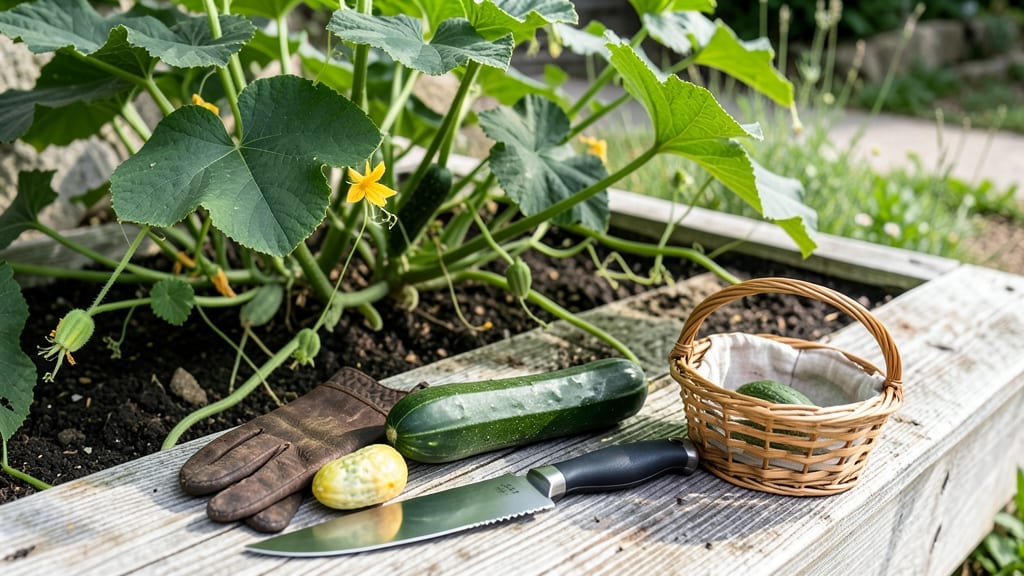
Knowing when to harvest cucumbers means catching them at the peak of flavor and crunch—before they turn bitter or mealy.
Picking too early or too late can ruin their texture, and I’ve learned that the difference between a perfect slice and a sad, seedy mess comes down to three simple tactile tests.
Skip these, and you’ll end up with cucumbers that are either too hard or too soft, no matter how much you water them.
This guide breaks down the exact cues to watch for—size, skin firmness, and even the color of the stem—so you never miss the window again. Plus, I’ll share the best way to harvest without damaging the vine and how weather plays a sneaky role in ripening.
By the end, you’ll know exactly when to snip, store, or save your cucumbers for pickling—no guesswork involved.
3 Tactile tests to harvest cucumbers at peak ripeness
Harvesting cucumbers at the right moment transforms your garden from a fruitful vine to a flavor factory. Too soon, and they're bitter; too late, and they turn mushy.
The secret? Trust your hands and eyes—not just the calendar. These three simple tests will help you pick cucumbers with crisp texture and seedless perfection every time.
First, understand that cucumbers are fast growers—most varieties mature in just 60-75 days. But timing isn't about days; it's about physical cues. Whether you're growing 'Straight Eight' slicers or 'Boston Pickling' varieties, these tactile checks work for all types.
Let's start with the easiest: the thumb pressure test.
🌱 How to Know When to Harvest Cucumbers
- 1 Thumb Pressure Test: Press your thumbnail into the cucumber's skin. If it resists slightly but doesn't feel hard, it's ready. A deep dent means it's overripe.
- 2 Size Comparison: Hold the cucumber next to a 6-inch ruler or your hand. Slicing varieties should be 6-8 inches long; pickling types stop at 2-4 inches. Measure from the stem end to the blossom end.
- 3 Seed Inspection: Cut open the blossom end (the yellow stem end). If seeds are small and white, harvest now. If they're dark and shriveled, the cucumber is past its prime. Aim for seedless crunch!
For the thumb pressure test, imagine pressing your thumb into a ripe avocado—just enough to leave a slight imprint without crushing it. This firm-but-yielding texture is your golden ticket to crisp cucumbers.
Pro tip: Test cucumbers in the morning when they're coolest and firmest. If you press too hard and the skin gives way easily, the cucumber has overstayed its welcome.
Next, grab a ruler or your hand for the size comparison test. Most slicing cucumbers like 'Marketmore' or 'Arkansas Traveler' should be about the length of your forearm (6-8 inches).
Pickling cucumbers, however, are tiny powerhouses—think 'Lemon Cucumber' size (2-4 inches). If your cucumbers are uneven in size, harvest the largest ones first to encourage even growth.
The seed inspection is where you get scientific. Cut open the blossom end (the yellow stem end) and peek inside. For peak ripeness, seeds should look like tiny white pearls. If they're brown and wrinkled, the cucumber has bitter overtones and a watery texture.
This test is especially critical for heirloom varieties, which can turn seedy and tough if left too long.
Here's a pro move: harvest every 2-3 days during peak production. Cucumbers grow rapidly, and leaving them on the vine stresses the plant. Use clean pruning shears or a sharp knife to cut stems, leaving a quarter-inch stub.
This prevents disease and encourages more fruit. Avoid twisting or pulling—it can damage the vine.
Environment plays a role too. Hot, dry weather speeds up ripening, so check cucumbers daily in summer. Cool, cloudy days slow growth, giving you more time.
If your cucumbers develop yellow patches or soft spots, they're overripe. Don't toss them—slice them thin for pickling or relish before they spoil.
For container gardeners, these tests work too, but space matters. Overcrowded plants produce smaller, misshapen cucumbers. If your 5-gallon pot is packed with vines, prune side shoots to improve air circulation and fruit quality.
And remember: trellised cucumbers ripen faster because they get more sunlight and less soil-borne disease.
Finally, store harvested cucumbers properly to maintain their crispness. Keep them in the fridge crisper drawer (not the door) for up to 1 week. For longer storage, wax them lightly or blanch and freeze slices.
But why store when you can eat fresh? With these tactile tests, your garden will be a cucumber paradise all season.
How cucumber variety affects harvest timing (and when to ignore the rules)
Not all cucumbers follow the same rules when it comes to harvest timing. The Straight Eight slicing cucumber, for example, thrives at 6-8 inches with crisp skin, while Boston Pickling varieties need harvesting at 2-3 inches for ideal pickling texture.
These differences stem from whether you're growing for fresh eating or preservation—and even heirloom vs. hybrid types play a role in timing adjustments.
Hybrid varieties like 'Marketmore 76' often have shorter harvest windows (50-60 days) compared to heirlooms like 'Lemon Cucumber', which can take 70+ days to reach peak flavor.
Understanding these distinctions helps you avoid bitter, seedy cucumbers or overly soft pickles. The key is matching your harvest timing to the variety's intended use.
| Variety Type | Ideal Size | Harvest Window | Seed Condition | Best For |
|---|---|---|---|---|
| Slicing (e.g., Straight Eight) | 6-8 inches | 55-65 days | Small, soft seeds | Fresh eating |
| Pickling (e.g., Boston Pickling) | 2-3 inches | 45-55 days | Hard, mature seeds | Fermentation |
| Heirloom (e.g., Lemon Cucumber) | 4-6 inches | 65-75+ days | Large, firm seeds | Flavor-focused |
| Parthenocarpic (e.g., 'Sweet Success') | 5-7 inches | 50-60 days | Seedless | Greenhouses/Containers |
For slicing varieties, wait until the cucumber reaches its full size but hasn't started yellowing at the stem end. This means it's crisp and seedless—perfect for salads. Meanwhile, pickling cucumbers should be harvested when they're smaller but firm, as their texture changes dramatically once they grow larger.
Ignoring these rules can lead to bitter flavors or overly soft produce.
Heirloom varieties often require more patience due to their longer maturation times. If you're growing 'Armenian' cucumbers, for instance, wait until they reach 10-12 inches and develop a slight curve—they won't be ready earlier.
Meanwhile, hybrid varieties like 'Diva' are bred for consistency, so they'll signal readiness more predictably with color and size cues.
One rule you can safely ignore? The "wait until yellowing begins" advice for slicing cucumbers. By then, they're often overripe and mealy. Instead, focus on firmness and size—these are the true indicators of peak ripeness.
For pickling cucumbers, harvest daily once they start appearing to prevent bitterness from developing.
Pro tip: Use a sharp knife or pruners to harvest cucumbers—this prevents damaging the vine and encourages more production. And if you're unsure whether a cucumber is ready, harvest it anyway.
Most cucumbers continue ripening slightly after picking, so you can always use them in cooked dishes if they're not quite perfect for fresh eating.