
How To
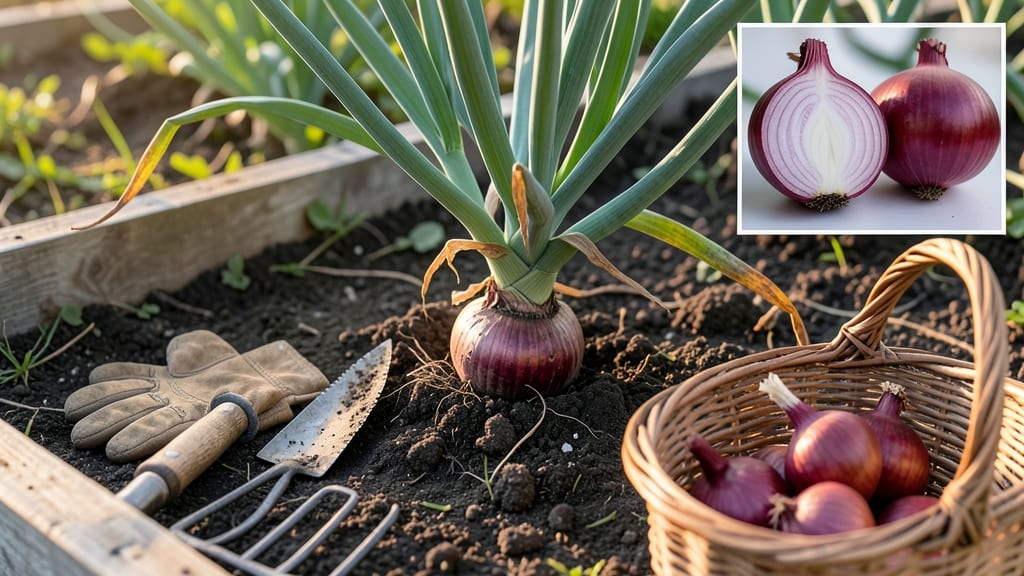
To know when to harvest red onions 🧅, watch for three key signs: the tops yellowing, the neck tightening, and a firm bulb when gently squeezed.
Harvesting too early means small, pungent bulbs that store poorly, while waiting too long risks bolting or tough, dry flavor. I’ve learned the hard way that timing is everything—one season of overripe onions taught me to trust the tactile cues over the calendar.
Below, I’ll walk you through the three hands-on tests that guarantee you pick your onions at their sweetest, juiciest peak, plus how to cure and store them for months without spoilage.
You’ll also discover the one mistake that ruins storage potential—and how to avoid it—so your harvest lasts until next spring.


3 Tactile tests to determine red onion harvest readiness
Red onions reach their peak flavor when harvested at the right moment, but knowing exactly when that is can be tricky. Unlike some vegetables, they don’t ripen after picking, so timing is everything. The key lies in three simple tactile tests that reveal maturity through touch and sight.
These methods help you determine whether your onions are ready for harvest or still need time in the ground.
First, let’s address a common mistake: waiting until the tops completely yellow and die back. By then, your onions may have already bolted or lost their sweet, crisp texture. Instead, focus on these three hands-on checks to catch them at their sweetest.
Each test provides unique clues about the onion’s maturity stage and flavor development, ensuring you harvest at the perfect moment.
These tests are especially useful for gardeners growing red onions in containers or small spaces, where visual cues can be harder to spot. Whether you’re a beginner or a seasoned gardener, these methods will help you avoid the frustration of harvesting too early or too late.
Let’s dive into the first test, which focuses on the leaf color and what it tells you about readiness.
- 1. Leaf Color Test 🌿
When to harvest: The outer leaves turn a pale yellow-green or straw-like color, while the inner leaves remain green. This indicates the bulb has stopped growing upward and is redirecting energy to the root system.
- 2. Neck Size Test 🧅
When to harvest: The neck (the area where the bulb meets the leaves) tightens and becomes papery. Gently squeeze this area—if it feels firm and dry, the onion is ready. A loose or spongy neck means it needs more time.
- 3. Root Ball Resistance Test 🤲
When to harvest: Gently grasp the root ball and wiggle the onion slightly. If it resists movement and feels firmly anchored, it’s ready. If it pulls out easily with little resistance, it’s underdeveloped. Overly loose roots can also signal overmaturity or stress.
The leaf color test is your first clue—watch for that telltale shift from vibrant green to pale yellow-green. This change signals the bulb has reached its ideal size and is no longer growing aggressively.
I’ve found that red onions often show this shift about 105 days after planting, but this can vary based on your climate zone and soil conditions.
Next, the neck size test is where many gardeners miss the mark. A tight, papery neck isn’t just about size—it’s about texture. If you press the neck and it feels slightly rough or dry, that’s your cue to harvest.
I once left my onions in the ground too long because I focused only on bulb size, only to find the necks had softened and the flavor had turned bitter. Don’t make that mistake!
The root ball resistance test is often the most reliable, especially in container gardens where visual cues can be obscured. A firm root ball means the onion has developed a strong anchor system, which correlates with a well-formed bulb.
If the roots feel mushy or the onion pulls out too easily, it’s either underdeveloped or overripe. This test is particularly useful for gardeners growing in limited space or urban gardens.
Combining these three tests ensures you harvest your red onions at their peak. For example, if the leaves are yellowing but the neck feels soft, leave the onion in the ground for another 3-5 days.
Conversely, if the neck is tight but the leaves are still green, it might be worth harvesting early to avoid bolting, especially in hot climates.
One pro tip I’ve learned is to harvest on a dry, sunny morning. This allows the onions to cure properly before storage, reducing the risk of rot or fungal diseases.
After harvesting, trim the tops to about 1 inch and let the bulbs dry in a well-ventilated area for a few days. This curing process enhances their flavor and shelf life.
If you’re growing red onions in cool climates, keep an eye on the forecast. A sudden drop in temperatures can trick the plants into thinking winter is coming, causing them to bolt prematurely.
In such cases, prioritize the neck size test—a tight neck is your best indicator of readiness, even if the leaves aren’t fully yellowed.
Finally, remember that red onions are perennial in warm climates, but they’re typically grown as annuals in most gardens. If you’re in a region with mild winters, you might get a second harvest in the fall.
Pay close attention to these tactile tests to ensure your second crop is just as flavorful as the first. With practice, you’ll develop a keen sense for when your red onions are ready to pick!
When to harvest vs. when to leave red onions in the ground
Red onions thrive in warm but not scorching conditions, making timing everything. Harvest too early, and you'll get small, pungent bulbs with poor storage life. Leave them too long, and they'll bolt or split in the heat, ruining flavor.
Your climate zone dictates the perfect harvest window—typically late summer to early fall—but visual cues are your best guide.
In hotter climates (Zones 8-10), red onions often mature faster, so monitor closely. In cooler zones (6-7), they may need extra weeks in the ground.
The key is balancing maturity signs with heat tolerance—once tops yellow and flop, act fast to avoid bolting. Storage potential hinges on this delicate window.
Harvest Red Onions: Pros & Cons
✅ Harvest Now
- 🟡 Tops yellow and flop over
- 🧅 Bulb feels firm when squeezed
- 📏 Neck tightens (1-2" diameter)
- 🌡️ Before 85°F+ heat stress
❌ Leave in Ground
- 🟢 Tops still green and upright
- 🤏 Bulb soft or mushy
- 🌡️ Above 90°F risk of bolting
- 🌧️ Heavy rain before curing
If you're in a short-season climate, prioritize harvesting when bulbs reach 1-2 inches in diameter, even if tops aren't fully yellow. Smaller onions store well but may lack sweetness.
In longer growing seasons, wait until tops yellow—this signals peak sweetness and storage readiness. Never harvest after tops die back completely, as flavor declines rapidly.
Heat waves are your biggest enemy. Red onions bolt (send up flower stalks) when stressed by temperatures above 85°F for 3+ days. If your area hits 90°F+ consistently, harvest earlier or use shade cloth.
Bolting onions develop bitter, woody bulbs and won't store. Mulch with straw to keep soil cool and extend your harvest window by 1-2 weeks.
For optimal storage, aim to harvest when bulbs have papery skin but before roots swell. Store in a cool, dry place (50-60°F) with good airflow. Onions left too long in the ground split or rot, while those harvested too early sprout or shrivel faster.
Balance these factors based on your local frost dates—most red onions won't survive freezing.
In Zone 6a (like much of the Midwest), plan to harvest between late August and early October. Use a calendar reminder for your region's first frost date, then work backward 8-10 weeks.
If you miss the window, dig up a few for immediate use—they'll still be edible, just less sweet. The trade-off? Fresh flavor beats storage potential any day.