
How To
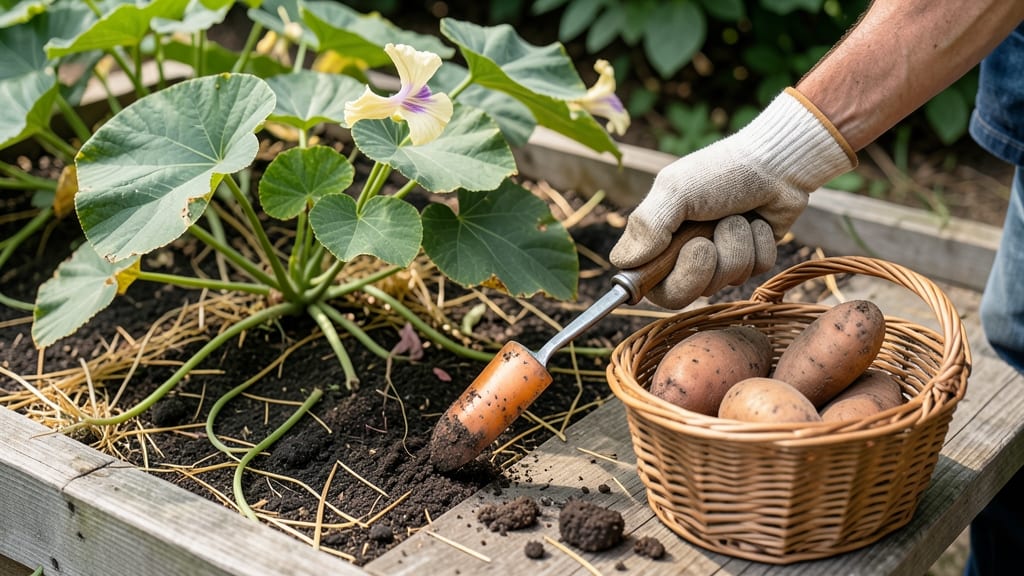
To know when to harvest sweet potatoes 🍠, watch for three key signs: yellowing vines, firm skin that resists gentle pressure, and a deep orange hue when sliced.
Sweet potatoes left in the ground too long become woody and dry, while harvesting too early means missing out on their full, sweet potential—so how do you nail the perfect timing?
You’re not alone if you’ve ever dug up tubers that were either too small or past their prime. The good news? A simple slip-and-squeeze test can tell you exactly when they’re ready—before frost ruins your crop.
Below, I’ll walk you through the exact visual cues and tactile checks to harvest at peak sweetness, plus how to store them for maximum flavor and shelf life.
The slip-and-squeeze test: how to check sweet potato maturity before digging
Harvesting sweet potatoes at the right time ensures maximum sweetness and prevents woody, dry tubers. The slip-and-squeeze test combines visual and tactile checks to give you precise timing. I’ve used this method for years to avoid overripe or underdeveloped harvests—here’s how to master it.
Start by observing the foliage. Mature sweet potatoes signal readiness through yellowing leaves and vines that begin to wither. This natural dieback happens when the plant redirects energy to the tubers. If your vines are still lush and green, they need more time—harvesting too early means small, starchy tubers.
Next, focus on the stem end. A mature sweet potato’s stem will turn brown and shriveled. Press it gently—if it feels soft and gives way slightly, the tuber is ready. This is your first tactile clue that the sweet potato has reached peak flavor and texture.
Now, let’s dive into the step-by-step process with my foolproof slip-and-squeeze test method. Follow these steps to avoid guesswork and ensure a perfect harvest every time.
How to Test Sweet Potato Maturity
-
Step 1: Check the Vines
Look for yellowing leaves and wilted vines. If 50% of the foliage has turned yellow and begun to die back, your sweet potatoes are nearing maturity. -
Step 2: Perform the Slip Test
Gently lift a vine near the base. If it slips easily from the soil (like pulling a weed), the tubers are ready. If the vine resists, wait 1-2 more weeks. -
Step 3: Do the Squeeze Test
Press a tuber through the soil with your fingers. If it feels firm and doesn’t dent easily, it’s mature. If it’s soft or mushy, it’s overripe. -
Step 4: Inspect the Stem End
Dig up one tuber to check the stem end. It should be brown and slightly shriveled. If it’s still green and firm, return it to the ground and wait. -
Step 5: Verify Skin Toughness
Gently peel a small section of the skin. If it resists and doesn’t tear easily, your sweet potatoes are ready. Thin, papery skin means they’re past their prime.
Timing is everything when harvesting sweet potatoes. If you wait too long after the vines die back, the tubers can become woody and dry, losing their signature sweetness.
Conversely, harvesting too early results in small, starchy tubers that lack flavor. Aim to harvest within 1-2 weeks after the vines yellow and die back.
For purple or jewel varieties, the slip-and-squeeze test still applies, but watch for color changes in the skin. Purple sweet potatoes develop a deeper hue as they mature, while jewel varieties turn a rich, deep orange. These visual cues confirm readiness alongside the tactile tests.
After confirming maturity, harvest on a dry, sunny day to allow the tubers to cure properly. Use a fork or hands to gently loosen the soil around the base of the plant, then lift the tubers carefully. Avoid cutting or bruising them—this can lead to rot during storage.
Once harvested, let your sweet potatoes cure in the sun for 10-14 days. This process thickens the skin and intensifies the flavor. Store them in a cool, dark place with good airflow to preserve freshness for months.
If you’re unsure whether your sweet potatoes are ready, start with the slip test—it’s the most reliable indicator of maturity. Over the years, I’ve found that combining this method with the squeeze test eliminates guesswork and guarantees a harvest full of sweet, flavorful tubers.
When to harvest sweet potatoes by variety: timing differences for purple, orange, and Jewel sweet potatoes
Not all sweet potatoes mature at the same time, and their variety plays a huge role in determining the perfect harvest window. Orange varieties like Beauregard and Georgia Jet are the most common, while purple sweet potatoes and Jewel varieties often need slightly different timing.
Understanding these differences ensures you harvest at peak sweetness and texture.
Climate also affects maturity—warmer regions can harvest earlier, while cooler zones may need to wait longer. For example, in USDA Zone 6a, most varieties are ready between 90-120 days after planting, but frost risk forces a quicker harvest.
Let’s break down the key differences so you can adjust your timing accordingly.
| Variety | Days to Maturity | Frost Sensitivity | Harvest Cue | Best Climate |
|---|---|---|---|---|
| Beauregard (Orange) | 90-110 days | Moderate (harvest before frost) | Vines yellow, skin tough | Zones 7-10 |
| Georgia Jet (Orange) | 85-100 days | High (frost-sensitive) | Leaves crispy, tubers firm | Zones 8-11 |
| Purple Sweet Potato | 100-130 days | Low (slower to mature) | Skin resists peeling, deep color | Zones 6-9 |
| Jewel (Orange) | 110-140 days | Very low (longer season) | Vines fully dead, tubers large | Zones 5-8 |
Beauregard and Georgia Jet are the fastest maturing, making them ideal for shorter growing seasons. If you’re in Zone 6a, aim to harvest these by late September to avoid frost damage. Purple varieties take longer to develop their signature color and sweetness, so don’t rush—wait until the skin is deep purple and tough.
For Jewel sweet potatoes, patience is key. These need the longest growing season and thrive in cooler climates.
If your area has an early frost, opt for row covers or harvest slightly earlier, even if the tubers aren’t fully mature. Undersized tubers will still store well, though they may lack full sweetness.
Pro tip: In warmer climates (Zones 9-11), you can extend the harvest window by 10-15 days beyond the typical range. Just monitor for leaf yellowing and vine dieback—these are your best indicators. Overheating tubers in the soil can turn them woody, so don’t wait too long!
Once you’ve harvested, cure your sweet potatoes for 5-10 days in a warm (80°F), humid (80%) space to develop their sweetness. This step is crucial for all varieties, but especially for Jewel and purple types, which need extra time to fully sweeten.