
Picking
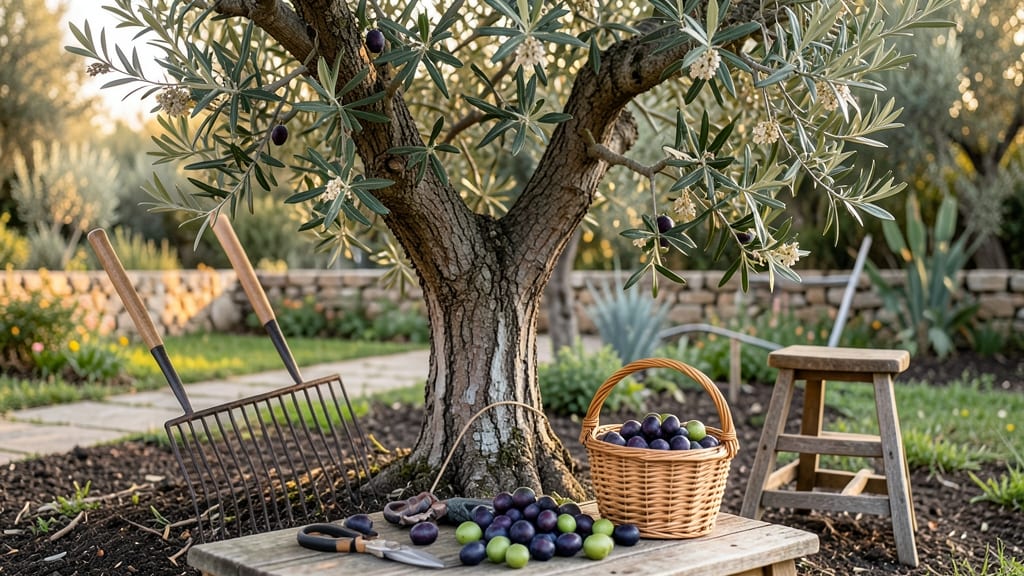
The olive harvest season in Zone 8-10 climates like the Mediterranean or California determines whether you end up with bitter olives or golden, flavorful oil.
Timing your harvest perfectly can mean the difference between bitter olives and rich, flavorful oil—yet many growers miss the optimal window, leading to wasted crops.
For Mediterranean varieties, like Arbequina or Frantoio, the ideal window is October through December, when olives shift from green to deep purple or black. But in coastal regions like Zone 10, harvests may stretch later, and some varieties like Koroneiki need to be picked earlier to avoid overripeness.
Below, I’ll walk you through how to read your tree’s cues—from color and texture to the telltale drop test—and how to adjust for your specific climate to lock in peak flavor and oil quality.
Determining the best olive harvest season by variety and climate
Harvesting olives at the right time ensures maximum oil yield and flavor, but the perfect window depends on your olive variety and climate zone. Mediterranean climates (like California’s coastal regions) typically harvest between October and December, while temperate zones may extend into January.
The key is balancing fruit color, pit softness, and moisture levels—each variety has its own ideal moment.
For example, Arbequina olives (common in Spain and California) ripen earlier than Frantoio (Italy’s classic oil variety), often by 2–4 weeks. Meanwhile, Koroneiki (Greece) thrives in hotter climates and may need a longer growing season.
Misjudging timing can lead to bitter olives (underripe) or fermented oil (overripe). Let’s break down how to pinpoint the best moment for your trees.
| Variety | Climate Zone | Harvest Window | Color Indicator | Oil Yield Peak |
|---|---|---|---|---|
| Arbequina | Mediterranean (Zone 9-10) | Late October–November | Purple to black | Early November |
| Frantoio | Temperate (Zone 8-9) | November–December | Deep purple-black | Mid-December |
| Koroneiki | Hot-Dry (Zone 10+) | October–January | Black with slight wrinkling | December–January |
| Manzanillo | California (Zone 9-10) | November–December | Green to purple | Late November |
*Oil yield peaks when olives reach 70–80% moisture loss from fresh weight.
In Mediterranean climates, where summers are hot and dry, olives ripen faster due to consistent sunlight and low humidity. My Arbequina trees in Zone 9 California, for example, are ready by early November—often 2 weeks ahead of Frantoio in cooler Zone 8 regions.
Pay attention to temperature drops in fall; a 50°F night can signal peak ripeness for many varieties.
For temperate climates, like those in Southern Italy or Oregon, harvests stretch later into December or January because cooler nights slow ripening. Test olives by squeezing gently: if the skin resists but yields slightly, they’re likely ready.
Overripe olives (soft, wrinkled) will produce lower-quality oil with higher free fatty acids. Aim to harvest before 20% of olives drop naturally—this is your last chance for optimal flavor.
Another critical factor is moisture content. Olives should feel firm but yielding when pressed, not dry or mushy. Use a moisture meter (or the pit test: press the olive—if the pit feels slightly soft, it’s ready).
In drought-prone areas, like Spain’s Andalusia, olives may ripen earlier due to water stress, so monitor trees closely. Irrigate lightly in late summer to avoid premature ripening.
If you’re growing multiple varieties, harvest them sequentially. Early-ripening Arbequina can go first, followed by Frantoio and Koroneiki a few weeks later. This staggered approach maximizes oil yield and table olive quality.
In my garden, I label branches with harvest dates to avoid confusion—especially when dealing with 10+ trees of different types.
Don’t overlook regional microclimates. A coastal olive grove in Malibu may harvest 2–3 weeks earlier than one 50 miles inland due to cooler ocean breezes. Similarly, valley locations (like Napa Valley) often have warmer nights, accelerating ripening.
To adapt, observe nearby commercial groves or ask local olive mill operators for their harvest schedules—they’ve fine-tuned their timing over decades.
Finally, store harvested olives
Key signs your olives are ready for harvest (beyond color)
Color alone isn’t the best indicator of olive ripeness—especially when you’re aiming for peak oil quality or table olives. Many growers rely on visual cues like purple-black hues, but overripe olives can ruin your harvest.
Instead, focus on tactile and sensory tests that reveal true ripeness. These methods help you avoid bitter, underripe olives or overly soft, fermented ones that spoil oil production.
First, check the pit-to-flesh ratio by cutting an olive in half. At peak ripeness, the pit should feel slightly soft when pressed—not hard like an unripe olive, nor mushy like an overripe one. The flesh should yield just enough to dent with gentle pressure.
This test works best on 3-5 olives per branch to account for natural variation. For oil production, aim for a 40-50% flesh-to-pit ratio—any higher, and the oil yield drops.
Next, perform the olive drop test by gently shaking branches over a tarp. Ripe olives will detach easily, while unripe ones cling tightly. Collect the fallen olives and taste one—it should have a balanced sweetness with minimal bitterness.
If it’s overly bitter, wait 1-2 weeks; if it’s bland, harvest sooner. This test is especially useful for table olive varieties like Manzanillo, where flavor matters most.
⚠️ Overripe Olives = Spoiled Oil
Harvesting too late leads to fermented olives with high acidity, which ruins oil quality. Watch for:
- Skin wrinkling or splitting
- Pits that feel mushy when pressed
- Olives dropping naturally (a late-season sign)
Action: Harvest within 1-2 weeks of these signs to preserve oil flavor and yield.
For a more scientific approach, test acidity levels using a pH strip. Ripe olives for oil should measure between 3.5 and 4.5 pH. Below 3.5? They’re underripe. Above 4.5? They’re overripe and risk fermenting.
This method is ideal for large-scale growers but works for home gardeners too with a simple pH test kit. Pair this with the drop test for the most accurate results.
Regional climate plays a role too. In cooler zones (Zone 8), olives may ripen later (November-December), while warmer zones (Zone 10) see earlier harvests (October). For example, Arbequina olives in California often ripen 2-3 weeks earlier than Koroneiki in Greece.
Adjust your tests based on your local first frost date—harvest before temps drop below 50°F (10°C) to avoid damage.
Finally, harvest in the early morning when olives are coolest and most hydrated. Use a soft brush or net to avoid bruising—damaged olives ferment faster. Spread harvested olives on trays in a shady, well-ventilated area for 24-48 hours to dry slightly before processing.
This step prevents mold and ensures consistent oil extraction.
By combining these tests—pit softness, drop test, acidity, and regional timing—you’ll nail the perfect harvest window every year. The key is consistency: test the same branches weekly once olives start changing color. With practice, you’ll recognize the ideal moment before your olives overripe or underdeliver.