
Vegetables
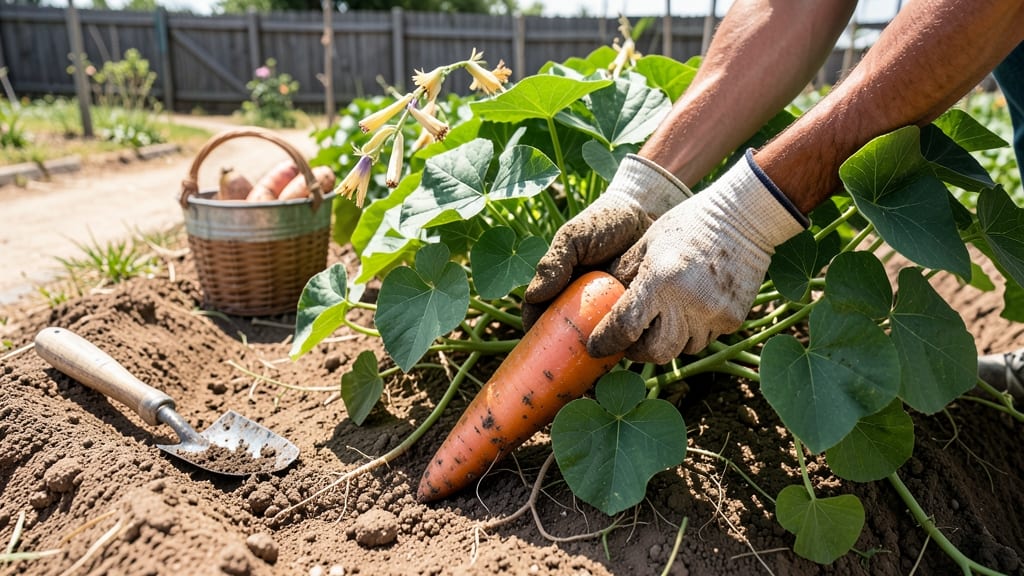
Harvesting sweet potatoes 🍠 in the right month determines whether you end up with sweet, storable tubers or bland, stringy ones.
Picture this: you’ve spent months nurturing your crop, only to dig up small, underdeveloped tubers because you missed the window. Or worse, a surprise frost turns your harvest into mush. Timing is the difference between a perfect crop and a disappointing one.
Most gardeners in USDA Zone 6a and beyond should aim for late September to October, when vines yellow and die back naturally. But regional variations—like tropical climates where sweet potatoes thrive year-round—mean your harvest month might be totally different.
Below, I’ll walk you through the key signs your sweet potatoes are ready, how to adjust for frost risk, and post-harvest care to keep them tasting sweet all winter long.
Sweet potato harvest months: when to dig based on frost risk
Sweet potatoes thrive in warm weather but frost is their enemy. A single light frost (28°F/-2°C) can damage leaves, while hard frost (25°F/-4°C) ruins tubers. Most varieties need 90-120 days to mature, so timing your harvest around your first frost date is critical.
In USDA Zones 7-9, this typically means September-October, while warmer zones (10+) can extend harvests into November or December.
Your local frost dates determine the window.
Check the USDA Plant Hardiness Zone Map for your area—Zone 5 growers may only get 100 frost-free days, while Zone 10 enjoys 365 days of warmth. Short-season varieties like 'Beauregard' mature in 90 days, while longer-season types like 'Georgia Jet' need 120-140 days.
Planting early gives you flexibility if frost arrives sooner than expected.
| USDA Zone | First Frost | Harvest Window | Best Varieties |
|---|---|---|---|
| Zones 3-5 | Mid-September | Late August - Early September | 'Georgia Jet', 'Centennial' |
| Zones 6-7 | Late October | September - Mid-October | 'Beauregard', 'Bonita' |
| Zones 8-9 | Mid-November | October - November | 'Porto Rico', 'Vardaman' |
| Zones 10-11 | None (tropical) | Year-round (peak: Fall) | 'Bonita', 'Hannah' |
If you’re in a northern climate (Zones 3-5), prioritize early-maturing varieties and plant slips (young plants) as soon as soil warms to 65°F (18°C).
In southern zones (8+), you can plant twice yearly: once in spring and again in summer for a fall harvest. Tropical zones (10+) offer the luxury of year-round planting, but even there, fall harvests yield the sweetest tubers due to cooler nights.
Use a frost date calculator (like the Old Farmer’s Almanac) to estimate your last safe harvest date. Subtract 90 days from your first frost date to find your planting deadline.
For example, if frost hits October 15, plant by July 15 for a 90-day variety or August 15 for a 120-day type. Adjust for heat waves—drought stress can delay maturity, so mulch heavily to retain moisture.
Watch for foliage signals like yellowing leaves and vine dieback, but don’t rely solely on them.
Dig up a test tuber at 90 days to check size—if it’s 3-4 inches long, it’s ready. Frost-sensitive varieties like 'Beauregard' must be harvested before leaves die, while hardier types like 'Georgia Jet' can tolerate light frost on tubers if harvested promptly. Wait too long, and tubers split or rot.
In cooler microclimates (e.g., mountain valleys or high-altitude gardens), plant in warmer pockets like south-facing slopes to extend the season.
Use black plastic mulch to raise soil temps by 5-10°F, giving tubers an extra 2-3 weeks of growth. Row covers can also delay frost by 1-2 weeks, buying time for late-season harvests.
If frost threatens before tubers mature, harvest prematurely and cure them indoors. Dig carefully to avoid damaging small tubers, then let them cure at 80-85°F (27-29°C) and 80% humidity for 10 days.
This heals wounds and develops sweetness, even in underdeveloped tubers. Store cured sweet potatoes in a cool (55-60°F/13-16°C), dark place for up to 6 months.
Pro tip: Mark your calendar with three key dates—planting day, first frost, and harvest deadline. Use a gardening journal to track variety performance each year. Over time, you’ll refine your timing for perfectly sweet, frost-free harvests
How to tell when sweet potatoes are ready to harvest (before frost hits)
Harvesting sweet potatoes at the right time ensures sweet, flavorful tubers packed with nutrients. The key is watching for three critical signs: leaf color changes, vine dieback, and tuber firmness.
These indicators tell you the plants are ready to pull from the ground—usually 90 to 140 days after planting, depending on your variety and climate.
In most regions, sweet potatoes reach harvest readiness in late September to October, just before the first frost. However, tropical and subtropical zones may extend this window into November or even December.
The goal is to harvest before temperatures drop below 50°F (10°C), as frost damages both the foliage and the tubers themselves.
⚠️ callout warning
⚠️ Harvest Too Early or Too Late?
❌ Mistake: Harvesting too early (before vines yellow) means small, underdeveloped tubers with poor flavor. ❌ Mistake: Leaving them in the ground too long risks frost damage, turning tubers mushy and inedible. ✅ Solution: Wait for 2-3 weeks of crispy yellow foliage before digging.
🌱 Pro Tip: Use a fingernail test—if the tuber skin resists piercing, it’s ready!
The first sign your sweet potatoes are ready is when the vines turn yellow and crispy. This typically happens 2 to 3 weeks before harvest and signals the plant is redirecting energy to the tubers.
At this stage, the leaves will also start to curl and dry out, almost like they’re "dying back" naturally.
Soil temperature is another critical cue—ideal harvest conditions occur when soil temps stay above 60°F (15°C) during the day. If nights dip below 50°F (10°C), frost becomes a risk, and you’ll need to harvest sooner than ideal. In colder climates, this might mean digging 2-4 weeks earlier than the usual window.
To confirm readiness, gently dig up a few tubers and check their size and skin. Mature sweet potatoes should be plump, firm, and resistant to fingernail pressure. If they’re small or soft, wait another week.
Overripe tubers may develop woody or shriveled skin, so timing is everything for that perfect balance of sweetness and texture.
Once you’ve confirmed readiness, harvest on a dry, sunny day to allow the tubers to cure properly. Use a garden fork to loosen the soil gently, then pull the vines to expose the tubers.
Avoid cutting or bruising them, as this can lead to rot during storage. After harvesting, let them cure in warm, humid conditions for 5-10 days to develop their full sweetness.