
Picking
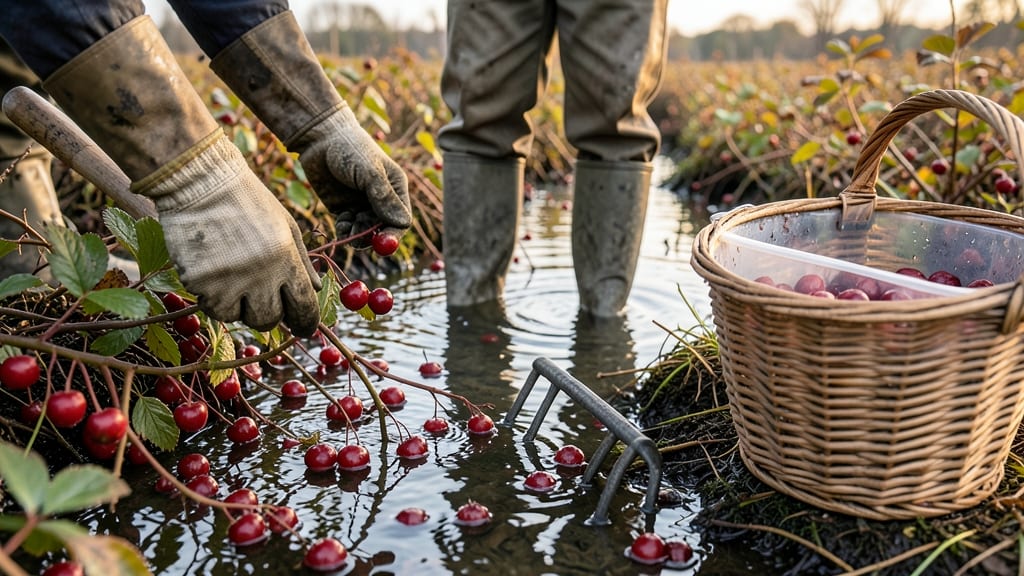
They harvest cranberries between late October and December, when the first frost transforms their color from green to that signature deep red 🫐.
If you’ve ever wondered why cranberries turn up in Thanksgiving pies and holiday drinks, the answer lies in their precise harvest window—when the first frost paints the bogs red. But timing isn’t just about tradition; it’s about science, weather, and a delicate balance that cranberry farmers master every year.
Most cranberries are grown on large-scale farms in cooler climates like Wisconsin, Massachusetts, and Oregon, where the right mix of frost and soil conditions ripens the berries perfectly.
Home gardeners in zones 3-8 can also grow them, but commercial harvests rely on large-scale flooding techniques and careful monitoring of frost dates.
In this guide, I’ll break down the exact conditions that signal harvest time, regional differences in timing, and practical tips for home gardeners to know when their own cranberries are ready to pick.
Cranberry harvest timing: frost dates and ideal conditions
Cranberries thrive in cool climates, and their harvest window is one of nature’s most precise calendars. The first frost of autumn is the critical trigger that signals ripeness, turning berries from pale green to their signature deep red.
Without this frost-induced sweetening, cranberries would remain tart and unripe, making frost not just a weather event but a harvest prerequisite.
Most commercial cranberry farms in the U.S. Northeast and Upper Midwest time harvests between late October and December, aligning with the first hard frost. However, regional climate variations mean some southern bogs may start as early as September, while northern regions might extend into January.
The exact timing depends on temperature drops, not just dates.
| Region | Key Frost Trigger | Harvest Window | Ideal Conditions |
|---|---|---|---|
| Wisconsin | First hard frost (25°F or lower) | Late October - November | Dry, crisp air; berries float test |
| Massachusetts | Light frost (32°F) | Mid-October - December | Humidity below 70%; no rain |
| New Jersey | Moderate frost (28°F) | Late September - November | Sunny days post-frost; dry vines |
| Pacific Northwest | Early frost (30°F) | October - January | Cooler nights; gradual color change |
Farmers rely on weather forecasts and historical frost data to predict the perfect window. A sudden temperature drop of 10°F or more within 24 hours is the gold standard for ripening.
This rapid change converts starches to sugars, intensifying the berries’ natural sweetness. Without frost, cranberries stay tart and unmarketable.
Home gardeners can mimic this process by lightly frosting berries (using a cold frame or refrigeration) if natural frost arrives late. However, commercial farms flood bogs post-frost to loosen berries from vines, making them easier to harvest. This water-based method also helps separate ripe from unripe fruit.
One key visual cue is the float test: ripe cranberries should bob to the surface when submerged in water. Unripe berries sink, while overripe ones may shrink or split. Farmers also check for berry detachment—ripe cranberries release easily when gently pulled from the vine.
Climate change has extended harvest windows in some regions, with later frosts delaying ripening. In Wisconsin’s central bogs, for example, harvests now often stretch into mid-December due to warmer autumns. Meanwhile, coastal areas like Massachusetts may see earlier starts if frost arrives sooner.
For home growers, microclimates matter. A sheltered garden spot might frost earlier than open fields, so monitor local weather stations. Planting cold-hardy varieties like ‘Stevens’ or ‘Early Black’ can also help align ripening with frost patterns in your area.
Post-harvest, cranberries need immediate drying to prevent mold. Farmers spread them on drying beds or use forced-air systems to reduce moisture below 10%. This step is crucial—wet berries spoil quickly, even in cold storage.
Understanding these frost-dependent cues ensures you don’t miss the window. Whether you’re a farmer or a backyard gardener, timing your harvest around the first frost is the secret to sweet, vibrant cranberries that shine in every holiday recipe. 🫐🌡️
How cranberry farmers prepare for the harvest season
Cranberry farmers know that harvest timing is everything—just a few days too early or late can mean the difference between peak flavor and wasted berries. To ensure a successful harvest, they begin preparations months in advance, focusing on bog management, equipment readiness, and labor coordination.
The goal? A smooth, efficient harvest when cranberries reach their ideal ripeness between late October and December.
One of the most critical steps is flooding the bogs before harvest. Farmers carefully control water levels to create the perfect conditions for cranberries to detach easily from the vines.
This technique not only simplifies harvesting but also ensures berries stay clean and undamaged. Without this step, cranberries would be nearly impossible to pick efficiently, especially in large-scale operations.
📋 Pre-Harvest Preparation Timeline
- 1 Late Summer: Prune vines to remove dead or weak growth and improve air circulation.
- 2 Early Fall: Test soil pH and adjust to 4.5-5.5 using sulfur or peat moss if needed.
- 3 October: Monitor weather forecasts for the first frost, which signals harvest readiness.
- 4 2 Weeks Before Harvest: Flood bogs to a depth of 4-6 inches to soften berries for easier picking.
- 5 Harvest Week: Deploy harvest crews with wet or dry methods, depending on berry condition and farm size.
- 6 Post-Harvest: Drain bogs and sort berries for size, color, and quality before storage or shipping.
Farmers also choose between wet and dry harvest methods based on berry ripeness and farm infrastructure. The wet method, which involves flooding bogs, is ideal when cranberries are fully ripe and ready to float.
This technique allows workers to use eggbeater-style harvesters to gently agitate the vines, releasing berries into the water where they’re collected. The dry method, on the other hand, is used when berries are firmer and less ripe, requiring hand-picking or mechanical harvesters to comb through the vines.
Labor plays a huge role in harvest efficiency. Cranberry farms often hire seasonal workers to handle the peak demand, ensuring that berries are picked quickly and sorted properly.
Training crews to recognize ripe vs. unripe cranberries is essential—ripe berries should be deep red, float in water, and detach easily from the vine. Any delay in harvesting can lead to overripe berries, which bruise easily and spoil faster.
After the harvest, farmers focus on post-harvest care, including sorting, cooling, and storing berries to maintain freshness. Some cranberries are shipped fresh, while others are processed into juices, sauces, or dried products.
Proper storage at 32-36°F and high humidity helps preserve quality until they reach consumers—just in time for holiday tables.
For home gardeners growing cranberries in small bogs or containers, the same principles apply. Monitor your plants for color changes and frost dates in your region, then flood your container or bog to simplify picking.
Even a small harvest can yield enough berries for homemade sauces or gifts—just like the pros!