
Planting
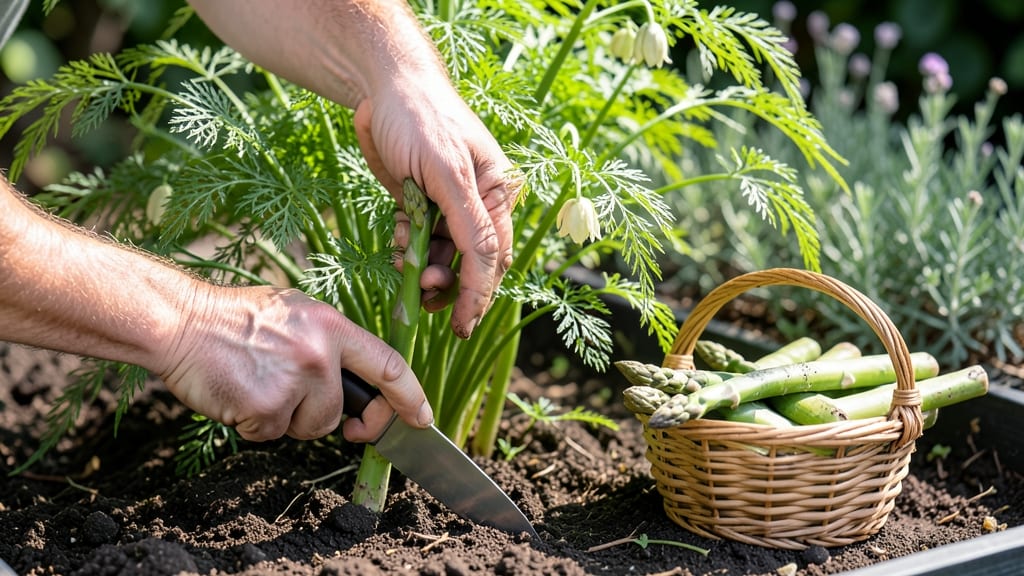
Harvesting asparagus after planting depends on the plant's age and seasonal cues — a 2- to 3-year wait before the first real harvest, with spears ready when they reach 6-8 inches and tips stay tightly closed.
If you’ve ever plucked spears too early, you know the disappointment: woody, bitter stalks that taste more like disappointment than dinner. The key? Waiting until soil temps hit 50°F and spears snap cleanly at the base — a simple test that saves your crop from stunted regrowth.
For first-year plants, resist the urge to harvest at all; let them focus on root growth. By year two, you’ll get a 6-week window in spring, but timing matters: stop cutting by late June to let foliage recharge for next season.
Below, I break down the exact signs to watch for, regional adjustments for Zone 6a, and the one mistake that kills yields faster than drought. Ready to turn your patience into a bountiful harvest?
How to determine asparagus harvest readiness using foliage height & soil tests
Harvesting asparagus at the right moment ensures tender, flavorful spears while protecting your plants for future yields. The key is monitoring foliage height, soil temperature, and spear development—not just guessing based on calendar dates.
First-year plants need extra care, while mature crowns follow slightly different rules. Let’s break down the science behind perfect timing so you never miss that sweet spot between 6-12 inches of spear growth.
For first-year plants, resist the urge to harvest at all—even if spears appear! These young crowns are establishing roots and need all their energy to grow strong for future harvests. Focus instead on soil moisture and fertilizer timing during their dormant first season.
By year two, you’ll see 1-2 foot tall spears, signaling it’s time to begin cautious harvesting. Mature plants (year three+) can produce 3-5 foot ferns and yield 100+ spears per season if cared for properly.
Use a simple soil probe test to confirm readiness: insert a metal rod 6 inches deep into the soil near your asparagus bed. If the soil feels warm (60°F+) and slightly damp, your spears are likely ready.
Cold soil (below 50°F) will produce bitter, woody spears, even if they reach the right height. Pair this with checking spear tip tightness—closed tips mean peak tenderness, while fanning tips signal it’s past prime.
Avoid harvesting spears thinner than a pencil (under 6 inches), as these won’t develop properly. For mature plants, aim for 10-12 inches of spear height before cutting—this ensures maximum yield without stressing the crown.
Pro tip: Harvest in the morning when spears are firmest, and use a sharp knife to cut just below soil level to prevent damage to the crown.
Seasonal timing matters just as much as spear height. In USDA Zone 6, start harvesting when soil warms to 60°F in early April and continue until spears become thin and fibrous around late June.
Stop harvesting by mid-summer to let the ferns regenerate energy for next year’s crop. This 6-8 week harvest window is your golden opportunity—miss it, and you’ll sacrifice both yield and flavor.
Watch for ferns turning yellow or spears growing too quickly—these are signs your plants are stressed, often from over-harvesting or poor soil nutrients. Amend your soil with compost or balanced fertilizer (10-10-10) before next season to prevent these issues.
Remember, asparagus is a perennial crop, so proper care now pays off for 10+ years of harvests.
For container-grown asparagus, harvest timing is slightly different due to limited root space. These plants may produce smaller spears but still need the same 6-12 inch height rule. Water containers daily during harvest season to prevent soil from drying out, which can stunt growth.
Containers also warm up faster in spring, so you might harvest 1-2 weeks earlier than in-ground beds.
If you’re unsure whether your spears are ready, perform the finger test: gently squeeze a spear. If it’s firm but yields slightly, it’s perfect. If it feels hard and woody, wait another 3-5 days. Over-harvesting leads to stunted regrowth and
5 Critical mistakes that ruin your asparagus harvest (and how to avoid them)
Even experienced gardeners unknowingly sabotage their asparagus harvest by making common mistakes that stunt growth or reduce flavor. I’ve learned the hard way—like the time I harvested too early and ended up with woody, bitter spears instead of tender gems.
These 5 critical errors are easy to avoid once you know the warning signs and solutions.
The biggest mistake? Harvesting asparagus too early—before spears reach 6-8 inches tall with tightly closed tips. Young plants need time to establish strong roots, and premature harvesting weakens them for future seasons.
I’ve seen gardeners rush the process, only to watch their yield shrink by 30-50% the next year.
Here’s the numbered-highlights warning system to spot these mistakes before they derail your harvest:
Result: Woody, bitter spears and stunted regrowth
Result: Dry, brittle spears or fungal rot from overwatering
Result: Damaged crowns and reduced future harvests
Result: Ferns don’t regenerate for next year’s spears
Result: Nutrient deficiencies and poor yield
Let’s tackle the first mistake head-on: harvest timing. Use a soil probe to check moisture—spears should snap cleanly when bent, not feel mushy or dry. I test mine every morning before harvesting; if the soil feels damp but not soggy, it’s prime time.
Pro tip: Harvest in the early morning when spears are crispest and most flavorful.
Another game-changer is cutting technique. Always harvest at ground level with a sharp knife or shears—never pull spears, which can uproot the crown. I mark my rows with bamboo stakes to avoid accidental damage. For first-year plants, limit harvests to 3-4 spears per plant to protect their development.
To extend your harvest by 2-3 weeks, focus on soil health and water consistency. Mulch with straw or wood chips to retain moisture and regulate temperature.
I’ve seen my harvest season stretch from 4 weeks to nearly 2 months just by adding a 2-inch mulch layer in early spring.
Finally, don’t forget: asparagus needs rest. Stop harvesting in late summer (around August) to let the ferns regenerate energy for next year’s spears. I set a calendar reminder to avoid this common oversight—it’s the secret to a bountiful harvest for years.