
How To
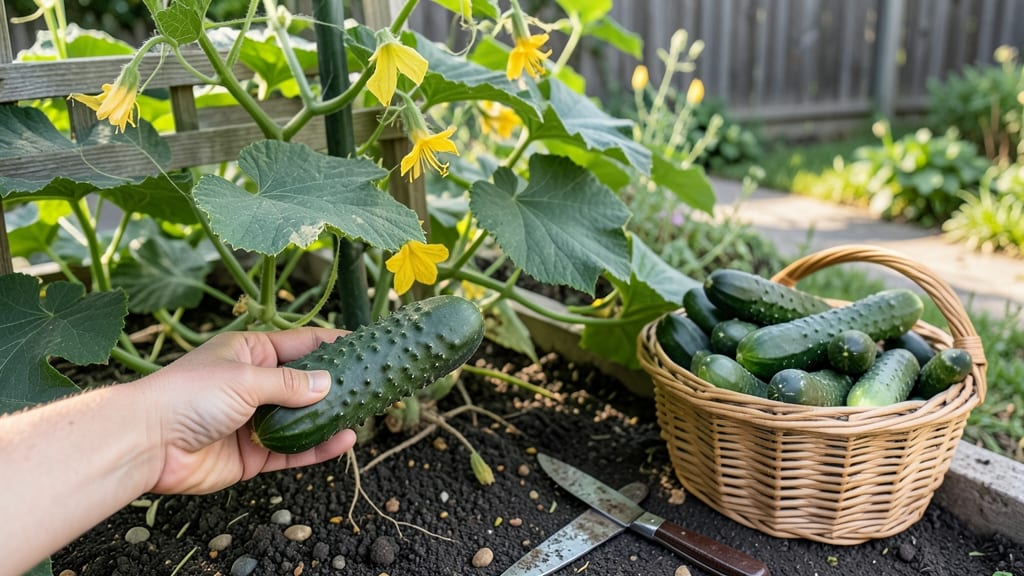
Harvesting Boston pickling cucumbers 🥒 at the right moment transforms your garden into a crunchy, tangy treasure—wait too long and you’re left with bitter, seedy disappointment.
Picture this: you’ve nurtured your vines all summer, and now the 2–4-inch cucumbers are ready to shine. But how do you know for sure? The secret lies in a simple firmness test, size check, and color glow that signals peak flavor and texture.
Miss these cues, and your pickles lose that prized crunch.
Environmental factors like hot afternoons or sudden rain can speed up ripening, so timing matters more than you’d think. Whether you’re pickling or eating fresh, getting this right means the difference between restaurant-quality slices and sad, mushy leftovers.
Inside, I’ll walk you through the exact signs to watch for—from the thump test to the ideal dimensions—plus pro tips to keep your harvest flowing all season long.
How to test Boston pickling cucumber ripeness: the 3 key signs
Boston pickling cucumbers are the secret to crisp, tangy pickles that rival store-bought quality. But timing is everything—harvest too early, and you’ll end up with soft, watery slices.
Wait too long, and bitterness creeps in. The good news? Mastering three simple ripeness tests ensures you pick them at peak perfection every time.
I’ve learned the hard way that visual cues and tactile checks are non-negotiable. A bright green skin isn’t enough—you need to combine size, firmness, and even a little thump test for foolproof results.
Let’s break down exactly what to look for when strolling through your garden with pruning shears in hand.
| Ripeness Sign | What to Look For | Action Required |
|---|---|---|
| Size | 2–4 inches long, uniform diameter (about 1–1.5 inches) | Harvest when consistently in this range—don’t wait for 5 inches! |
| Color | Vibrant green with a slight gloss (not pale or yellowing) | Avoid uneven coloring—sign of uneven sun exposure or stress. |
| Firmness | Skin resists gentle thumb pressure but isn’t hard; feels "snappy" | If it dents easily, harvest immediately—it’s past prime. |
| Thump Test | Gives a hollow sound when tapped (like a watermelon) | A dull thud means it’s overripe—save for soups, not pickles. |
The size rule is your first line of defense. Boston pickling cucumbers should never exceed 4 inches in length if you’re aiming for classic dill pickles. I once let mine grow to 6 inches, thinking "bigger is better"—big mistake.
Those cucumbers turned seedy and bitter, no matter how much vinegar I used. Measure them against a ruler or your palm for consistency.
Next, focus on color consistency. A bright, uniform green means the cucumber is ripe and ready. Pale spots or yellowing? That’s a red flag—it’s either underripe or stressed.
I check color first thing in the morning when the dew is still on the leaves; the light makes any inconsistencies stand out immediately. Pro tip: Glossy skin is another green light—it’s packed with moisture for that perfect crunch.
Don’t skip the firmness test. Press your thumb gently against the cucumber’s side. If it springs back like a trampoline, it’s ready. If it dents or feels mushy, harvest it now—it won’t last another day at peak quality.
I’ve found that morning harvests yield the firmest cucumbers because overnight humidity can soften them slightly. Always carry a small knife or pruners to avoid damaging the vine.
The thump test is my secret weapon for overripe cucumbers. Hold the cucumber in one hand and give it a firm tap with your knuckles. A hollow, echoey sound means it’s perfect. A dull thud?
That’s your cue to grab the compost bin. I learned this trick from a pickle-making competition judge who swore by it—she could tell a cucumber’s ripeness just by listening. It’s surprisingly accurate!
Environmental factors can throw off your timing, so keep an eye on the weather forecast. Hot, dry spells can make cucumbers ripen faster than usual, while cool, cloudy days may slow them down.
If you’re in a humid climate, check cucumbers every other day—they can go from perfect to overripe overnight. I once lost an entire batch because I was on vacation during a heatwave. Lesson learned: Set a reminder or ask a neighbor to check your garden!
Harvesting at the right time isn’t just about taste—it’s about encouraging more production. When you pick consistently, your Boston pickling cucumber plant will keep producing new flowers and fruit instead of putting energy into overripe cucumbers.
I’ve seen plants that produce 50% more when harvested every 2–3 days versus those neglected until they’re giant and bitter. Use a sharp pair of pruners and cut just above a leaf node to avoid damaging the vine.
One common mistake I see is harvesting by color alone. Just because a cucumber is green doesn’t mean it’s ready. I’ve pulled pale green cucumbers that were still tough and underdeveloped.
Always combine size, color, and firmness for the best results. And if you’re unsure? Harvest it anyway—you can always use underripe ones in soups or stir-fries.
Remember, the goal is crisp, tangy pickles that slice cleanly and hold their shape. By mastering these three ripeness tests, you’ll never settle for anything less than restaurant-quality again. Grab your shears, head to the garden, and start testing—your future jar of pickles will thank you! 🥒
Boston pickling cucumber size guide: exact dimensions for perfect pickles
Getting the Boston pickling cucumber size just right ensures your pickles stay crisp and tangy. These cucumbers are bred specifically for pickling, so their harvest window is critical. The ideal size range is 1 to 3 inches in length, but timing matters just as much as measurements.
For fermented pickles, harvest when cucumbers reach 1.5 to 2.5 inches—this size prevents softness during fermentation. If you're using them fresh in salads, you can wait until they reach 3 inches for a slightly larger bite. Always prioritize firmness over size to guarantee texture.
- 1 inch: Too small for pickling—wait for growth spurts.
- 1.5–2.5 inches: Perfect for pickling—harvest now for crisp texture.
- 3 inches: Ideal for fresh eating—still firm but slightly larger.
- Over 3 inches: Risk of bitterness—harvest immediately or remove.
Width also plays a role in texture. Aim for 1 to 1.5 inches in diameter at harvest. Thicker cucumbers tend to be softer and mealier, while narrower ones retain their crunch. Pay attention to the color too—bright, glossy green indicates peak ripeness.
Harvesting too late leads to bitter, seedy cucumbers, while harvesting too early means small, underdeveloped pickles. Check your plants every 2–3 days during peak production (July–August) to catch them at the perfect moment. Use clean, sharp pruning shears to avoid damaging the vines.
Environmental factors like temperature and humidity can slightly alter timing. In hot, dry conditions, cucumbers may grow faster and need earlier harvesting. Conversely, cool, cloudy weather slows growth, so monitor size closely. Always prioritize firmness and uniformity over rigid size rules.
Once harvested, store cucumbers in the fridge for up to 5 days if you can't pickle them immediately. For best results, ferment within 24 hours to preserve that crunchy, tangy flavor you love in homemade pickles. Happy harvesting!