
Picking
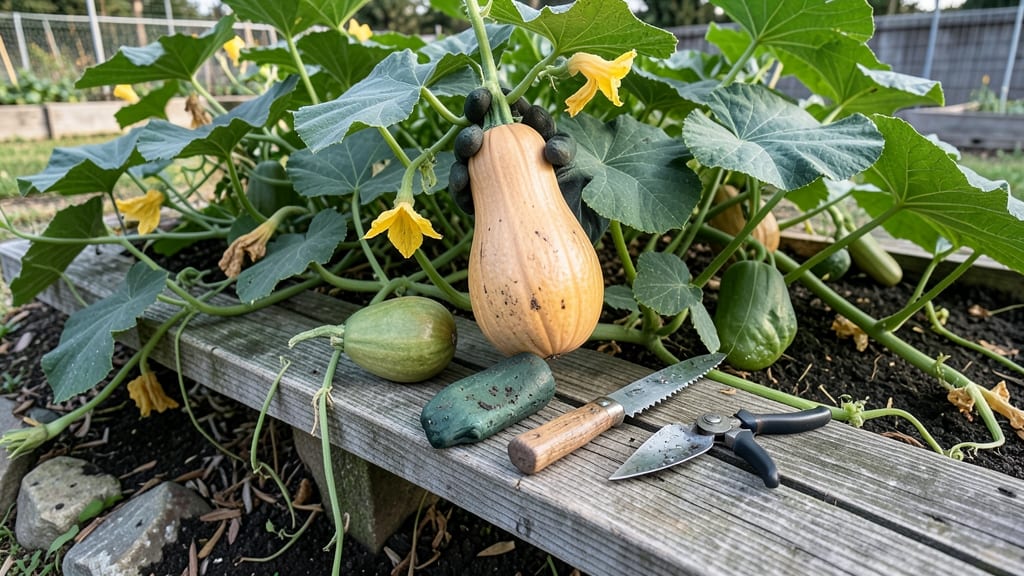
When to harvest butternut squash from the garden comes down to two simple cues: when the rind hardens like a board and the seeds inside turn pale cream 🎃 — that’s your signal to pull them from the vine before frost ruins the flavor.
Picture this: you’ve waited all summer, and now the squash is the size of a football, but the skin still gives slightly when you press it. That’s a classic mistake that leads to watery, bland flesh.
Or worse, you wait too long, and the first frost turns your prize into a mushy mess.
In Zone 6a, that perfect window usually falls between late September and November, but the real test is what’s happening on the vine. Below, I’ll walk you through how to read those rind and seed clues—plus how to store your harvest so it lasts through the winter.
You’ll also learn the three biggest harvest mistakes gardeners make (and how to spot them before it’s too late). No more guessing—just a foolproof way to turn your garden’s hard work into sweet, storage-friendly squash.
How to identify perfect butternut squash harvest time using rind and seed clues
Harvesting butternut squash at the right time transforms a bland, fibrous mess into a sweet, nutty delicacy. The key lies in two simple but critical indicators: the rind hardness and seed color.
When these signals align, you’ve hit the sweet spot for flavor and texture. I’ve learned the hard way—overripe squash turns mushy, while underripe ones stay tough and watery.
Most gardeners focus only on the skin color, but the real magic happens when you combine rind firmness with internal seed maturity. A squash with a hard rind but immature seeds will still taste bland, while one with perfect seeds but soft skin risks rotting.
Let’s break down these clues so you never miss the ideal harvest window again.
🌱 Pro Tip: Morning is the best time to check your squash. The cool temperatures make the rind firmer, giving you a more accurate reading.
| Harvest Indicator | Ready Signs | Not Ready Signs | Action |
|---|---|---|---|
| Rind Hardness | Hard to pierce with fingernail; dull orange color | Soft skin; easily punctured; shiny surface | Harvest immediately |
| Seed Color | Pale cream or light tan | Dark green or black seeds | Wait 3–5 more days |
| Stem Condition | Dries slightly; snaps cleanly when bent | Green and flexible; no drying | Harvest when both rind and stem are ready |
| Vine Health | Yellowing leaves; natural die-back | Still green and actively growing | Monitor daily for peak timing |
The rind hardness is your first line of defense. Press your fingernail into the squash skin—if it doesn’t puncture easily and the skin feels thick, you’re on the right track. A mature butternut squash rind should be tough enough to resist a fingernail but not so hard it’s rock-like.
Overly hard rinds often indicate the squash has dried out on the vine, which can lead to woody texture and reduced sweetness.
For the seed test, cut open the squash and examine the seeds. Ready-to-harvest seeds should be pale cream or light tan in color. If they’re still dark green or black, the squash needs more time on the vine.
I’ve found that seeds turn color 5–7 days before the rind fully hardens, so this is a critical secondary check. Remember, overripe seeds (black and shriveled) mean the squash has passed its prime.
Environmental factors can throw off these cues. Hot, dry weather speeds up maturity, while cool, wet conditions slow it down. In my garden, butternut squash planted in early June typically hits harvest readiness by mid-to-late September, but a late planting in July might not be ready until October.
Always adjust your expectations based on your local climate and growing season.
One common mistake I see is harvesting based solely on size. A butternut squash can grow large but still be underripe inside. Instead, combine all four indicators: rind hardness, seed color, stem condition, and vine health.
When all four align, you’ve got a winner. For extra insurance, I like to harvest a few days early—butternut squash continues to ripen after picking, improving flavor over 1–2 weeks of proper storage.
If you’re unsure, cut one open for the seed test while leaving others on the vine. This gives you real-time feedback without risking the whole crop. And always use a clean, sharp knife—dull tools crush the skin, creating entry points for rot.
Once harvested, cure your squash in a warm, dry place (80–85°F) for 10 days to develop full flavor and extend shelf life.
🌿 Key Takeaway: The perfect butternut squash has a hard rind, pale cream seeds, a dry stem, and a yellowing vine. Master these clues, and you’ll never miss harvest season again!
Butternut squash harvest timeline: month-by-month guide for different climates
Timing your butternut squash harvest depends on your climate zone and last frost date. In temperate zones (like USDA 5-8), harvest typically spans late September to November, while tropical climates may extend into December.
Cold climates require early harvests before frost damage sets in. Adjust planting dates to ensure maturity before winter arrives.
Butternut squash thrives in 75–100 days from planting, but frost sensitivity shortens this window in colder regions. For example, in Zone 4, aim for harvest by early October, while Zone 9+ gardeners can enjoy later harvests. Always monitor vine health—yellowing leaves signal maturity, not disease.
📅 Butternut Squash Harvest Timeline by Climate
- Temperate Zones (5-8): Harvest late September–November. Plant in mid-May for 100-day varieties. Watch for dull orange rinds and hard stems—key maturity signs.
- Tropical Zones (9-11): Extend harvest to December–January. Plant in early spring or fall to avoid summer heat stress. Prioritize shade cloth if temps exceed 90°F.
- Cold Zones (1-4): Harvest by early October before frost. Use row covers to delay frost or plant shorter-season varieties (70–75 days). Check for firm rinds 2 weeks before expected frost.
- Early/Late Planting Adjustments: Plant 2 weeks earlier in cool climates or 2 weeks later in hot zones to align harvest with peak season. Example: In Zone 7, plant by May 15 for October harvests.
- Frost Warnings: Butternut squash cannot tolerate frost. If frost threatens, harvest immediately—even if not fully ripe. Cure indoors for 3–5 days to improve flavor. Use black plastic mulch to extend growing season.
For early planting, start seeds indoors 4–6 weeks before last frost and transplant after soil reaches 60°F. In hot climates, opt for fall planting (August–September) to avoid summer wilting. Always space plants 3–4 feet apart to prevent crowding, which delays maturity.
After harvest, cure squash in a warm, dry place (80–85°F) for 7–10 days to develop sweetness. Store in a cool (50–55°F), dark location for up to 3 months. In humid climates, reduce storage time to 2 months to prevent rot.
Pro tip: Mark your planting and harvest dates to refine your schedule yearly. Over time, you’ll master the perfect butternut squash harvest window for your unique climate—no more wasted squash or missed opportunities! 🌱