
Vegetables
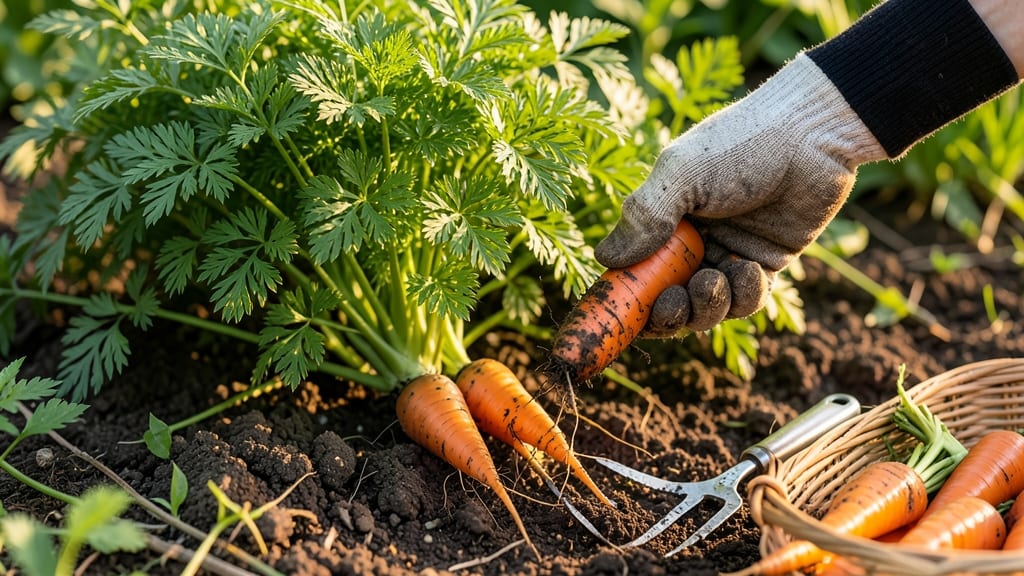
Harvesting carrots at the right time turns soil-tested patience into sweet, crisp roots that taste like summer in a bite.
Wondering why your 🥕 carrots taste bland or woody? Timing your harvest is the secret to sweet, crisp roots that rival store-bought perfection—here’s how to nail it every time.
Most gardeners wait too long, letting roots toughen or split. The key is watching for vibrant color, a diameter of 0.5-1.5 inches, and leaves reaching 6-8 inches tall—signs your carrots are ready to pull.
Below, I’ll break down the exact seasonal cues by zone, how to test for doneness without digging, and the one mistake that ruins flavor faster than overwatering.
How to tell when carrots are ready to harvest by size, color, and texture
Harvesting carrots at the right time transforms your garden into a sweet, crisp treasure trove. Unlike many vegetables, carrots don’t ripen after picking, so timing is everything. The perfect carrot should be firm, vibrant, and easy to pull—but how do you know when yours are ready?
Let’s break down the visual and tactile cues that signal peak harvest time, including how variety differences (like heirloom vs. baby carrots) change the game.
First, consider the days to maturity listed on your seed packet. Most standard carrots reach harvest readiness in 60-80 days, but this varies by type.
For example, baby carrots (like 'Paris Market') are ready in just 45-50 days when roots reach 1-2 inches, while heirloom varieties (like 'Purple Haze') may take 80-100 days to develop their full bold color and complex flavors. Paying attention to these timelines helps narrow down your search.
Now, let’s talk size and shape. The most reliable indicator is the shoulder of the carrot (the top 1-2 inches) peeking above the soil. For standard varieties, aim for a 1-1.5 inch diameter at the widest point.
Baby carrots should be ½-1 inch thick, while heirloom types like 'Blackspan' can grow larger—up to 2 inches or more—before reaching their sweetest stage. If the roots are smaller than expected, they’re likely not ready yet.
Color is another game-changer for harvest timing. Mature carrots develop a deep, consistent hue—whether orange, purple, red, or yellow—with no pale or greenish patches. For example, 'Danvers' carrots should be a rich, even orange, while 'Chantenay' varieties turn a deep red-orange.
If your carrots look washed out or uneven, they need more time in the soil. Overripe carrots may develop a woodier texture and bitter taste, so don’t wait too long!
| Carrot Type | Size at Harvest | Color Cues | Days to Ready | Texture Check |
|---|---|---|---|---|
| Standard (e.g., 'Nantes') | 1-1.5 inches diameter | Deep orange, uniform | 60-80 days | Firm, crisp, no soft spots |
| Baby (e.g., 'Paris Market') | ½-1 inch diameter | Bright orange or yellow | 45-50 days | Tender, sweet, no bitterness |
| Heirloom (e.g., 'Purple Haze') | 1.5-2+ inches diameter | Deep purple or orange | 80-100 days | Dense, slightly fibrous |
| Long (e.g., 'Chantenay') | 12-16 inches long | Red-orange, tapered | 70-90 days | Crunchy, smooth skin |
Don’t overlook the foliage—healthy leaves mean your carrots are thriving. When the top leaves reach 6-8 inches tall and the shoulder is fully exposed, it’s often time to harvest. However, if the leaves start yellowing or wilting, your carrots may be overripe or stressed.
This is especially true in hot, dry weather, which can cause carrots to become woody and tough. Always prioritize moisture and shade during peak summer heat to maintain sweetness.
The texture test is your final checkpoint. Gently grasp a carrot near the soil line and give it a firm tug. If it slides out easily with minimal resistance, it’s ready! If the carrot resists or breaks, it’s either underdeveloped or overgrown.
For stubborn roots, use a garden fork to loosen the soil around the edges before pulling. This prevents damage to both the carrot and nearby plants. Pro tip: Harvest on a cool, cloudy day to reduce stress on the roots.
Seasonal timing also plays a role. In spring-planted crops, carrots are typically ready by late summer (August-September), while fall plantings yield harvests in October-November. If you’re in a cooler climate (USDA Zones 3-5), extend your harvest window by using row covers to protect
Best practices for harvesting carrots without damaging the roots
Harvesting carrots the right way ensures you get those sweet, crisp roots you’ve been dreaming of—not woody, stringy disappointments. The key lies in timing and technique. Once your carrots reach 1-1.5 inches in diameter and the tops are 6-8 inches tall, they’re ready.
But how you pull them out matters just as much as when you do it.
Using the wrong method can snap roots or leave them in the soil, forcing you to dig them up later with a fork—risking damage. I’ve learned the hard way that gentle extraction is the way to go.
Let me walk you through the best tools and techniques to avoid common mistakes that even experienced gardeners make.
Carrots harvested too soon (less than 50 days) will be small and bland, while waiting too long (over 100 days) turns them woody. Check soil moisture first—dry soil makes roots tough. Harvest on a cool, cloudy day to preserve moisture and prevent stress.
Start by loosening the soil around the carrot with your fingers or a small hand fork. This breaks the suction between the root and soil, making extraction easier. Never use a large fork—it can pierce the roots.
For loose, sandy soil, you might even pull them out by hand with a gentle twist. The goal is to preserve the root’s integrity so it stays fresh longer.
If the soil is compacted or rocky, a garden fork with narrow tines is your best bet. Insert it 2-3 inches away from the carrot and wiggle it gently to loosen the soil.
Then, grasp the carrot tops and pull upward with steady pressure. If resistance persists, the carrot might still be growing—let it mature a few more days.
One of the biggest mistakes I’ve seen is forking too close to the carrot, which can cause splits or bruising. Always aim for the soil around the root, not the carrot itself.
After harvesting, brush off excess dirt with your hands or a soft brush. Avoid rinsing until you’re ready to store or cook—the moisture can speed up spoilage.
For baby carrots or varieties like Paris Market, which mature in 50-60 days, you can harvest as soon as they reach 1 inch in diameter. But for standard varieties like Danvers or Nantes, wait until they’re 1.5 inches wide for maximum sweetness.
The shoulder of the carrot should be fully exposed above the soil.
Finally, harvest in the morning after watering to ensure the soil is moist but not soggy. This makes the roots easier to pull and keeps them crisp. Store harvested carrots in a cool, dark place with high humidity, like a root cellar or crisper drawer, to extend their shelf life.
With these tips, you’ll enjoy perfectly preserved carrots straight from your garden to your table.