
Picking
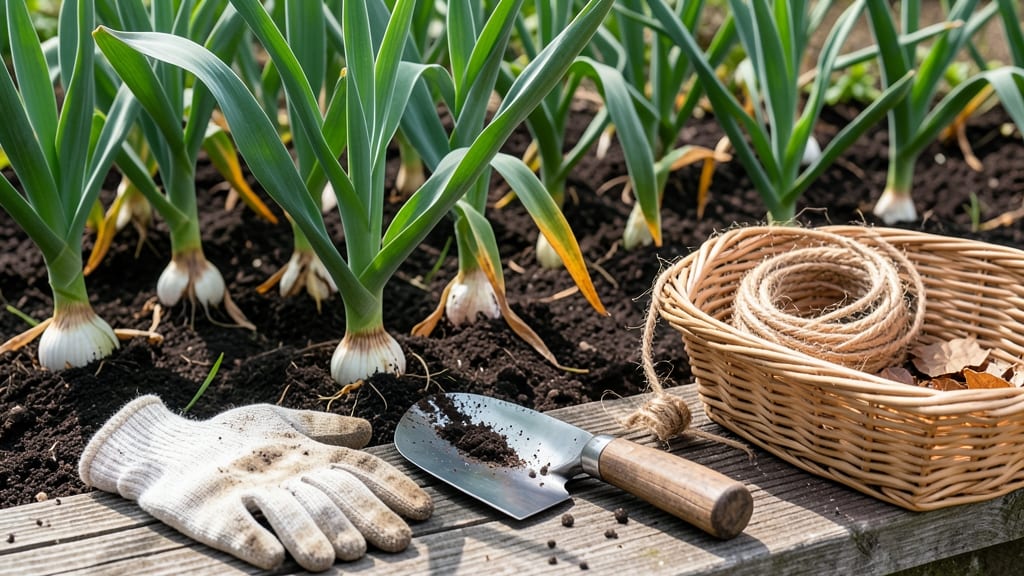
Harvesting garlic in North Carolina at the right time means the difference between plump, flavorful bulbs and shriveled disappointment—so knowing when to dig is everything.
If you’ve ever pulled garlic too early and ended up with tiny, underdeveloped cloves, you know the frustration. Or maybe you’ve waited too long and watched the bulbs split in the heat.
The secret? Reading your garlic’s 🧄 scapes and soil cues—both of which reveal the perfect window, usually between mid-June and mid-July, depending on your region.
North Carolina’s 6b-8a zones play a big role here. In the cooler mountain areas (like 6b), garlic often matures a few weeks earlier than in the Piedmont or coastal plains (7b-8a).
But the real giveaway isn’t the calendar—it’s the browning of lower leaves while upper ones stay green, paired with firm bulbs when you gently squeeze them.
Below, I’ll walk you through how to spot these signs, the best tools for digging, and how to cure your harvest for long-term storage—so you never miss the sweet spot again.
How garlic scapes indicate perfect harvest timing in NC
North Carolina’s garlic growers rely on garlic scapes—those curly green flower stalks—as the first clear sign that harvest time is approaching. Unlike other crops, scapes don’t just signal blooming; they’re a direct indicator that the bulb below is maturing.
In USDA zones 6b-8a, timing scape removal correctly can mean the difference between plump, flavorful bulbs and small, underdeveloped ones.
Hardneck varieties, like Music or Chesnok Red, are the stars of NC gardens because they produce scapes. These scapes appear in late April to early May, about 10-12 weeks after planting.
When you see them, it’s your cue to act—either harvest the scapes or let them mature to trigger bulb development. Softneck varieties, like Silverskin, rarely produce scapes, so they rely on leaf signals instead.
🌱 5 Key Signs Your Garlic Scapes Signal Harvest Time
- 🌿 Scape Curling: Scapes curl into a tight loop when mature—this is your 3-week warning before bulb readiness.
- 🌡️ Soil Temp: Scapes emerge when soil reaches 55-60°F, signaling bulb growth acceleration.
- ⏳ Hardneck vs. Softneck: Hardneck scapes appear 60-90 days after planting; softneck varieties may never produce them.
- 🌱 Leaf Color Shift: Lower leaves turn straw-colored 2-3 weeks after scapes form—time to monitor closely.
- 📅 NC Climate Zones: Mountain regions (Zone 6b) harvest 2 weeks earlier than Coastal areas (Zone 8a).
If you remove scapes when they’re 4-6 inches long, you redirect the plant’s energy toward bulb development, often resulting in larger cloves. However, leaving scapes too long can reduce bulb size.
For hardneck varieties, this is a critical trade-off: scapes are edible (great in pesto!), but prioritize bulb size for storage.
For softneck garlic, which lacks scapes, focus on leaf browning instead. When 50% of lower leaves turn yellow-brown but the top leaves remain green, it’s time to dig. In NC’s humid summers, this usually happens in mid-June to early July, depending on planting date.
Pro tip: Use a soil thermometer to confirm readiness. Ideal harvest soil temps in NC range from 65-75°F. If temps spike above 85°F, bulbs may split or rot—so adjust your harvest timing accordingly. Mountain regions can harvest earlier, while Coastal areas may need to wait until July.
Don’t ignore neighboring plants as a secondary cue. When most garlic in your patch shows brown lower leaves and firm bulbs when gently squeezed, it’s time to dig. This collective signal is especially reliable in NC’s varied microclimates, where individual plants might mature at slightly different rates.
One common mistake? Harvesting too early because scapes appear. Scapes are an early warning system, not the final signal. Wait 3-4 weeks after scape formation before digging hardneck varieties. For softnecks, scapes aren’t a factor—so rely solely on leaf color and bulb firmness.
In NC’s Zone 7b (Piedmont region), I’ve found that harvesting first-week of June for hardnecks and third-week of June for softnecks yields the best results. Always dig on a dry, sunny day to prevent disease.
Use a fork or spade to loosen soil gently, then brush away dirt to inspect bulbs for readiness.
Remember: Garlic bulbs stop growing when the plant senses daylength changes in late spring. This is why scapes—emerging in April-May—are your advance notice. By the time you see them, the bulb’s already on its final growth phase.
Pay attention, and NC’s garlic season will reward you with plump, flavorful harvests every year. 🧄
Soil and weather conditions that confirm garlic harvest time
North Carolina’s garlic harvest timing depends heavily on soil temperature and moisture levels, which vary by region. In the Piedmont and Coastal areas (USDA zones 7b-8a), garlic typically matures by mid-June to early July, while mountain regions (zone 6b) may see harvests slightly later.
The key is watching leaf browning while monitoring underground conditions.
Start by checking soil moisture—garlic bulbs need well-drained soil but consistent hydration. If the soil feels dry 2 inches below the surface, water deeply 1-2 weeks before harvest to plump the bulbs.
Overly wet soil can lead to rot or poor storage quality, so avoid soggy conditions. In NC’s humid summers, mulch helps regulate moisture while preventing fungal issues.
| Condition | NC-Specific Signal | Action |
|---|---|---|
| Soil Temperature | 60–75°F (Piedmont/Coastal) 55–68°F (Mountains) |
Test with a soil thermometer; harvest when temps stabilize above 60°F. |
| Leaf Color | Lower leaves brown and crispy; upper leaves still green | Dig test bulbs to check for paper skins around cloves. |
| Moisture Level | Soil feels damp but not soggy 2" deep | Water lightly 3 days before harvest to firm up bulbs. |
| Weather Forecast | Dry, sunny 5-day outlook | Harvest during morning hours to avoid rain. |
Pay attention to NC’s seasonal patterns: Late May through early June often brings ideal harvest conditions with warming soil and decreasing rainfall. If you notice lower leaves turning brown while the upper foliage remains green, it’s time to test a few bulbs.
Gently dig up 1-2 plants and check for fully formed paper skins around the cloves—this confirms maturity.
Hardneck varieties (like ‘Music’ or ‘Chesnok Red’) typically mature 2-3 weeks earlier than softneck types (e.g., ‘Silverskin’) in NC’s climate. If you’re growing multiple varieties, harvest hardnecks first.
Avoid waiting too long, as overripe garlic splits easily and stores poorly. In humid NC summers, bulbs left too long in the ground may sprout or rot.
Before digging, perform a quick soil readiness test: Press your finger into the soil near the plant base. If it feels firm but not compacted and the garlic leaves are 50% brown at the base, your bulbs are ready.
In Coastal NC, where humidity is higher, prioritize harvesting during dry spells to prevent fungal infections. Use a fork or spade to lift bulbs carefully, shaking off excess soil to inspect for damage.
Once harvested, cure garlic in a shady, well-ventilated area for 2-3 weeks. NC’s high humidity can slow drying, so avoid plastic bags or enclosed spaces. Proper curing ensures long-term storage and prevents mold.
If you miss the window, bulbs may still be usable but won’t store as long—so timing is everything in NC’s climate! 🌱