
How To
Harvesting lima beans at the right time turns those creamy, buttery pods into a garden star 🌱—but wait too long, and you’ll be left with tough, stringy husks instead.
If you’ve ever pulled a pod from the vine only to find it dry and leathery, you know how quickly things go wrong. The key is catching them at the perfect stage—when they’re 4 to 6 inches long, firm but slightly tender, and still a vibrant green.
This isn’t just about size, though. Climate, variety, and even your local growing season play a role in when those pods reach peak flavor. A butter bean might need picking earlier than a flat lima, and a hot summer can speed up maturity.
Below, I’ll break down the exact signs to watch for, how often to check your plants, and the one mistake that turns sweet harvests into tough work. Ready to turn your lima bean patch into a flavorful success?
How to identify the perfect lima bean pod size for harvesting
Harvesting lima beans at the right size ensures peak flavor and tender texture. Unlike some beans, lima beans have two main types—flat and butter—each with its own ideal pod dimensions.
Understanding these differences helps you avoid tough, fibrous pods that ruin meals. The key is checking size, firmness, and seed development before they overmature.
For flat lima beans, aim for pods that measure 3-4 inches long and 1/2 to 3/4 inch wide. These pods should feel firm but slightly yielding when gently squeezed. If you wait too long, the pods thicken, and the beans inside become hard and dry.
Butter lima beans, on the other hand, are harvested when they're 2-3 inches long and rounder in shape, with a buttery texture that’s best enjoyed fresh.
My rule of thumb? Use your finger-width as a quick guide. For flat lima beans, the pod should be about 1 to 1.5 times the width of your thumb. For butter beans, it’s closer to the width of your index finger.
This simple trick works even if you don’t have a ruler handy. Just pinch the pod gently—if it feels too hard or shriveled, it’s past its prime.
Timing is everything because lima beans continue to harden and dry once picked. Overripe pods lose their creamy texture and develop a woody taste. Even worse, the seeds inside become large and tough, making them less enjoyable to eat.
To maximize your harvest, check your plants every 2-3 days once pods start forming. This frequent monitoring prevents overmaturity and encourages more pods to develop.
| Pod Type | Ideal Size | Finger Test | Seed Stage | Harvest Window |
|---|---|---|---|---|
| Flat Lima Beans | 3-4" long, 1/2-3/4" wide | 1-1.5x thumb width | Plump, filling pod | 70-80 days after planting |
| Butter Lima Beans | 2-3" long, round shape | Index finger width | Small, tender seeds | 60-75 days after planting |
| Overripe Pods | >4" long, thickened | Hard, doesn't yield | Large, dry seeds | Avoid—loss of flavor |
Visual cues are just as important as size. Look for bright green pods with no signs of yellowing or browning. The pod should also be smooth and glossy, not wrinkled or dull.
If you see dark spots or cracking, it’s a sign the pod is drying out and past its best. Cutting pods open for a quick check can also help—if the seeds inside are small and soft, they’re ready to harvest.
Some gardeners worry about harvesting too soon, but underripe lima beans are still edible—they just lack the full buttery flavor and tender texture you crave. If you’re unsure, go ahead and pick a few pods to test.
Taste one raw or lightly cooked to check for sweetness. If it’s bland or mealy, leave it on the vine a day or two longer. But if it’s sweet and creamy, you’ve nailed the perfect harvest time.
Don’t forget that variety matters. Some lima bean types, like ‘Fordhook’ or ‘Christmas’, produce larger pods and may take a few extra days to reach ideal size. Always check the seed packet instructions for specific guidance.
If you’re growing heirloom varieties, they might have slightly different size requirements, so keep notes on what works best in your garden each year.
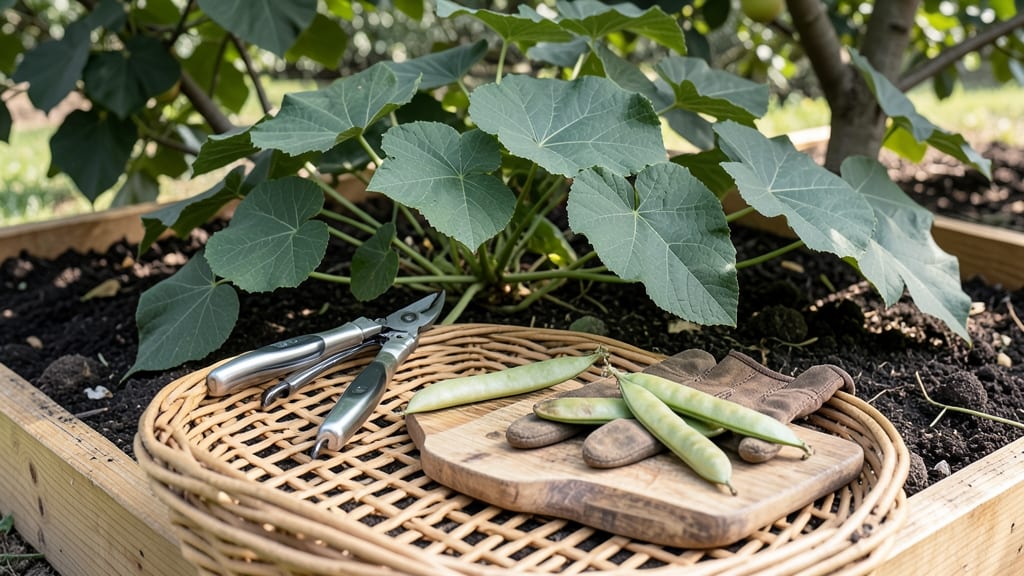
Pro tip: Use a small pruning shears or clean scissors to snip pods from the vine. This prevents damage to the plant and makes harvesting easier, especially for vining varieties that can grow up to 6 feet tall.
Always harvest in the morning when pods are cool and crisp. This ensures you’re getting the freshest, most flavorful beans possible.
If you miss the ideal harvest window, don’t panic. Lima beans can be dried and stored for later use, though their texture changes. For the best results, aim to harvest at least 80% of your pods at peak size.
This leaves enough energy in the plant to produce more pods throughout the season. With the right timing, you’ll enjoy a continuous harvest of tender, delicious lima beans all summer
Lima bean color and texture clues for optimal harvest timing
Harvesting lima beans at the right moment transforms their flavor from bland to rich and buttery. The key lies in observing two critical factors: pod color and texture.
A slight delay can mean tough, stringy pods, while picking too early robs you of full flavor development. Let’s break down what to watch for in your garden.
Start by examining the pod color. Mature lima beans should be a vibrant, deep green with no yellowing or brown spots. Flat lima varieties (like ‘Fordhook’) will have a glossy finish, while butter beans (like ‘Baby Fordhook’) may appear slightly paler but still uniformly green.
A dull or mottled appearance signals overripeness.
Next, focus on seed visibility through the pod’s translucent skin. At the perfect harvest stage, you’ll see plump seeds filling about 70-80% of the pod’s length. If seeds are barely visible or appear shriveled, the pod is too young.
Conversely, if seeds press against the pod walls with no give, the beans have passed their prime.
⚠️ WARNING: Overripe Lima Beans Ruin Flavor
Texture is your final clue. Run your thumb along the pod’s seam—the line where it attaches to the vine. A ready-to-harvest pod will have a slightly soft seam that gives under gentle pressure.
If the pod feels wooden or hollow, the beans inside are past their peak. For butter beans, the entire pod should feel firm yet tender, like a ripe green bean.
Don’t overlook the pod’s size as a secondary indicator. Flat lima beans should measure 4-6 inches long, while butter beans are best when 3-5 inches long. Use your hand as a guide: most mature pods will span from your thumb to middle finger when held flat.
Smaller pods often lack the creamy texture gardeners love.
For continuous harvests, pick lima beans frequently—every 2-3 days during peak production. This encourages plants to produce more pods and prevents overmaturity. Store freshly harvested beans in the fridge for up to 5 days or blanch and freeze them to preserve their buttery sweetness for months ahead.
Mastering these visual and tactile cues turns lima bean harvesting from guesswork into a rewarding routine. With practice, you’ll develop an intuitive sense for the perfect moment—when flavor, texture, and nutrition align for the best homegrown harvest. Happy picking! 🌱