
How To
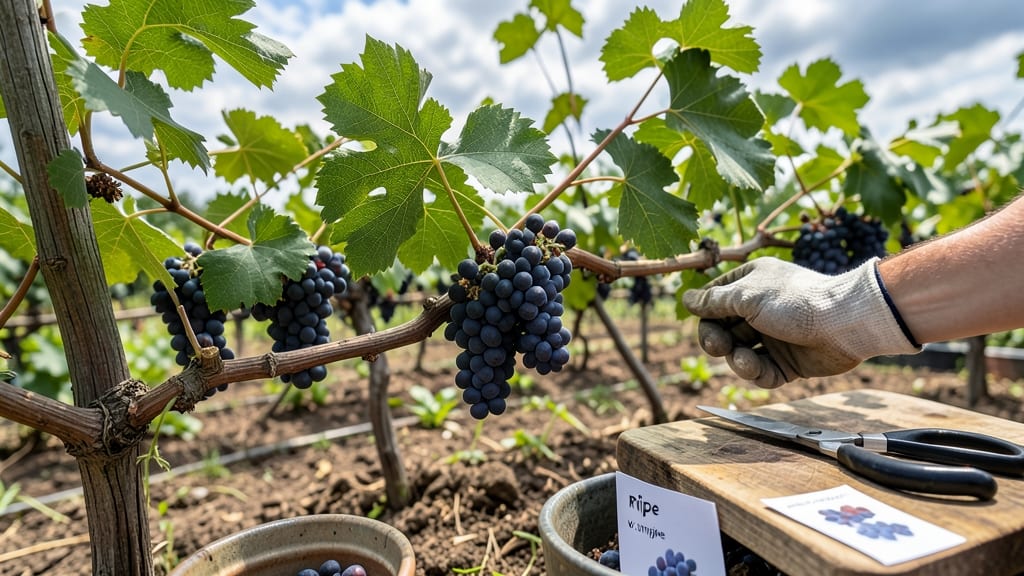
Harvesting muscadine grapes at the right time ensures sweet, flavorful fruit that’s perfect for eating, jams, or wine—but miss the window, and you risk overripe, seedy, or bird-snacked clusters.
Timing the harvest of muscadine grapes perfectly ensures sweet, flavorful fruit—but wait too long, and you risk overripe, seedy, or even bird-snacked clusters. The stem twist test is your secret weapon for nailing the ideal harvest window.
If you’ve ever picked grapes that were too tart or burst with seeds, you know how critical precise timing is. These grapes ripen between late August and October, depending on your USDA zone, but color and texture alone won’t tell the full story.
Below, I’ll show you how to use the stem twist test, check sugar levels, and adjust for regional climates—so you never miss the perfect harvest window again.
How to perform the muscadine stem twist test for perfect ripeness
Harvesting muscadine grapes at the right time transforms your vineyard into a flavor factory. But how do you know when those deep purple or bronze clusters are ready? The stem twist test is my go-to method—simple, reliable, and no fancy tools required.
This test helps you avoid both underripe tartness and overripe mushiness, ensuring grapes packed with perfect sweetness.
Timing matters because muscadine grapes ripen between late August and October, depending on your USDA zone. In Zone 7-9, grapes typically reach peak ripeness in September, while cooler Zone 6 areas might extend into early October.
The twist test lets you fine-tune that window, even if your local weather throws curveballs like heatwaves or early frosts.
Step-by-Step: Muscadine Stem Twist Test
- 1 Select a cluster: Choose a representative cluster from a sun-exposed vine. Avoid clusters near shady spots or damaged leaves, as they may ripen unevenly.
- 2 Gently grasp the stem: Hold the main stem (not the individual berries) about 1 inch below the cluster. Use your thumb and forefinger to apply light pressure.
- 3 Twist counterclockwise: Apply a slow, twisting motion (like opening a jar). The goal is to detach the cluster from the vine with minimal force.
-
4
Interpret the result:
- 🟢 Underripe: Stem snaps cleanly with no resistance. Grapes will taste tart and seedy.
- 🟡 Perfectly ripe: Stem twists off with a slight pop and minimal force. Grapes are plump, colored, and sweet.
- 🔴 Overripe: Stem resists twisting or tears unevenly. Grapes may be mushy, fermenting, or bird-damaged.
- 5 Verify with visual cues: Cross-check with berry color (deep blue, bronze, or red), skin texture (slightly leathery but yielding), and size (full for the variety, typically 1-2 inches).
Pro tip: Perform the twist test on 3-5 clusters per vine to account for variation in ripening. Muscadine grapes ripen unevenly, so a few clusters might be ready while others lag behind. Harvest the ripe clusters first, then monitor the rest every 2-3 days.
If your grapes pass the twist test but still taste slightly tart, they’re likely just underripe. Let them hang another 2-3 days in the sun. Overripe grapes, however, will ferment on the vine, developing an alcoholic tang and attracting pests like birds and wasps.
The twist test helps you beat the clock before that happens.
For southern growers, early morning is the best time to test—grapes are cooler and firmer, making the twist easier to judge. Avoid testing after hot afternoons, when grapes may feel softer and overripe due to heat stress.
Always harvest in the morning to preserve flavor and texture.
Don’t overlook the seed development clue. Ripe muscadine grapes have fully formed, brown seeds that detach easily from the flesh. Underripe grapes contain hard, green seeds that resist separation. This is another quick visual check when you’re unsure about the twist test results.
Once you’ve mastered the twist test, you’ll never guess at harvest time again. This method works for all muscadine varieties,
Muscadine grape ripeness stages: sugar levels, seed development, and flavor changes
Understanding the ripeness stages of muscadine grapes transforms guessing into precision. These grapes undergo dramatic changes in sugar content, seed development, and flavor profile from early summer to fall. Each stage offers unique sensory experiences—from tart tanginess to rich, jammy sweetness.
Early season grapes (June-July) are barely edible, with low Brix levels (5-10) and firm, astringent skins. Their seeds remain hard and underdeveloped, while flavors hover between sour and bland. Patience is key—this phase is purely about waiting for the magic to unfold.
The mid-season shift (August) marks the beginning of transformation. Brix levels climb to 12-16, seeds soften slightly, and flavors develop subtle berry undertones. The skin color deepens from green to purple or bronze hues, signaling the grapes are finally becoming palatable.
This is when I start performing the stem twist test weekly.
| Stage | Brix Level | Seed Condition | Flavor Profile | Harvest Readiness |
|---|---|---|---|---|
| Early Season | 5-10 | Hard, undeveloped | Tart, bland | Not ready |
| Mid-Season | 12-16 | Softening | Berry undertones | Monitoring |
| Late Season | 18-24+ | Soft, developed | Jammy, sweet | Prime harvest |
| Overripe | 25+ | Mushy | Fermented | Avoid |
The late season peak (September-October) delivers the sweetest, most flavorful muscadines, with Brix levels reaching 18-24. Seeds become fully developed but remain soft, while flavors explode with jammy depth and tropical notes.
This is when the stem twist test becomes foolproof—grapes detach cleanly with just a slight twist, and the skin yields slightly when pressed.
Waiting too long risks overripe grapes, where Brix levels spike to 25+, seeds turn mushy, and flavors develop fermented or alcohol-like characteristics. The skin may also split, making clusters vulnerable to rot and bird damage.
I've learned this lesson the hard way—always harvest before the grapes become overly soft!
For peak flavor, aim to harvest when grapes achieve 18-22 Brix and pass the stem twist test. Early morning harvests preserve sweetness, as daytime heat can cause sugar levels to drop slightly. Store harvested grapes in a cool, dark place for up to 2 weeks to maintain quality.
🍇