
How To
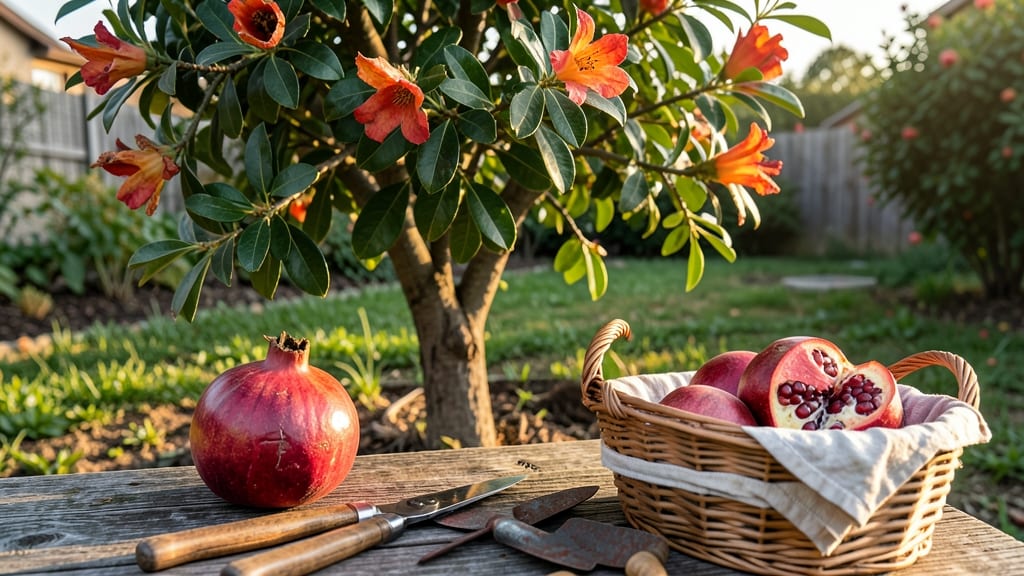
Harvesting pomegranate fruit at the right time ensures sweet, juicy seeds packed with flavor—wait too long, and you risk splitting or attracting pests.
You’ve spent months nurturing your 🍇 pomegranate tree, but knowing when to pick can be tricky. Too early, and the fruit tastes tart and underripe; too late, and the skin cracks or falls to the ground.
The key lies in three simple tactile tests: rind color, seed development, and stem separation.
In USDA Zones 6a-10a, pomegranates typically ripen between 180 and 240 days after flowering, usually in late fall or early winter. But climate and variety play a role—hotter regions may ripen faster, while cooler zones need extra time.
Below, I’ll walk you through the exact cues to harvest at peak perfection.
You’ll also learn how to store pomegranates if they’re not quite ready and avoid common mistakes that waste your hard work. By the end, you’ll never second-guess when to pluck that deep yellow-brown fruit from the tree.
3 Tactile tests to know when pomegranates are ready for harvest
Harvesting pomegranates at the right moment transforms tart, underripe fruit into sweet, jewel-like seeds bursting with flavor. But how do you know when they’re perfectly ripe? Relying on guesswork can lead to disappointment—either overripe fruit that splits or underripe pomegranates that lack sweetness.
The key lies in these three tactile tests that reveal ripeness through touch, sight, and a gentle twist.
Unlike many fruits that soften as they ripen, pomegranates stay firm but develop subtle changes in skin texture, weight, and stem attachment. These cues are your shortcut to avoiding the common mistakes of harvesting too early or too late.
Mastering them ensures you’ll pick fruit that’s juicy, flavorful, and ready to enjoy—or store for later.
🍇 3 Tactile Tests for Pomegranate Ripeness
-
1. Skin Color Shift:
Look for a deep yellow-brown hue replacing green.
🟡
-
2. Heavy for Size:
Gently shake the fruit—ripe pomegranates feel heavy and solid.
⚖️
-
3. Stem Detachment:
Twist gently—the stem should separate cleanly from the tree.
🌿
Pro Tip: Combine all three tests for 100% accuracy. A single cue isn’t enough!
Start with the skin color test, which is the easiest visual cue. A pomegranate’s rind begins as green but gradually shifts to a deep yellow-brown as it ripens. This color change signals that the fruit’s sugars have fully developed, but it’s not the only indicator.
Some gardeners mistake overripe fruit for ripe—watch for cracks or wrinkled skin, which mean it’s past its prime.
Next, use the weight test to confirm ripeness. Hold the pomegranate in your hand and compare it to others on the tree. A ripe fruit will feel surprisingly heavy for its size, almost like it’s denser inside.
This happens because the seeds and juice sacs are fully plump. If it feels lightweight or hollow when shaken, it’s not ready yet—wait another week or two.
The stem detachment test is the final check to ensure you’re harvesting at peak ripeness. Grasp the fruit’s stem between your thumb and forefinger and twist gently. If the stem snaps off cleanly with a slight resistance, the pomegranate is ready.
If it resists or the stem tears, the fruit needs more time. This test is crucial because it confirms the fruit’s connection to the tree has weakened naturally, a sure sign of ripeness.
Avoid the common mistake of harvesting based on size alone. Some pomegranate varieties, like 'Wonderful', grow large but stay tart if picked too early. Others, like 'Eversweet', ripen more uniformly but still require these tactile tests.
Overripe pomegranates may split open on the tree, attracting pests like fruit flies or rodents, so timing is critical.
If you’re growing pomegranates in cooler climates (USDA Zones 6-7), expect a slightly later harvest than in hotter zones (Zones 8-10). In my Zone 7 garden, I’ve found that pomegranates ripen about 2-3 weeks later than in Zone 9.
Always adjust your harvest window based on your local climate—late fall is the sweet spot for most regions.
Once you’ve mastered these tests, you’ll never second-guess when to harvest again. The perfectly ripe pomegranate will be firm yet heavy, with a deep yellow-brown rind and a stem that releases easily. Cut one open to reveal vibrant red seeds—that’s your reward for nailing the timing!
For extra flavor, let freshly harvested pomegranates sit at room temperature for a day or two before storing. This mimics the final ripening stage and enhances sweetness. Just avoid storing them in the fridge until you’re ready to use them—cold temperatures can dull their flavor.
How climate and variety affect pomegranate harvest timing
Your local climate and the pomegranate variety you grow dramatically impact harvest timing. In hot climates like USDA Zones 8-10, pomegranates often ripen 2-3 weeks earlier than in cooler Zones 6-7.
For example, my 'Wonderful' variety in Zone 9 typically ripens by late October, while the same variety in Zone 7 may not reach peak ripeness until mid-November.
Cooler climates with shorter growing seasons may require seasonal adjustments like using black plastic mulch to warm soil or choosing earlier-maturing varieties such as 'Eversweet'. These adaptations help extend your harvest window and ensure fruit reaches full ripeness before the first frost.
| Variety | Climate Zone | Ideal Harvest Time | Notes |
|---|---|---|---|
| 'Wonderful' | Zones 7-10 | Late October - Early November | Classic variety; needs full sun |
| 'Eversweet' | Zones 6-9 | Mid-November - Early December | Cold-hardy; sweeter flavor |
| 'Ambrosia' | Zones 8-10 | September - October | Early ripening; seedless |
| 'Parfianka' | Zones 6-8 | Late October - November | Tart-sweet; good for cooler areas |
If you live in a warmer climate, you might experience multiple harvest waves throughout fall. For instance, my 'Ambrosia' pomegranates in Zone 10 often ripen as early as September, while later varieties like 'Wonderful' follow in November.
This staggered ripening lets me enjoy fresh pomegranates for nearly 3 months!
For cooler climates, focus on harvesting before frost. Even if fruit isn't fully ripe, you can accelerate ripening indoors by placing pomegranates in a cool, dry location (like a garage) for 1-2 weeks.
Varieties like 'Eversweet' handle this transition better than 'Wonderful', which may split if exposed to freezing temperatures.
Pro tip: Track your local frost dates and adjust your harvest schedule accordingly. In Zone 7**, I start harvesting 'Eversweet' by mid-November to ensure I get fruit before the first frost, which typically hits around October 15th. This timing ensures I maximize both yield and quality.
Remember, pomegranate ripening slows in cooler weather. If your tree is in Zone 6 or below, consider planting a dwarf variety near a south-facing wall to capture extra heat.
This simple trick can extend your harvest window by 1-2 weeks—making all the difference in short growing seasons! 🌿