
How To
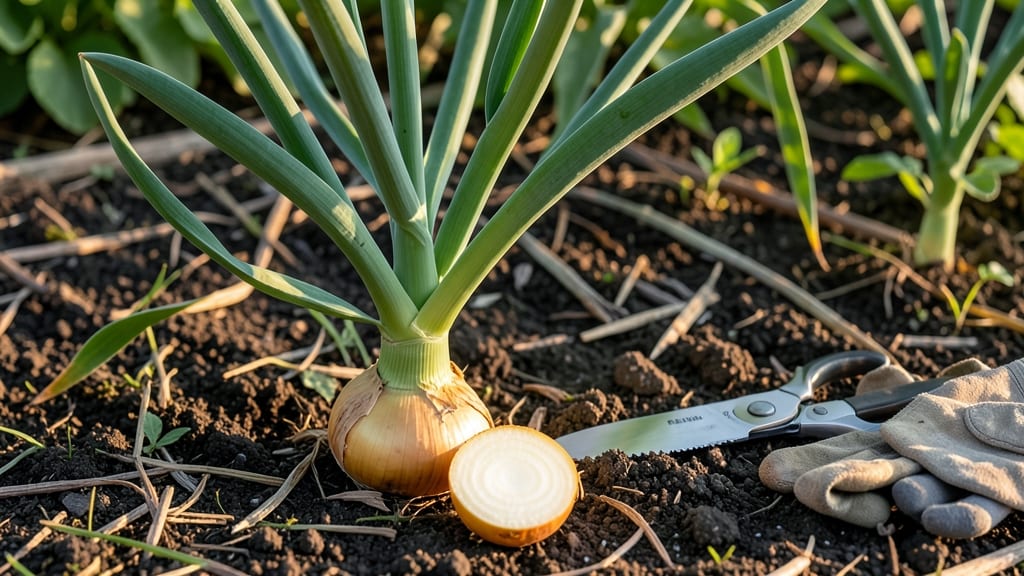
Harvesting yellow onions 🧅 at the right time transforms them from bland to bold, and missing that window means tough, pungent bulbs instead of sweet, tender ones.
Picture this: you’ve nurtured your onions all season, and now the tops are yellowing and flopping over—but is that the perfect cue, or are you waiting too long?
The answer lies in a mix of bulb size, neck dryness, and even the weather, and getting it wrong can ruin your harvest before you even pull them from the soil.
In this guide, I’ll walk you through the exact signs to watch for—from 1- to 2-inch bulbs to the telltale shriveled neck—and how to adjust if your onions are running late or early. No more guesswork, just foolproof timing for the best flavor and storage life.
Whether you’re growing Texas Early White or Yellow Sweet Spanish, you’ll leave here knowing when to dig, how to cure them properly, and what to do if you’ve already waited too long.


How to determine yellow onion harvest time by bulb size
Harvesting yellow onions at the perfect time ensures sweet, tender bulbs packed with flavor. The most reliable method is checking bulb diameter—aim for 1 to 2 inches across when the tops start yellowing.
Smaller bulbs (under 1 inch) often lack sweetness, while oversized ones (over 2.5 inches) can become tough and pungent. Timing this window correctly prevents waste and maximizes your harvest.
Start monitoring your onions about 100 to 120 days after planting, depending on your variety and climate. During this stage, gently brush away soil to inspect bulb size without damaging the roots.
Look for firm, round bulbs with dry, papery skin—these are prime indicators. If the bulbs feel soft or still have a glossy sheen, they need more time in the ground.
Here’s a quick reference to help you visualize the ideal harvest window:
A critical step many gardeners miss is stopping water about 1 to 2 weeks before harvest. Reducing moisture helps concentrate sugars in the bulbs, making them sweeter.
If your onions are in sandy soil, you may need to water slightly longer, while clay soil can hold moisture too long—adjust accordingly. Always water in the morning to avoid fungal issues.
Pay attention to the neck of the onion, where the bulb meets the green tops. When it starts to shrink and dry, this is another clear signal to harvest. The neck should feel tight, not loose or spongy.
If you tug gently and the bulb pops out of the soil easily, it’s ready. Resist the urge to harvest earlier—smaller bulbs won’t store well and lack flavor.
For sweeter onions, some gardeners recommend harvesting on a dry, sunny day when temperatures are mild (between 60°F and 75°F). Avoid harvesting after rain, as wet bulbs can rot during curing.
If you must harvest in humid conditions, spread onions in a dry, shaded area to dry for 24 hours before curing.
One common mistake is harvesting onions too late, which leads to wooden, pungent bulbs that store poorly. If your onions’ tops turn completely brown and the bulbs feel hollow when squeezed, they’ve passed their prime.
Always prioritize bulb size and leaf color over calendar dates—these visual cues are your best guides.
Once harvested, cure your onions in a well-ventilated, dark place for 2 to 3 weeks. This step enhances flavor and extends storage life. Place them in a single layer with good airflow, avoiding direct sunlight. Proper curing transforms fresh harvests into onions that’ll last through winter.
If you’re growing short-day varieties (like Texas Early White) in cooler climates, they may mature faster—watch for signs of readiness around 90 days. Conversely, long-day varieties (like Yellow Sweet Spanish) need closer to 120 days. Adjust your expectations based on your specific onion type and local growing conditions.
Remember, the goal is firm, dry bulbs with a papery skin—these are the hallmarks of a perfect harvest. With practice, you’ll develop an eye for the ideal moment, ensuring your yellow onions are always at their peak for cooking, storage, or sharing with neighbors.
The base shrivel test: proven method for perfect harvest timing
Harvesting yellow onions at the right moment ensures sweet, flavorful bulbs instead of tough, pungent ones. The base shrivel test is my go-to method for pinpointing perfect harvest timing. This simple technique focuses on the neck of the bulb, where key visual cues appear just before maturity.
Start by gently grasping the outer leaves of your onion plants. Look for the neck area where the leaves meet the bulb. At the ideal harvest stage, this neck will begin to tighten and shrivel.
The skin should also develop a papery texture—this indicates the bulb has stopped growing and is ready for harvest.
Too Early: Bulbs <1 inch diameter, soft texture, green tops still growing (🟢).
Too Late: Bulbs split open, tops completely brown and dry (🟤), flavor becomes bitter.
If you harvest too early, your onions will be small and watery, lacking the sweetness developed during full maturity. The base shrivel test helps avoid this by confirming the bulb's readiness through physical changes. I always check 2-3 plants per batch to account for natural variations in growth.
For long-day varieties, perform this test around 100-120 days after planting. Short-day varieties may reach maturity sooner, typically between 80-100 days. The key is consistency—check the necks every 3-5 days during the final growth stage to catch the perfect moment.
Once you confirm the neck has shriveled and the bulb feels firm, it's time to harvest. Use a garden fork to loosen soil around the bulb before gently pulling.
This minimizes damage to the papery skin, which protects storage quality. After harvest, let onions cure in the sun for 2-3 days to harden the skin further.
Pro tip: Store harvested onions in a cool, dry place with good air circulation. This extends their shelf life while preserving that perfect harvest flavor you worked so hard to achieve. The base shrivel test isn't just a method—it's your ticket to garden-fresh onions all season long. 🧅