
Picking
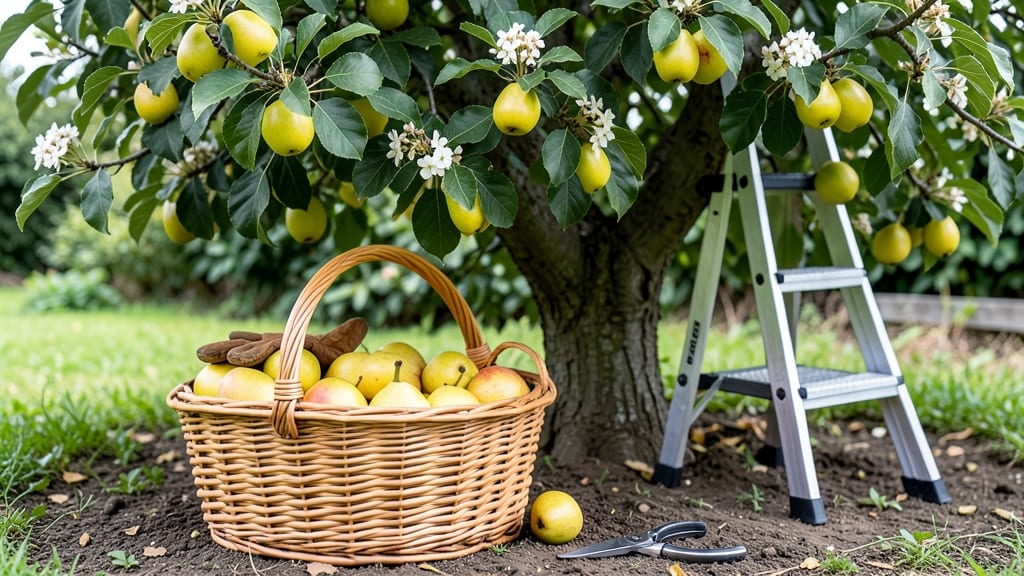
Harvesting Bartlett pears at the right time ensures sweet, juicy fruit instead of sour or mealy disappointments—this is the golden window you’ve been waiting for.
Picture this: you’ve nurtured your 🍐 Bartlett pear tree all season, and now the moment of truth arrives. One wrong move, and your hard work turns to waste. The secret? A simple 3-finger press test that tells you exactly when to pick—no guesswork, no regrets.
Most Bartletts ripen between September and October, but climate and your zone (like 6a) shift that timeline. Too early, and they’re tart; too late, and they lose their snap.
I’ll show you how to spot the perfect balance—when the skin blushes golden, the stem separates cleanly, and that finger test gives just enough.
Once you master the timing, you’ll also learn how to store your harvest for weeks (or even months) so every pear stays as sweet as the day you picked it. Ready to turn your tree’s bounty into perfect fruit?

When to harvest Bartlett pears: ideal ripeness timeline & climate factors
Timing your Bartlett pear harvest perfectly ensures sweet, juicy fruit instead of sour or mealy disappointments. These pears are climacteric fruits, meaning they ripen best after picking—so harvest when they're firm but yielding, not fully ripe on the tree.
The ideal window spans late summer to early fall, but exact timing depends on your USDA zone and local climate.
In USDA zones 6-8, Bartlett pears typically reach harvest readiness between mid-September and early October. Cooler zones (5 or below) may need to harvest by late August to avoid first frost damage, while warmer zones (9+) can extend harvesting into November.
Always monitor your tree's progress rather than relying solely on calendar dates.
Climate plays a critical role: warm days and cool nights accelerate ripening, while hot summers or early frosts can disrupt the process. A first-frost date within 4-6 weeks of your expected harvest signals it's time to act—Bartletts won't survive freezing temperatures on the tree.
The optimal harvest window balances ripeness with frost risk. In most regions, aim to harvest when 70-80% of the fruit shows readiness signs. Leave a few pears on the tree to ripen naturally as a reference point for future years.
Here’s how your USDA zone affects Bartlett pear harvest timing:
| USDA Zone | Harvest Window | Key Climate Factors | Frost Risk |
|---|---|---|---|
| Zones 3-5 | Late August - Early September | Short growing season; prioritize early-ripening varieties | High (first frost often by October 15) |
| Zones 6-8 | Mid-September - Early October | Moderate climate; ideal for Bartletts | Moderate (first frost typically October 30) |
| Zones 9-11 | October - November | Long growing season; may require thinning for optimal ripening | Low (frost rare before December) |
Temperature fluctuations during ripening create Bartlett pears' signature sweetness. Daytime highs of 75-85°F combined with nighttime lows of 50-60°F produce the best flavor profile. If summer temperatures exceed 90°F for extended periods, pears may ripen unevenly or develop off-flavors.
Bartlett pears need 3-4 years of growth before producing significant fruit, and their harvest timing stabilizes after that. In my Zone 7 garden, I’ve found that pears harvested in early October ripen perfectly indoors, while those left on the tree past mid-October risk frost damage or mealiness.
Watch for these visual ripeness cues to confirm harvest readiness: skin color shifting from green to golden-yellow with a slight blush, and the fruit feeling heavy for its size. The stem end may also dry slightly and become woody—a sign the pear is nearing peak ripeness.
Protect your harvest by monitoring weekly temperature forecasts in late summer. If a hard frost (below 28°F) is predicted within 10 days, harvest immediately, even if the pears aren’t fully ripe. They’ll continue ripening indoors, though flavor may not reach its peak.
For gardeners in cooler climates, consider planting early-ripening Bartlett varieties or using row covers to extend the growing season. In warmer areas, shade cloth can prevent sunburn on ripening fruit, which can occur when temperatures exceed 95°F.
Timing your harvest correctly transforms Bartlett pears from sour to sweet in just a few weeks. With the right climate awareness and ripeness tests, you’ll enjoy homegrown pears at their peak—ready to eat fresh, bake, or preserve for winter.
The 3 finger-press test: how to check Bartlett pear sweetness & firmness
Determining the Bartlett pear harvest time isn’t just about waiting for fall—it’s about mastering the 3 finger-press test. This simple method helps you gauge fruit firmness and sweetness without guessing.
When done right, you’ll know exactly when your pears are ready-to-pick—neither too tart nor mushy. The test combines visual cues with tactile feedback to give you confidence every harvest season.
Start by selecting a representative pear from your tree—avoid those near the edges, as they may ripen faster or slower. Look for skin color changes first: ripe Bartletts shift from green to golden-yellow with a slight rosy blush.
This color shift often happens just before the finger-press test confirms ripeness. Pay attention to the stem end too—it should feel slightly woody and dry, another sign of maturity.
⚠️ callout warning
Bartlett pears ripen after harvest. Picking too early means sour, firm fruit—even if it looks ripe. Wait until the 3 finger-press test confirms 0.5–1.5 lbs of pressure yields slightly, but the pear doesn’t dent deeply. Overripe pears become mealy and lose flavor. Check weekly in September–October to avoid missing the window!
Now for the test itself: use your thumb, index, and middle finger to gently press the pear’s blossom end (the opposite side of the stem). Apply firm but gentle pressure—think of it like squeezing a stress ball.
If the pear yields slightly (about ½ inch) but doesn’t dent deeply, it’s ready-to-pick. This usually requires 0.5–1.5 lbs of pressure, similar to pressing a ripe avocado. If it feels rock-hard, wait 3–5 days and retest.
Distinguishing between ready-to-pick and overripe pears is where many gardeners stumble. An overripe Bartlett will dent deeply under pressure, feel soft and spongy, and may even separate from the stem when twisted gently.
At this stage, the flesh turns grainy and loses sweetness. To avoid this, harvest in the morning when pears are coolest—this gives you the most accurate finger-press test results.
Common mistakes include testing too hard or ignoring visual cues. If you press with your whole hand, you’ll crush the fruit instead of gauging firmness. Also, don’t rely solely on size—some pears stay small but ripen fully.
Instead, combine the 3 finger-press test with color and aroma checks. A ripe Bartlett will also smell sweet and floral near the stem. Write down your test results for a few weeks to track patterns in your climate.
Once you’ve mastered the finger-press test, harvesting becomes second nature. Pick pears on a dry morning to reduce bruising, and store them in a cool, dark place (like a basement) to ripen further.
With practice, you’ll anticipate the Bartlett pear harvest time like a pro, ensuring every pear you bring in is perfectly sweet and firm. Happy harvesting!