
Picking
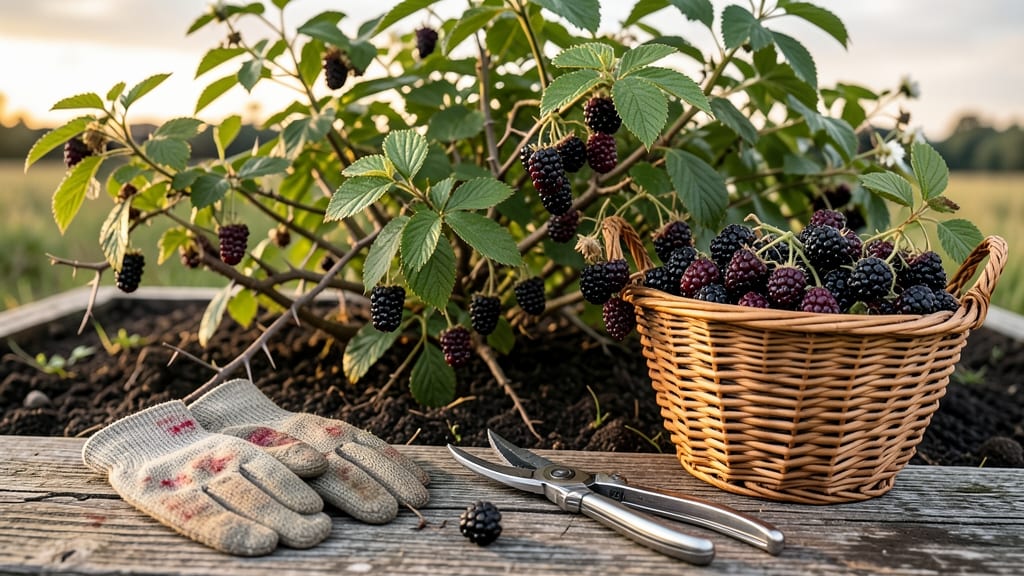
Timing the blackberry harvest season right means the difference between sweet, juicy fruit and tart, underripe disappointment—and mastering it is easier than you think.
Picture this: you’re reaching for a handful of 🫐 blackberries, only to find them mealy or still tart. It’s a common mistake, but one that’s entirely avoidable with the right knowledge. The key lies in understanding when your bushes are ready to yield their best flavor.
In USDA Zone 6a, blackberry harvest season typically kicks off in late July and stretches through September, but regional climate and variety play huge roles. Early-season types like Chester ripen first, while latecomers like Natchez hold out until early fall.
Below, I’ll walk you through the exact signs of peak ripeness, how sunlight and temperature speed up (or slow down) the process, and a few pro tips to extend your harvest window without overpicking or damaging your plants.
Blackberry harvest season: exact timing and climate Zones
Knowing exactly when to harvest your blackberries depends heavily on your USDA hardiness zone and the specific variety you're growing. In my experience, timing can vary by 2-4 weeks depending on whether you're in Zone 3 or Zone 10.
Early-season varieties might ripen as soon as late June, while late-season types can stretch into October in warmer climates.
Temperature plays a crucial role too. Warmer zones (7-10) often see harvests starting 2-3 weeks earlier than cooler zones (3-6).
For example, my Thornless Chester plants in Zone 7 consistently produce ripe berries by mid-July, while the same variety in Zone 5 might not reach peak ripeness until early August.
Sunlight exposure also accelerates ripening - plants with full sun exposure (6+ hours daily) will ripen 10-15% faster than those with partial shade.
The comparison table below breaks down exact harvest windows by zone and variety type, plus how temperature affects ripening speed in your specific growing conditions.
If you're growing everbearing varieties like Triple Crown, you'll notice two harvest waves each season. The first flush comes in early summer, while the second, larger harvest appears in late summer/fall.
This dual production is why many gardeners in Zones 6-9 prefer everbearing types - they maximize your harvest window from June through September.
For floricane varieties (like Natchez or Ouachita), all fruit forms on second-year canes, so harvest timing shifts to late summer when these canes mature.
In my Zone 7 garden, I've found that pruning out old canes in winter ensures the new canes produce fruit exactly 12-14 months later - a reliable schedule that's easy to plan around.
Extreme temperatures can disrupt this timing. Heatwaves above 90°F may cause berries to ripen 20-30% faster but often results in smaller, less flavorful fruit. Conversely, cool, cloudy summers can delay ripening by 3-4 weeks, especially in Zones 3-5.
I've learned to monitor my local growing degree days (GDD) to predict ripening more accurately than just following calendar dates.
Sunlight duration also affects timing. Plants receiving 8+ hours of sun will ripen 1-2 weeks earlier than those with only 6 hours. In my Zone 8 garden, I've noticed that south-facing trellises produce ripe berries 5-7 days ahead of those on north-facing rows.
This is why proper site selection is just as important as choosing the right variety for your zone.
One common mistake I see is assuming all blackberries ripen at the same time. In reality, each cane produces fruit over 7-10 days, with new berries forming at the base while older ones ripen at the tips.
This staggered ripening means you'll need to harvest in batches over 2-3 weeks rather than all at once. The key is to check your plants every 2-3 days during peak season to catch berries at their sweetest.
For gardeners in Zones 3-5, early frosts can cut harvests short. I've found that row covers or low tunnels can extend the season by 2-3 weeks in these cooler climates.
Meanwhile, in Zones 9-10, late frosts in spring might delay flowering, pushing back harvest timing by 3-4 weeks. Understanding these regional patterns helps you adjust both your planting dates and harvest expectations
How to test blackberry ripeness: 5 key signs of peak flavor
Picking blackberries at the right moment transforms your harvest from sour to sweet. The secret? Knowing exactly when those 🫐 berries hit their flavor peak. Too early, and you’ll get tart, hard fruit.
Too late, and they’ll turn mushy or attract pests. The good news? With these 5 foolproof tests, you’ll never miss the window again.
Start by checking the berry color. Fully ripe blackberries should be deep black (for black varieties), deep red, or purple—depending on your plant type. A reddish tint or green patches mean they’re still maturing.
Pro tip: Don’t rely on color alone—some varieties like Triple Crown stay red even when ripe.
Blackberries should be fully dark (black, red, or purple) with no green or light spots.
Press lightly—ripe berries yield slightly but don’t squish like overripe fruit.
Grasp the berry and pull gently—it should separate cleanly from the plant.
Sniff the berry—ripe ones emit a fruity, slightly floral scent.
Check for fresh berries forming at the plant’s base—this signals peak harvest time.
Next, perform the stem test, one of the most reliable tricks. Grasp a berry between your thumb and forefinger and pull gently toward you. If it detaches easily (without the stem breaking off), it’s ready.
If the stem resists or snaps, wait another day or two. This test works best in the morning when berries are firmest.
Avoid the common mistake of picking berries that are too soft or mushy. Overripe blackberries lose their structure and flavor, plus they’re more prone to bird attacks or mold.
Similarly, hard, green berries won’t ripen further once picked—so leave them on the plant. The sweetest berries are those that pass all five tests above.
For pro harvesters, taste-test a few berries from different parts of the plant. Flavor can vary slightly due to sun exposure or nutrient distribution. If some clusters taste tart while others are sweet, prioritize the sweeter ones and return later for the rest.
Remember: blackberries don’t ripen after picking, so timing is everything!
Once you’ve mastered these signs, you’ll know exactly when to harvest for the best flavor. Store your freshly picked berries in the fridge for up to 3 days or freeze them for longer-term use. Happy picking! 🫐