
Picking
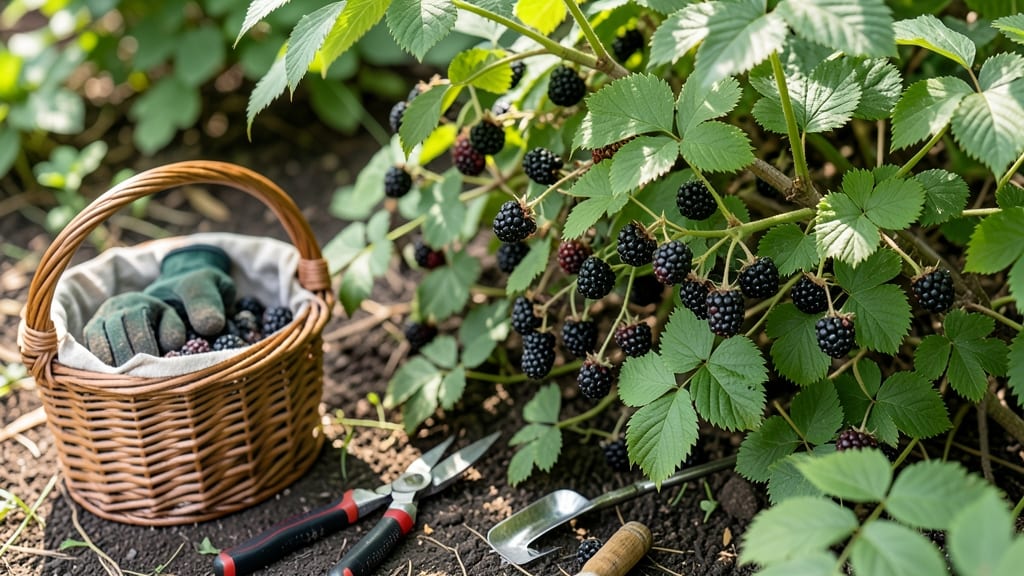
Knowing the blackberry harvest time means the difference between jam that tastes like summer and something that could pass for a science experiment.
Picking blackberries at the perfect ripeness transforms your jam, pies, and snacks from good to extraordinary—but how do you know when they're truly ready? The answer lies in three simple tactile tests that take seconds but save hours of regret later.
Most blackberries ripen between July and September in USDA Zone 6a, but the exact window depends on your variety and local climate. A warm spring might push harvests earlier, while cooler summers can delay them by weeks.
In this guide, I’ll walk you through the three foolproof ways to spot peak ripeness—no guesswork, no wasted berries—plus how to store your harvest so it stays fresh for weeks.

3 Tactile tests to determine blackberry harvest time
Picking blackberries at the perfect moment ensures the sweetest flavor and maximum yield. But relying on color alone can lead to overripe or underripe berries. Instead, I use three science-backed tactile tests—color, firmness, and stem detachment—to guarantee peak ripeness every time.
These methods work for all blackberry varieties, from thornless to traditional types.
Why tactile tests? Because blackberries soften rapidly once fully ripe, and overripe berries can spoil quickly. The key is catching them at that sweet spot where they’re firm enough to handle but yield just enough to signal readiness.
Let’s dive into the three foolproof tests I swear by every harvest season.
🌱 3 Tactile Tests for Perfect Blackberry Ripeness
- 🫐 Color Test: Fully ripe blackberries should be deep black, purple, or red (depending on variety) with a glossy sheen. Avoid berries with green or white patches, as they’re underripe.
- 🤲 Firmness Test: Gently squeeze the berry—it should feel firm but slightly yielding, like a ripe peach. If it’s rock-hard, it’s not ready; if it’s mushy, it’s overripe.
- 🍃 Stem Detachment Test: The berry should easily detach from the plant with light pressure (no tugging!). If it resists, it’s not ripe; if it falls apart, it’s past its prime.
Pro Tip: Check for new flower clusters forming behind the current berries—this confirms you’re harvesting at the right time!
Start with the color test to narrow down candidates. Look for berries that match your variety’s mature color—deep black for most types, purple for some heirlooms, or red for varieties like ‘Chester.’
A glossy surface is a tell-tale sign of ripeness, while dull or patchy colors mean they need more time.
Next, perform the firmness test on your shortlisted berries. Use your thumb and forefinger to apply gentle pressure. A ripe blackberry will yield slightly but won’t squish like overripe fruit. Think of it as the perfect balance between a tennis ball (too firm) and a water balloon (too soft).
This test helps avoid seedy or mealy berries that ruin jams and pies.
The stem detachment test is my favorite because it’s the most reliable. Grasp the berry between your thumb and index finger and lift gently. If it separates cleanly from the plant, it’s ready to pick.
If it hangs on stubbornly, it’s not ripe yet. If the fruit crumbles when you pull, it’s overripe and best used immediately for baking or freezing.
Timing matters too. In USDA Zone 6a, blackberries typically ripen between July and September, but climate and variety shift this window. For example, thornless varieties like ‘Natchez’ often ripen earlier than traditional types. Always harvest in the morning when temperatures are cooler to preserve freshness and flavor.
One common mistake? Picking berries based on size alone. A large berry that’s still firm isn’t necessarily ripe—it might just be waterlogged from rain. Combine all three tests for 100% accuracy.
And remember: Blackberries ripen unevenly on the same cane, so check multiple berries before committing to a full harvest.
Once you’ve mastered these tests, you’ll never waste time on underripe or overripe blackberries again. The result? Jams with perfect sweetness, pies with burst-of-flavor, and snacks that taste like summer. Happy harvesting!
Best blackberry harvesting techniques for maximum yield
Timing your blackberry harvest correctly ensures you get the sweetest, juiciest berries while maximizing your plant's productivity. Harvesting at the right moment prevents overripe fruit from spoiling on the vine and encourages future yields.
I’ve learned that patience pays off—waiting for peak ripeness makes all the difference in flavor and texture.
To make the most of your harvest, start by checking the berry color and firmness every few days during peak season. Blackberries should be a deep, uniform color—black, purple, or red depending on the variety—and feel plump but slightly soft to the touch.
Ignoring these cues often leads to underripe or overripe berries.
Essential Blackberry Harvesting Steps
- 🌱 Pick berries in the morning when temperatures are cooler to preserve freshness and flavor.
- ✂️ Use sharp pruning shears or scissors to avoid crushing berries and damaging canes.
- 🫐 Harvest every 2-3 days during peak season to prevent overcrowding and improve air circulation.
- 💧 Store berries in the fridge in a single layer with a paper towel to absorb moisture and extend shelf life.
- ☀️ Avoid harvesting after rain to prevent mold growth and waterlogging of the fruit.
One of my biggest mistakes was harvesting blackberries too early to avoid bird damage. While birds love ripe blackberries, harvesting in batches—picking clusters as they ripen—reduces losses and keeps your plants productive. I now use lightweight harvesting baskets with handles to collect berries efficiently without straining my back.
After picking, handle berries gently to avoid bruising, which shortens their shelf life. Sort through your harvest immediately, discarding any damaged or moldy berries. For long-term storage, freeze blackberries on a tray lined with parchment paper before transferring them to a sealed bag.
This method preserves their texture and flavor for up to 12 months.
If you’re growing multiple blackberry varieties, prioritize harvesting the earliest-ripening ones first. Thornless varieties like 'Cheyenne' or 'Natchez' often ripen slightly earlier than traditional types, so plan your harvesting schedule accordingly. Keeping a small notebook to track ripening times by variety helps streamline future harvests.
Finally, don’t forget to prune and fertilize after your main harvest to encourage next year’s crop. A balanced fertilizer with equal parts nitrogen, phosphorus, and potassium—like a 10-10-10 blend—supports root and cane growth for a bountiful harvest season after season.