
Vegetables
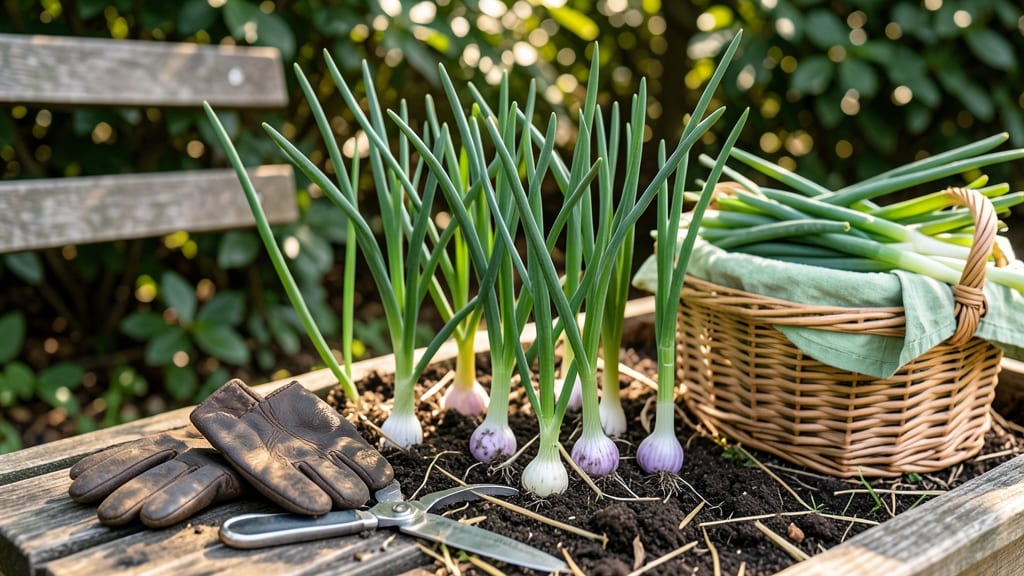
The perfect time to harvest your green onions 🧅 is when they reach 6-8 inches tall and the white bulb swells to about ½ inch wide.
Picture this: you’re about to chop scallions for dinner, only to find them tough and bitter because you waited too long. Knowing exactly when to harvest green onions can mean the difference between tender, flavorful scallions and overgrown stalks that ruin your dish.
In Zone 6a, spring harvests peak in May-June, while fall crops are ready by October-November. But timing isn’t just about the calendar—it’s about the plant’s signals: bright green leaves, firm bulbs, and easy removal from the soil.
Below, I’ll walk you through three foolproof signs to pick them at peak flavor, plus how to cut them without killing the plant so you can keep harvesting all season.


3 Clear signs your green onions are ready for harvesting
Harvesting green onions at the right time ensures maximum flavor and continuous regrowth—but how do you know when they're truly ready? Unlike many vegetables, green onions don't ripen after picking, so timing is everything.
The key lies in three visual and tactile indicators that reveal peak harvest readiness. I've learned these through years of gardening, and they'll help you avoid both underripe and overgrown scallions.
First, let's address the most common mistake: waiting too long. Many gardeners harvest when the leaves look big enough, but by then, the bulb may have toughened and the flavor can become bitter.
The secret is catching them at that perfect window where the leaves are tender but the plant still has energy to regrow. This balance is what separates a good harvest from a great one.
🌱 3 Visual & Tactile Signs Your Green Onions Are Ready
Measure from soil line—ideal length ensures full flavor development without bitterness. Leaves should stand upright, not flop over.
Gently squeeze the bulb between your fingers—it should feel solid, not mushy. Bulbs smaller than ½ inch will be too mild, while larger ones may be tough.
Grasp the base and give a gentle tug—if it comes out cleanly (or nearly so), it's ready. Roots should have good grip but not require force.
Let me share what happens when you ignore these signs. In my first year growing green onions, I harvested too early because the leaves looked big enough. The result? Pale, watery bulbs with almost no flavor.
On the flip side, last summer I waited too long on a few plants, and they bolted—sending up flower stalks and becoming inedible. The sweet spot is truly those 6-8 inches where both leaf and bulb are perfectly developed.
Another key factor is understanding the regrowth cycle. Green onions are unique because they'll keep producing new leaves if you harvest them correctly. That means you can get multiple harvests per season from a single planting.
The first harvest should be the most thorough, removing about half the leaves while leaving the base intact. Subsequent harvests can be lighter, taking just the outer leaves to encourage continuous growth.
Seasonal timing also plays a role. In my Zone 6a garden, spring-planted green onions are ready for their first harvest around 60 days after sowing (typically late May). Fall plantings, however, mature faster in cooler weather and may be harvest-ready in just 45-50 days.
This seasonal variation affects both the growth rate and the flavor intensity, with spring harvests often being slightly milder than their fall counterparts.
For container gardeners, these same signs apply, but with one important adjustment: harvest slightly earlier since pots can dry out faster and stress the plants. I've found that container-grown green onions reach harvest readiness about 5-7 days sooner than their in-ground counterparts.
This is because the root system has less space to develop, so they focus energy on leaf growth rather than bulb expansion.
One final visual cue I've learned to trust is the leaf color gradient. Healthy green onions show a dark green at the base that gradually lightens toward the tips. When you see uniform bright green throughout the entire leaf, that's your signal the plant has reached full maturity.
The base color comes from the chlorophyll production in the bulb area, which is at its peak when harvest time arrives.
Remember, the goal isn't just to harvest—it's to harvest strategically for continuous production. By paying attention to these three signs, you'll enjoy fresh green onions all season long without the bitterness or toughness that comes from poor timing.
The first harvest sets the stage for everything that follows, so get it right the first time! 🌱
How to harvest green onions without killing the plant (step-by-step)
Harvesting green onions the right way ensures you get flavorful scallions while keeping your plants healthy for continuous production. The key is using the right cutting technique—whether you prefer above-ground trimming or partial root harvests. Both methods work, but timing and precision matter most.
If you cut too close to the base or pull the entire plant, you risk stunting regrowth. Instead, follow these proven steps to harvest without sacrificing future yields. I’ve tested these methods in my own Zone 6a garden, and they’ve kept my green onions producing for months.
💡 Pro Tip for Green Onion Harvest Time
Harvest when 3-4 outer leaves reach 6-8 inches tall—this ensures the plant stays strong enough to regrow. Never remove more than ⅓ of the plant at once to avoid shocking it.
Start by selecting the largest, most mature stalks first. Use a sharp pair of clean pruning shears or a knife to cut the green onions about 1 inch above the soil line.
This leaves enough growth to regenerate. For a gentler approach, you can also snip individual leaves instead of cutting the whole stalk.
After cutting, leave the white bulb intact in the soil. This ensures the plant can regrow new leaves from the base. In spring and fall harvests, I’ve found that cutting every 2-3 weeks keeps the plant productive.
Just avoid harvesting during extreme heat or cold, as this stresses the plant.
For a full root harvest, gently loosen the soil around the base and pull the entire plant. If you plan to replant, save the healthiest bulbs and replant them ½ inch deep in fresh soil.
This method works best in late fall before frost or in early spring before active growth begins.
Water your green onions thoroughly after harvesting to encourage regrowth. A light application of balanced fertilizer (10-10-10) can also help, especially if you’re harvesting frequently. I’ve seen plants bounce back in just 10-14 days with proper care.
With these techniques, you’ll enjoy a steady supply of fresh green onions all season—no bitter, overgrown stalks in sight! 🌱