
Picking
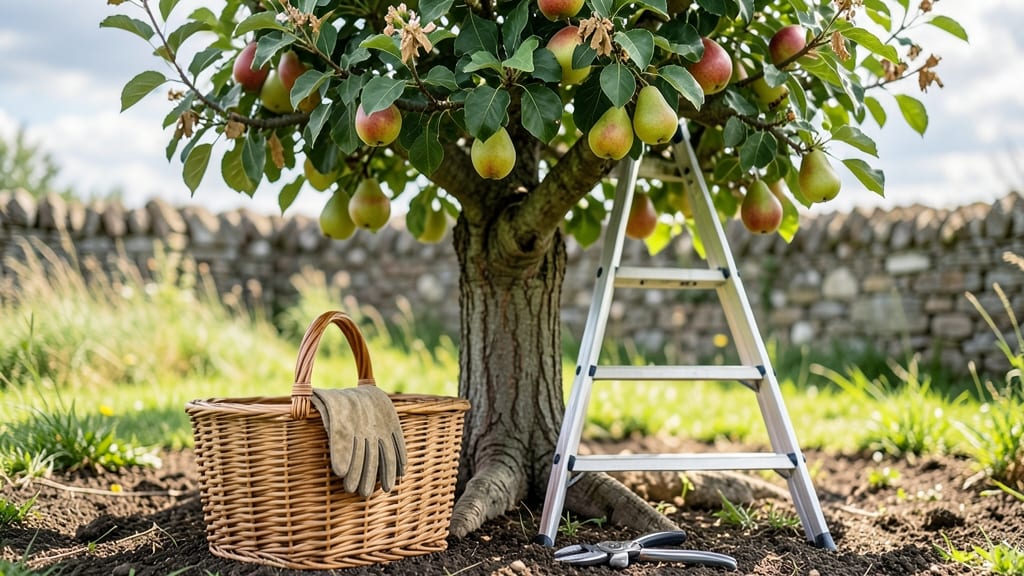
Knowing the exact harvest time for pears means the difference between buttery sweetness and mealy disappointment—here’s how to nail it every season.
Picture this: you twist a pear from the tree, and it releases with a faint pop. The skin has deepened to a rich gold or blush, and when you press near the stem, it gives just slightly—like a ripe peach.
That’s your cue. Miss this window, and you’re left with fruit that either won’t soften indoors or turns mushy before you can enjoy it.
Most pears in USDA Zone 6 ripen between late August and October, but the real secret lies in the color-stem test. A uniform blush, a stem that separates cleanly, and a gentle yield under pressure?
Those are the signs you’ve timed it right. Below, I’ll walk you through how to spot these cues, adjust for your region, and avoid the three mistakes that ruin harvests every year.
You’ll also discover how to store your pears to keep them crisp for weeks—because even the perfect harvest deserves a second chance. Let’s get started.

How to use the color-stem test for pears (step-by-step guide)
The color-stem test is my go-to method for determining when pears are truly ripe and ready to pick. Unlike apples, pears don’t ripen on the tree—they need to soften off the branch.
This test combines three key visual and tactile cues: stem color, fruit blush, and stem resistance. Mastering it ensures you harvest pears at peak flavor, avoiding the pitfalls of underripe hardness or overripe mushiness.
Different pear varieties ripen at slightly different times, so I always check the stem color first. For example, Bartlett pears develop a golden-yellow hue, while Bosc pears turn deep green with a slight russet blush.
The stem itself should also change—look for a shift from green to brown or tan. This color shift signals the fruit’s internal sugars are peaking, making it the perfect time to harvest.
Here’s how I perform the test every week during harvest season—it takes just minutes and saves hours of guesswork later.
Gently grasp the stem attachment where the fruit meets the branch. A ripe pear’s stem will show 50-75% color change—from green to brown or tan. For Bartletts, aim for golden-brown; for Boscs, look for a deep green with russet spots.
Examine the skin color for uniform blush. Unripe pears may have patchy green or uneven coloring. A ripe pear’s skin should be consistently colored—no green patches near the stem. For example, Anjou pears ripen to a deep red blush.
Gently twist the pear at the stem. If it separates cleanly with minimal force, it’s ready. If the stem resists or snaps off abruptly, wait 3-5 days. A ripe pear should feel like it’s giving slightly—not rock-hard or mushy.
Apply gentle pressure near the stem. A ripe pear should yield slightly (like a ripe avocado) but not feel soft or squishy. If it’s rock-hard, it needs more time; if it’s too soft, it’s overripe and best used immediately.
Refer to your pear variety’s harvest window. For example, Bartletts ripen in late summer (August-September), while Boscs are best in early fall (September-October). Cross-check your findings with local climate patterns.
Timing your harvest based on the color-stem test is especially critical for Bartlett pears, which ripen fastest. I’ve learned that picking them too early results in bland, mealy fruit, while waiting too long turns them into a mushy puddle.
For Bosc pears, the test is equally vital—their firm texture relies on precise ripeness. Once harvested, store them at 32–40°F (0–4°C) to slow ripening.
Pro tip: If you’re unsure, harvest a few pears early and let them ripen at room temperature. This lets you monitor progress without risking overripe fruit on the tree.
I always keep a sample batch indoors to test flavor before committing to a full harvest. This method has saved me from wasting entire crops of underripe pears!
Remember, pears continue ripening after harvest, but only up to a point. Overripe pears develop soft spots and a fermented smell—so don’t wait too long. The color-stem test is your best tool to balance ripeness and freshness, ensuring every pear you pick is a sweet, juicy success.
Now that you’ve mastered the test, your next challenge is storing those pears properly. Once harvested, keep them in a cool, dark place (like a basement or fridge) to maintain crispness. With this method, you’ll enjoy homegrown pears at their peak for weeks!
Best time of year to harvest pears by region (climate guide)
Harvesting pears at the right time ensures maximum flavor and texture, but the perfect timing depends entirely on your climate.
In cool climates like the Pacific Northwest or New England, pears typically ripen late summer to early fall, while warm climates in the Southeast or Southwest may see harvests as early as mid-summer. Temperature plays a huge role—cooler nights slow ripening, while hot days can speed it up.
Regional differences also matter. For example, Bartlett pears in Zone 5-6 often ripen by late August to September, while Bosc pears in Zone 8-9 may not reach peak ripeness until October or November.
Understanding your local frost dates and average temperatures helps you predict the best harvest window for your specific pear varieties.
| Climate Type | Best Harvest Months | Key Temperature Cues | Pear Varieties |
|---|---|---|---|
| Cool (Zones 3-6) | Late August - Early October | 50-70°F nights, 75-85°F days | Bartlett, Anjou, Seckel |
| Temperate (Zones 7-8) | Mid-September - November | 60-80°F nights, 85-95°F days | Bosc, Asian, Moonglow |
| Warm (Zones 9-11) | July - Early September | 70-90°F consistent temps | Orient, Kieffer, Red Anjou |
In cool climates, pears often need cooler nights to develop full sweetness. If temperatures stay too warm, pears may ripen too quickly and become mealy. I’ve found that checking the stem color is crucial—when it turns brown and separates easily, that’s your cue.
In warm climates, pears may ripen faster, so monitor them weekly starting in mid-summer.
Don’t assume all pears ripen at once! Some varieties like Asian pears stay firm longer, while Bartletts soften quickly. If you’re unsure, use the gentle twist test: grasp the pear and twist gently—if it releases easily, it’s ready.
Harvesting too early means bland flavor, while waiting too long can lead to overripe fruit that’s mushy or attracts pests.
Pro tip: Keep track of your local first frost date. In cooler regions, you’ll want to harvest at least 2-3 weeks before frost to avoid damage. In warmer areas, pears may continue ripening off the tree, but they’ll never reach their peak flavor if left too long.
Always prioritize color consistency and stem separation over calendar dates.
Finally, store harvested pears in a cool, dark place (like a basement or garage) to slow ripening. If you’re in a warm climate and harvest early, pears can continue ripening indoors at room temperature—but check them daily to avoid spoilage.
The right timing makes all the difference between juicy perfection and disappointing texture!