
How To
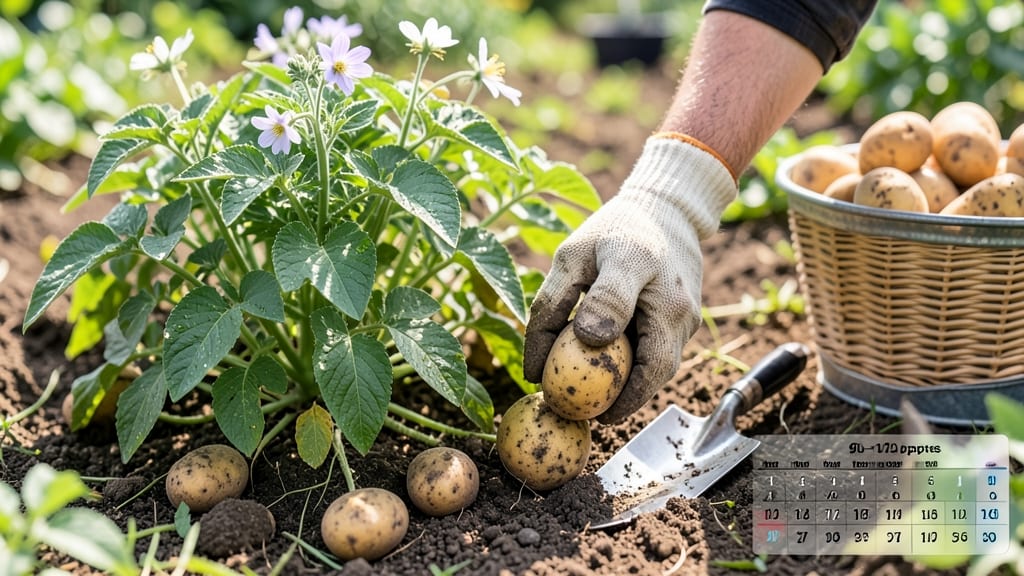
Harvesting potatoes takes anywhere from 60 to 120 days from planting, depending on the variety and growing conditions — and knowing the exact timeline can save you from digging too early or too late.
Picture this: you’ve patiently waited, watered, and fertilized, only to pull up a handful of green, underdeveloped spuds or, worse, shriveled tubers that fell victim to waiting too long. The right timing isn’t just about days; it’s about recognizing the perfect signs your 🥔 are ready.
Early varieties like ‘Yukon Gold’ can be ready in as little as 60 days, while late varieties like ‘Russet’ might need 100-120 days to reach full maturity. Climate, soil, and even the time of year play a role, too.
In this guide, I’ll break down the exact days for popular varieties, teach you how to spot the ideal harvest cues, and share tips to adjust for your zone so you’re digging up potatoes at their peak — every time.

Potato harvest timing by variety: exact days from planting to ready
Timing your potato harvest perfectly depends entirely on the variety you're growing. Early harvests risk small, underdeveloped tubers, while waiting too long can lead to shriveling or disease. Each potato type has a specific maturity window, measured from planting seed potatoes to harvest-ready tubers.
Understanding these timelines helps you plan meals and storage needs with precision.
Most gardeners plant potatoes in early spring (4-6 weeks before last frost) and expect harvests between 70-120 days. However, this range varies wildly—some varieties like Red Norland mature in just 60 days, while others like Russet Burbank need 100+ days.
The key is matching your variety to your growing season and climate zone.
| Variety | Days to Maturity | Harvest Window | Key Harvest Cues |
|---|---|---|---|
| Yukon Gold | 90-110 days | Late July - Early September | Flowers fade, skin toughens, tops yellow |
| Russet Potatoes | 100-120 days | Mid-August - October | Large tubers, stems brown, foliage dies back |
| Red Potatoes (e.g., Red Norland) | 60-80 days | Early July - Mid-August | Small tubers, flowers appear, tops wilt |
| Fingerling Potatoes (e.g., Purple Peruvian) | 85-100 days | Late July - September | Long tubers, skin resists pressure, tops brown |
| New Potatoes (e.g., 'Early Rose') | 45-55 days | Late June - Early July | Thin skin, harvest before flowering |
For Yukon Gold potatoes, aim for harvest between 90-110 days after planting. These buttery varieties thrive in cooler climates and signal readiness when their flowers fade and the skin toughens against a thumbnail press.
I always check for yellowing foliage as a final cue—this means the plant is redirecting energy to the tubers.
Russet potatoes take longer—100-120 days—because they develop larger, starchy tubers. Look for brown stems and foliage dying back before harvesting. If you wait too long, the skins may crack or the tubers could sprout. In my garden, I mark the planting date on a calendar and set reminders for the harvest window.
If you grow red potatoes like Red Norland, you’ll harvest earlier—60-80 days. These varieties are perfect for short seasons or container growing. The trick is to harvest when the flowers appear but before the tops fully yellow.
I often dig a test tuber at 50 days to check size—if they’re golf-ball sized, they’re ready!
Fingerling potatoes like Purple Peruvian need 85-100 days and reward patience with their unique shapes. Harvest when the skin resists pressure and the tops turn brown. I’ve found that fingerlings stored well in cool, dark conditions for up to 3 months, making them great for fall and winter meals.
For new potatoes, timing is critical—harvest between 45-55 days before the plant flowers. These tender tubers are best enjoyed fresh, as they won’t store long.
I use a small fork to gently loosen the soil around the plant and check for thin-skinned tubers about the size of a chicken egg.
Climate plays a huge role in harvest timing. In warmer zones (8-10), potatoes may mature faster, while cooler zones (3-5) could extend the season. I always adjust my planting date by 2-3 weeks earlier in hotter climates to avoid bolting.
Mulching with straw also helps regulate soil temperature for consistent growth.
Pro tip: Keep a harvest journal to track your potatoes’ progress. Note the day you plant, when flowers appear, and when the tops yellow. Over time, you’ll spot patterns in your garden’s unique conditions.
Last year, my Yukon Golds matured 10 days earlier than expected because of a dry spell in July.
Remember, harvesting too early means small, starchy tubers, while waiting too long risks shriveled or diseased potatoes. The best approach? Monitor your plants closely and use the thumbnail test: press a tuber gently—if the skin resists, it’s ready!
How to tell when potatoes are truly harvest-ready (beyond days)
Counting days until potato harvest can feel like waiting for a slow-moving train—especially when your seed potatoes were planted early or late. While most varieties mature in 60-120 days, relying solely on a calendar risks harvesting underdeveloped tubers or waiting too long for shriveled, diseased potatoes.
Instead, focus on visual and tactile cues that tell you the real story about your crop's readiness.
Your potato plants send clear signals when it's time to dig. The foliage color shifts from vibrant green to yellow, while the skin of tubers becomes tough enough to resist a gentle thumbnail press.
Even the soil temperature plays a role—warmer ground speeds up maturity, while cooler climates may delay these signs. Let's break down the field-tested indicators that guarantee you'll harvest at peak flavor and texture.
- 🌱 Foliage Yellowing: 70-80% of plant tops turn yellow or brown and begin to die back naturally.
- 🤲 Skin Toughness: Press a thumbnail into a tuber—if it resists penetration, the skin is set and harvest is imminent.
- 📏 Tuber Size: Compare tubers to the expected size for your variety (e.g., Yukon Golds should be 3-4 inches in diameter).
- 🌡️ Soil Temperature: Ground should be 60°F+—cooler soil slows maturity and increases rot risk.
- ⏰ Flowering Stage: Most varieties are ready 2-3 weeks after flowering, but early varieties may mature sooner.
Don't overlook the soil conditions around your potato plants. When the ground feels dry and crumbly at a depth of 6-8 inches, it's a sign that your tubers have stopped growing and are ready for harvest.
This dryness also reduces the risk of rot during digging. If your soil stays soggy, wait a few more days or harvest in dry weather to prevent damage.
Climate variations can throw off your harvest timeline. In cooler northern climates, potatoes may take 10-15 extra days to mature compared to warmer southern regions.
If you planted late-season varieties like Russet Burbanks, monitor the foliage die-back closely—these can take up to 120 days to reach full maturity. Conversely, early varieties like Red Pontiac may be ready in as few as 60 days, so don't wait too long!
One common mistake is harvesting based on flowering alone. While flowers signal the start of tuber formation, they don't indicate readiness—most varieties need 2-3 weeks post-flowering to reach harvest size. For new gardeners, dig up one test tuber when flowers appear to check its size.
If it's smaller than a golf ball, wait another week or two before committing to a full harvest.
Pro tip: For longer storage, harvest when the foliage is fully yellowed but before it dies completely. This allows tubers to cure naturally in the ground, developing thicker skins that resist rot.
If you're growing for immediate use, you can harvest slightly earlier when tubers are firm but still tender, such as when 50% of foliage yellows. Just be prepared for shorter storage life.