
How To
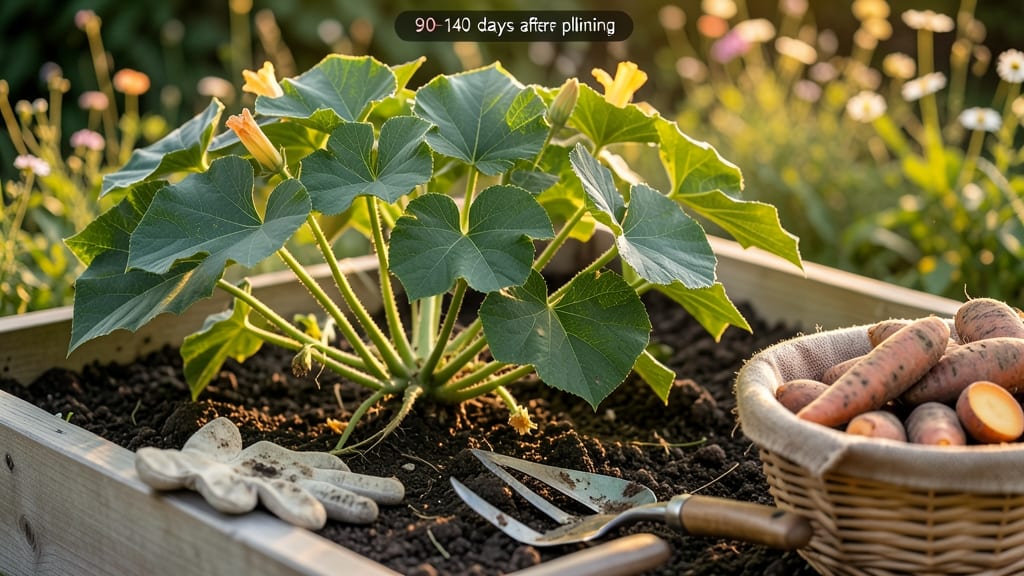
Harvesting sweet potatoes at the right time ensures perfect flavor and texture, and the window is narrower than you might think—typically between 90 and 120 days after planting.
Sweet potatoes left in the ground too long turn starchy and tough—while harvesting too early means small, underdeveloped tubers. Timing is everything, and these key signs will ensure you pull them at peak flavor and texture.
You’ll know they’re ready when the vines yellow and die back, the skin is firm and hard to pierce, and the tubers are at least 2 inches in diameter. But watch out for frost—even a light freeze can ruin your crop before it’s fully mature.
In this guide, I’ll walk you through the exact signs to look for, how to adjust for your climate, and what to do if you miss the window. No more guessing—just perfectly timed harvests every season.
Signs your sweet potatoes are ready for harvest (beyond days after planting)
Counting days after planting gives you a rough estimate, but sweet potatoes don't follow a strict calendar—they respond to seasonal cues and environmental conditions. Instead of guessing, look for these visual and tactile signs that your tubers are ready for harvest.
These clues tell you when your sweet potatoes have reached peak flavor and texture, regardless of how many days have passed since planting.
First, focus on the leaves and vines. When they start turning yellow-brown and wilt naturally, it’s a clear signal that the plant is redirecting energy to the tubers underground.
This process usually begins 8-10 weeks after planting, but it can vary based on your climate and variety. If your vines are still green and lush, your sweet potatoes likely need more time to mature.
Next, check the skin firmness of the tubers. Gently dig up one or two sweet potatoes and test their skin resistance. If the skin is hard and difficult to pierce with your fingernail, they’re ready.
Soft or easily pierced tubers are still growing and need more time. This tactile check is one of the most reliable ways to determine harvest readiness without relying solely on days after planting.
Here’s a quick reference for the key visual and tactile cues that indicate your sweet potatoes are ready for harvest:
| Sign | Description | Action |
|---|---|---|
| Vine Color | Leaves turn yellow-brown and wilt | Check tubers for firmness |
| Skin Firmness | Hard to pierce with fingernail | Harvest within 1-2 weeks |
| Tuber Size | 2-3 inches in diameter | Ideal for storage and flavor |
| Frost Warning | First frost approaching (below 50°F) | Harvest immediately to prevent damage |
| Growing Conditions | Dry soil or heat stress | Harvest early to avoid stress |
Don’t overlook the impact of frost on your harvest. Sweet potatoes are tender plants that can’t survive freezing temperatures. If a frost warning is issued and your vines haven’t died back yet, it’s time to harvest immediately.
Tubers left in the ground during a frost will become waterlogged and rot, ruining your crop. In regions with early frosts, plan to harvest 2-3 weeks before the first expected frost date.
Another critical factor is soil moisture. If your soil is dry or overly wet, it can stress the plant and affect tuber development. Aim for consistent moisture during the growing season, but reduce watering 2-3 weeks before harvest to allow the skin to toughen.
Overly wet soil can lead to soft, watery tubers, while dry soil can cause small, tough tubers. Balance is key to achieving the perfect harvest texture.
Pay attention to the size and shape of your sweet potatoes. While they can grow larger, tubers that reach 2-3 inches in diameter are typically at their peak flavor and storage potential. Larger tubers may become woody or fibrous, especially if left in the ground too long.
If you’re growing heirloom varieties, they might take slightly longer to reach this size, so adjust your expectations based on the specific variety you’re cultivating.
Finally, consider the regional climate where you’re growing. In warmer climates with longer growing seasons, sweet potatoes may take up to 140 days to mature, while in cooler regions, they might be ready in as few as 90 days.
If you’re in a short-season area, choose early-maturing varieties like Beauregard or Georgia Jet to ensure you can harvest before frost sets in.
By combining these visual cues, tactile tests, and an understanding of your local climate, you’ll know exactly when to harvest your sweet potatoes for the best results. Once you’ve confirmed they’re ready, it’s time to gently dig them up and prepare for storage or immediate use.
The key is to act quickly once the signs appear—sweet potatoes left in the ground too long lose their sweetness and quality.
How long to wait after planting: growing degree days explained
Counting days after planting sweet potatoes is a common approach, but it’s far from foolproof. Regional climates and temperature fluctuations can drastically alter tuber maturity. Instead, gardeners use growing degree days (GDD), a heat-unit system that accounts for actual growing conditions—not just calendar days.
This method ensures you harvest at peak sweetness and texture, regardless of whether summer was scorching or unusually cool.
For sweet potatoes, 1,500–2,000 growing degree days (calculated above a 50°F baseline) typically signal harvest readiness. This range translates to roughly 90–120 days in warm climates, but only 70–90 days in hotter regions like Zone 9 or 10.
Without accounting for GDD, you risk harvesting too early (small tubers) or too late (woody, fibrous roots).
🌡️ How to Calculate Growing Degree Days for Sweet Potatoes
- 1. Find your baseline: Sweet potatoes use a 50°F baseline.
- 2. Track daily highs/lows: Use a weather station or local NOAA data for average daily temps.
- 3. Calculate daily GDD: Subtract 50°F from the average daily temp. Example: (85°F + 65°F) ÷ 2 = 75°F avg → 25°F GDD.
- 4. Sum GDD over time: Add daily GDD until you hit 1,500–2,000 total.
- 5. Adjust for frost: Harvest 2–3 weeks before the first frost in your zone.
Pro Tip: Use free online GDD calculators (like Purdue Extension’s) to automate tracking. Input your last frost date and planting date for instant estimates.
Let’s say you planted sweet potatoes in Zone 7 on May 15. By August 15, you might accumulate 1,800 GDD—even if only 90 calendar days have passed.
This explains why tubers mature faster in hot climates (e.g., Zone 10) than in cooler ones (e.g., Zone 5). Ignoring GDD could mean harvesting 3–4 weeks too late in northern regions, resulting in woody, bitter tubers.
Regional examples highlight why GDD matters:
- Zone 5 (cool summers): Target 2,000 GDD (~120 days) due to slower growth.
- Zone 8 (warm summers): Aim for 1,600 GDD (~90 days) to avoid over-maturation.
- Zone 10 (hot summers): Harvest at 1,400 GDD (~75 days) to prevent tuber breakdown.
To simplify, bookmark this GDD cheat sheet for sweet potatoes: 1,500 GDD = Early harvest (smaller tubers) 1,800 GDD = Ideal sweetness/texture 2,000+ GDD = Risk of woody, fibrous roots Pair GDD tracking with leaf color changes (yellowing vines) for foolproof timing.
Remember: Frost is the ultimate deadline. Sweet potatoes cannot tolerate frost, and even light chilling (32°F) turns tubers black and inedible. Use GDD to estimate your harvest window, then monitor 10-day forecasts to pull tubers before the first frost.
Store them in a cool, dark place (55–60°F) to preserve sweetness for 4–6 months.