
Vegetables
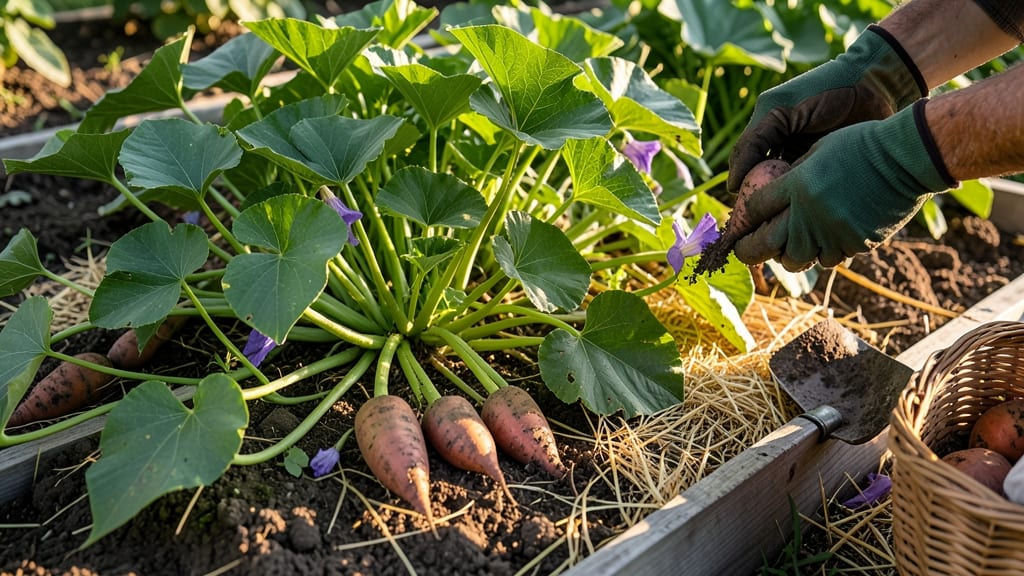
Timing the harvest of your sweet potatoes at just the right moment ensures peak flavor and a starchy, satisfying tuber 🍠 — but get it wrong, and you’ll end up with bland, fibrous roots.
Picture this: you’ve nurtured your sweet potatoes all season, and now the vines are yellowing, the leaves are crisping, and the skin is toughening. That’s your cue to dig—but how do you know if they’re truly ready?
Overharvest too soon, and you’ll miss out on that sweet, velvety texture. Wait too long, and the tubers turn woody and tough.
In this guide, I’ll show you how to read your plants for the perfect harvest window, from checking leaf color to testing skin firmness. We’ll also cover how climate and variety affect timing, so you can pull your sweet potatoes when they’re at their best.
By the end, you’ll know exactly when to dig for sweet, flavorful sweet potatoes that store well and taste amazing—no guesswork required.

How to test sweet potato harvest readiness using firmness and leaf signals
Sweet potatoes mature underground, so you can't see their progress like above-ground crops. Instead, focus on leaf signals and tuber firmness to determine the perfect harvest window. The key is catching them at peak sweetness—too early means small, bland tubers, while waiting too long risks tough, fibrous flesh.
Start monitoring your plants about 120 days after planting, when most varieties reach maturity. Look for yellowing vines and drying leaves as the first signs. These changes indicate the plant is redirecting energy to the tubers, a clear signal that harvest time is approaching.
Step-by-Step Harvest Readiness Test
- 1 Check vine health: Observe the vine color—healthy green vines mean tubers are still growing. When 50% of vines turn yellow and start dying back, the tubers are nearing maturity.
- 2 Test leaf toughness: Gently rub a leaf between your fingers. If it feels crispy and dry (like autumn leaves), the tubers are ready. Soft, green leaves mean they need more time.
- 3 Scratch the soil: Use your fingernail to scratch the top inch of soil. If the skin of exposed tubers feels hard and rough (not soft), they’re ready. Tender skin means they’re still growing.
- 4 Press for firmness: Gently squeeze a tuber through the soil. It should feel firm but not rock-hard. A soft tuber isn’t ready, while a hard one might be overripe.
- 5 Inspect the stem end: Dig up one tuber to check the stem end. If it’s yellow and dry, the tuber is mature. A green stem end means it’s not ready yet.
For optimal flavor, harvest when tubers are firm but not overly large. Larger sweet potatoes tend to be less sweet and more starchy. If you’re harvesting for long-term storage, wait until the vines are completely dead and the tubers are firm to prevent spoilage.
Timing matters for climate zones too. In hot climates (zones 8-10), sweet potatoes may mature faster—aim for harvest by late September. In cooler zones (6-7), wait until first frost threatens (usually October).
Pro tip: If you’re unsure, do a test harvest by digging up one tuber. If it’s small or underdeveloped, give the plants 1-2 more weeks before harvesting the rest. This avoids wasting your entire crop.
After harvest, cure your sweet potatoes for 10 days in a warm (80°F), humid (80%) space to develop flavor and thicken the skin. Store them in a cool, dark place afterward for long-term use.
Remember, sweet potatoes don’t ripen further after harvest, so timing is everything. Master these firmness and leaf tests, and you’ll enjoy tubers with perfect sweetness and texture every season. 🍠
Sweet potato harvest time by variety: when to dig for best flavor
Not all sweet potato varieties mature at the same time, and your local climate plays a huge role in determining the perfect harvest window. In hot, short growing seasons, varieties like Beauregard ripen quickly, while cooler climates may delay Jewel or Purple sweet potatoes by weeks.
Understanding these differences ensures you dig at peak flavor—when tubers are fully developed but not woody.
For most gardeners, the ideal harvest time falls between 90 to 150 days after planting, but this range varies by variety. Early varieties like Georgia Jet can be ready in as little as 90 days, while heirloom types like Bonita may take up to 140 days.
Paying attention to vine dieback and skin toughening is more reliable than relying solely on days since planting.
| Variety | Days to Maturity | Best Harvest Window | Climate Notes |
|---|---|---|---|
| Beauregard | 90–110 days | Late August–October | Thrives in hot climates; harvest before first frost |
| Jewel | 100–120 days | September–November | Adapts to cooler seasons; extend with row covers |
| Purple | 110–130 days | October–December | Needs longer season; ideal for mild winters |
| Georgia Jet | 85–100 days | Late July–September | Early variety; perfect for short seasons |
| Bonita | 130–150 days | October–November | Heirloom; store well but needs warm season |
In hot climates like the Deep South, sweet potatoes often mature faster due to longer daylight and higher temperatures. For example, Beauregard in Texas may be ready by mid-September, while the same variety in cooler zones like Zone 5 might not reach peak flavor until October or November.
Use a soil thermometer to monitor temperatures—ideal harvest conditions occur when soil temps drop below 80°F (27°C) but stay above 55°F (13°C).
If you’re growing heirloom varieties like Bonita or Regal, plan for a later harvest, especially in northern gardens. These types often develop deeper flavors when given extra time in the ground.
However, avoid waiting too long—frost damage or over-mature tubers can turn sweet potatoes woody and bitter. Always prioritize vine dieback as your final cue over calendar dates.
Pro tip: For storage varieties like Jewel, harvest slightly earlier (when vines are 50% yellowed) to improve keeping quality. Cure tubers in a warm (85°F/29°C), humid (80–85%) space for 10 days to develop their signature sweetness.
This step is critical for varieties prone to mealy texture if harvested too early.
Remember, local microclimates matter! A south-facing bed warms faster than a north-facing one, potentially speeding up maturity by 1–2 weeks. Keep a garden journal to track your specific harvest times—this helps you fine-tune future plantings for perfectly timed digs every season. 🌱