
How To
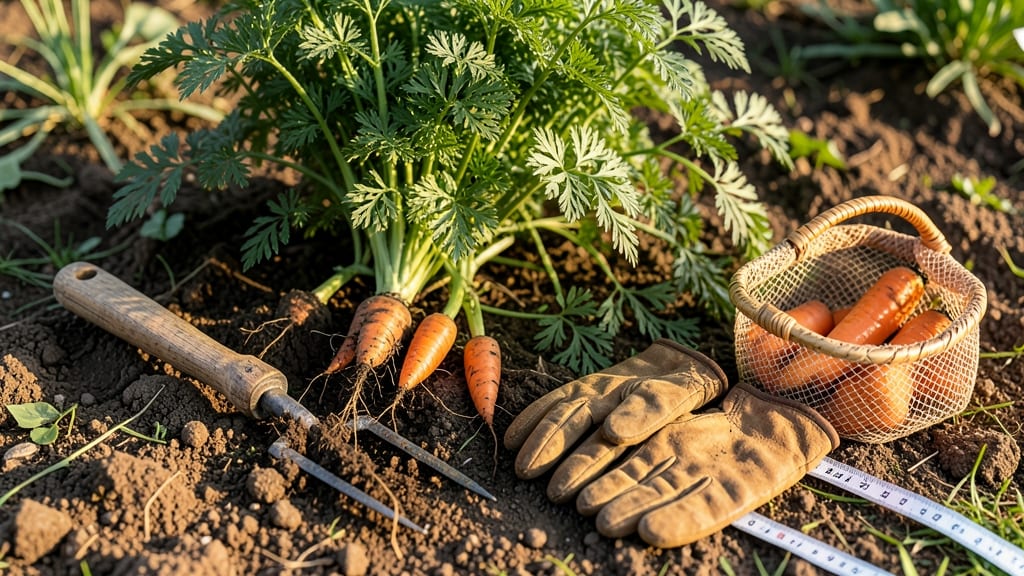
Telling when to harvest carrots means checking for deep color, firm roots, and the right leaf signals—otherwise, you risk woody roots or stunted growth.
Picture this: you’ve nurtured your 🥕 plants for 60 days, and now the question is how to know they’re ready. Pull one too soon, and you’ll get bitter, undersized roots.
Wait too long, and they’ll split or toughen. The key? A mix of soil tests, leaf cues, and size checks that work every time.
In Zone 6a, spring carrots planted in March should be ready by late May, while fall plantings hit harvest in October. But timing isn’t just about the calendar—it’s about the skin texture and whether the tops start yellowing.
Below, I’ll walk you through the exact tests to avoid guesswork and guarantee crisp, sweet carrots every harvest.
You’ll leave here knowing the three foolproof signs of perfect ripeness, how to adjust for short-season varieties, and what to do if your carrots refuse to come out of the soil. No more wasted effort—just perfect harvests.
5 Soil & root tests to determine carrot harvest readiness
Knowing exactly when to harvest carrots can be tricky—overlook the signs, and you might end up with woody roots or underdeveloped produce. The good news? Simple soil and root tests reveal the perfect moment to pull them for maximum sweetness and crisp texture.
I’ve tested these methods in my garden for years, and they never fail.
Carrots mature between 50-80 days, but days-to-maturity labels on seed packets are just guidelines. Soil conditions, weather, and variety play huge roles. That’s why relying on physical cues—not just a calendar—is key.
Below, I’ll walk you through five foolproof tests to determine if your carrots are ready for harvest.
Gently press your finger into the soil around the carrot’s base. If the soil resists slightly but gives way, the root is firm and ready. Too loose? Wait a few days. Too hard? The carrot may be overmature.
Grasp a carrot’s top leaves and give a gentle tug. If it slides out easily with minimal resistance, it’s ready. If the soil clings tightly or the carrot snaps, it’s not mature enough.
Look at the top 1-2 inches of the carrot. If the shoulder (the widest part) is 1.5-2 times wider than the taproot, it’s harvest-ready. Narrow shoulders mean more growth time needed.
Press your thumbnail into the carrot’s skin. If it leaves a slight indentation but doesn’t crush, the carrot is tender. A hard, unyielding surface means it’s overripe and woody.
Dig up a test carrot and check the stem end. If it’s dry and brown (no green), the carrot is fully mature. A green stem means it’s not ready—leave it in the ground for 5-7 more days.
Timing your harvest right also depends on seasonal factors. In spring, carrots often mature faster due to cooler soils, while summer heat can slow growth.
I’ve found that morning harvests yield the crispiest carrots because the soil is cooler and firmer. Always harvest after a light rain to make pulling easier.
One common mistake? Waiting too long because the leaves look healthy. While leaf health matters, it’s the root’s physical traits that truly determine readiness. Overlooking the finger or thumbnail tests can lead to forked roots or bitter flavors—neither of which you want.
Pro tip: If your carrots are smaller than expected, check your soil’s nitrogen levels. Too much nitrogen encourages leafy growth over root development. A balanced 5-10-10 fertilizer (high in phosphorus) promotes better root expansion. I add this mid-season to give my carrots a growth boost.
For short-season varieties like ‘Paris Market,’ you can harvest as early as 45 days, even if they’re tiny. Longer varieties like ‘Danvers’ need the full 70-80 days. Always taste-test a small sample—sweetness is the ultimate indicator of perfect timing!
Once you’ve mastered these tests, you’ll never guess again. Your carrots will be uniform in size, sweet in flavor, and crisp in texture—every single time. Happy harvesting! 🥕
Leaf color & growth patterns that signal perfect harvest timing
Your carrot leaves are whispering clues about harvest readiness—you just need to know how to listen. Healthy foliage signals optimal maturity, while yellowing or wilting often means it's past prime.
The crown size (where leaves meet the root) also reveals whether your carrots are ready to pull or need more time in the soil.
Most gardeners focus on root size, but leaf color is your first warning system. Bright green leaves with a deep purple or red tint (in varieties like 'Purple Haze') indicate peak sweetness.
When leaves start turning yellow or brown at the edges, that's your cue to harvest soon—before they bolt or become tough.
Here's where many gardeners go wrong: they wait too long for "perfect" size, only to find woody, bitter roots. Others pull too early, harvesting small, underdeveloped carrots that lack flavor. The secret lies in balancing leaf health, crown development, and root firmness.
Comparison Table: Leaf Patterns vs. Harvest Timing
| Leaf Condition | Crown Appearance | Root Readiness | Action |
|---|---|---|---|
| Bright green, vibrant | Firm, no yellowing | Firm but tender (1-2 inches thick) | Harvest soon (ideal timing) |
| Yellowing edges | Slight browning at base | Firm with deep color | Harvest within 3-5 days |
| Wilted or brown | Dry, crispy crown | Woody, fibrous texture | Harvest immediately (past prime) |
| Pale green, stunted | Small, underdeveloped | Small, pale roots | Wait 1-2 weeks (needs more time) |
Pay special attention to the leaf crown where stems meet the root. A thick, well-developed crown (about 1-2 inches wide) means your carrots are ready. If the crown is thin or still green, the roots likely need more time.
Pro tip: Gently tug on a few leaves—if they pull out easily with minimal resistance, the roots are ready.
Seasonal timing matters too. In spring plantings, watch for leaves to mature by late May (Zone 6a), while fall crops should be harvested before first frost (usually late October). Ignoring these cues leads to bitter, stringy carrots or frozen, inedible roots.
Next time you're tempted to guess, trust your leaves. They’re nature’s harvest calendar—just read between the green lines. 🌱🥕