
How To
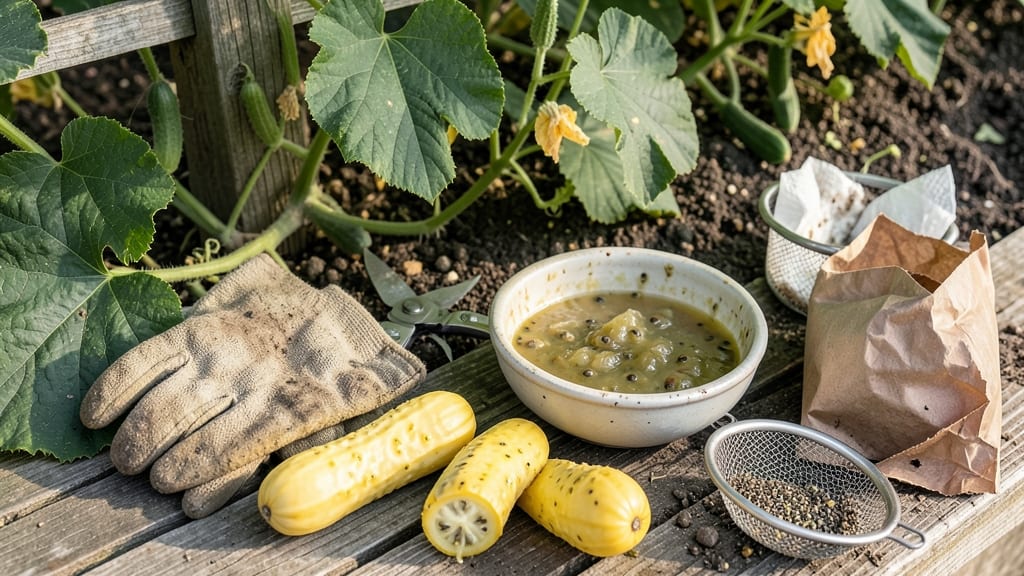
To harvest cucumber seeds from your homegrown 🥒 plants, you’ll need to pick the right cucumbers at the perfect stage—and then follow a few key steps to ensure those seeds stay viable for planting next year.
Preserving cucumber seeds from your favorite heirloom varieties isn’t just cost-effective—it’s a way to keep rare flavors alive in your garden for years to come. But timing, technique, and proper drying are everything.
If you’ve ever watched a perfectly good cucumber turn bitter or mushy before you could use it, you know how quickly things can go wrong. The difference between saving seeds and wasting fruit often comes down to knowing when to harvest and how to process them.
In this guide, I’ll walk you through selecting the best cucumbers, extracting the seeds, drying them properly, and storing them so they stay fresh and ready to plant next spring.
When and how to select cucumbers for seed harvesting
Selecting the right cucumbers for seed harvesting is the foundation of saving viable, flavorful seeds for next year’s garden. The key is patience—waiting until cucumbers reach full maturity ensures seeds develop properly.
Most heirloom varieties take 75-90 days from planting to produce seed-ready fruit, so mark your planting date to track progress accurately.
First, avoid hybrid varieties (marked with "F1" on seed packets) since their seeds won’t produce true-to-type plants. Stick to open-pollinated or heirloom cucumbers like 'Lemon Cucumber,' 'Straight Eight,' or 'Armenian.' These varieties are bred to reproduce consistently, ensuring your saved seeds will grow plants identical to the parent.
Look for cucumbers that are overripe but not rotting. This means the skin may turn yellow or develop soft spots, but the fruit should still hold its shape. The stem end should be dry and slightly shriveled, indicating the seeds inside are fully developed.
A gentle squeeze should reveal a slightly mushy texture—like a ripe avocado—rather than a firm, crisp feel.
Color changes are another critical clue. Dark green cucumbers may develop yellow or brown patches, while lighter varieties might turn pale or develop a waxy sheen. The seeds inside should be plump and dark-colored (black, brown, or deep gray), not pale or shriveled.
If the seeds look underdeveloped, the cucumber wasn’t ready for harvesting.
Timing matters beyond just days—temperature and weather play a role too. Harvest seeds when nighttime temperatures stay above 50°F (10°C) to prevent premature germination during drying.
If frost threatens before your cucumbers mature, consider harvesting them early and completing the drying process indoors under a grow light or sunny window.
One common mistake is harvesting cucumbers too early for seed saving, even if they’re perfect for eating. For seed purposes, wait until the fruit is past its prime—this ensures the seeds have fully matured.
If you’re unsure, cut open a cucumber to check the seeds. Fully mature seeds will sink in water, while immature ones will float.
| Cucumber Maturity Cue | What to Look For | Action Required |
|---|---|---|
| Skin Texture | Soft, slightly wrinkled, or developing yellow/brown patches | Harvest immediately for seed saving |
| Stem End | Dry, shriveled, or turning yellow | Cut open to check seed color and plumpness |
| Seed Color | Dark brown, black, or deep gray (not pale or shriveled) | Proceed with seed extraction |
| Fruit Size | Larger than typical harvest size (e.g., 8+ inches for slicing types) | Avoid if still firm—wait for softening |
| Growth Stage | 75-90 days after planting (varies by variety) | Track planting date to avoid early harvest |
Isolate your seed-saving cucumbers from other varieties to prevent cross-pollination, which can lead to unpredictable traits in next year’s plants. If you’re growing multiple cucumber types, use row covers or mesh bags over flowers to control pollination.
Even if you don’t plan to save seeds, isolating plants improves the purity of your harvest.
Once you’ve selected your cucumbers, label them immediately with the variety name and harvest date. This prevents mix-ups later, especially if you’re saving seeds from multiple plants.
Store the labeled cucumbers in a cool, dry place (like a basement or garage) for 1-2 days before processing to allow the seeds to fully mature inside the fruit.
Remember, the goal is to save seeds that will grow into plants identical to the parent. By focusing on maturity cues, variety selection, and isolation, you’ll maximize your chances of success. With these steps, you’re ready to move on to extracting and drying the seeds for long-term storage.
Step-by-step guide to extracting and drying cucumber seeds
Once you’ve selected your overripe heirloom cucumbers, the real work begins—extracting and drying those viable seeds properly. Skipping steps like fermentation or improper drying can lead to moldy seeds or poor germination rates. I’ve learned the hard way that rushing this process ruins months of effort!
Start by slicing open your cucumber lengthwise and scooping out the gelatinous seeds into a bowl. The pulp surrounding them is key—it helps remove unwanted debris during fermentation. If you’re working with hybrid cucumbers, save yourself the trouble; their seeds won’t grow true to type.
🌱 Step-by-Step Seed Extraction & Drying
- Step 1: Scoop seeds into a clean jar and cover with water. Let ferment 3-5 days at room temp—this removes pulp.
- Step 2: Stir daily to prevent mold growth. Bubbles mean fermentation is working!
- Step 3: Drain seeds and rinse with cool water to remove slimy residue.
- Step 4: Spread seeds on paper towels or mesh bags in a shady, dry spot for 3-5 days.
- Step 5: Store dried seeds in paper envelopes in a cool, dark place for up to 5 years.
For drying, I prefer paper towels because they allow airflow, but mesh bags work too—just avoid plastic, which traps moisture. Test for dryness by pressing a seed; it should crunch slightly. If it feels damp, extend drying time by another day.
Label your seeds with the variety name and harvest year—trust me, you’ll forget! Store them in airtight containers with a silica gel packet to prevent moisture buildup. Properly dried seeds should last 3-5 years while maintaining high germination rates.
One pro tip: If seeds smell fermented or look discolored after drying, they’ve likely gone bad. Always start fresh with new cucumbers next season. With patience, you’ll have a reliable seed stash for years to come!