
How To
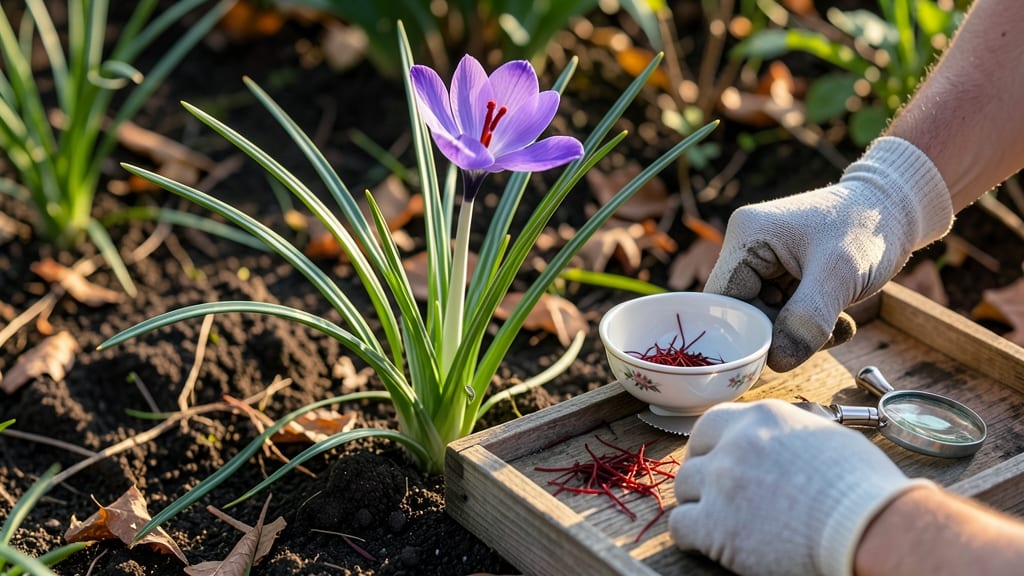
To harvest saffron threads from your Saffron Crocus 🌼, you’ll need to act within a 3-4 day window after the flowers bloom—or risk losing flavor and yield.
Saffron’s golden threads aren’t just the world’s most expensive spice—they’re also the most delicate to harvest. Timing your harvest wrong can ruin flavor or yield, but mastering this skill unlocks premium-quality saffron straight from your garden.
Picture this: you’ve spent months nurturing your Saffron Crocus 🌼 in USDA Zone 6a, and now the moment has arrived. The flowers are fully open, the threads are vibrant red, and the air smells like autumn in the Mediterranean.
But one wrong move—like harvesting too early or too late—and you’ll end up with threads that are bitter, weak, or even unusable.
In this guide, I’ll walk you through the exact timing, the precise techniques, and the pro tips to ensure you harvest saffron threads that are rich in flavor and ready for your favorite recipes.
The perfect timing for harvesting saffron crocus flowers
Harvesting saffron threads requires precision timing to ensure maximum flavor and potency. The 3-5 AM daylight window is ideal because morning dew keeps the delicate stigmas moist and easier to remove. Missing this window can lead to bitter, low-quality saffron or even damage to your plants.
Saffron crocus flowers bloom for only 3-4 days before they wilt, making timing critical. Harvesting too early results in underdeveloped stigmas, while waiting too long risks over-mature threads that lose their vibrant color and aroma. Climate plays a role too—cooler regions may need to adjust by 1-2 days earlier.
Look for these visual cues to confirm readiness: fully open purple petals, bright red stigmas that are 1-1.5 inches long, and slight wilting at the edges. The threads should detach easily when gently pulled, a sign they’re at peak potency.
In humid climates, harvest slightly earlier to prevent fungal growth on the stigmas. Conversely, in arid regions, you may extend the window by 12-24 hours since the flowers dry faster. Always prioritize early morning harvests for the freshest, most aromatic saffron.
| Harvest Stage | Key Features | Action Required |
|---|---|---|
| Early Bloom | Petals partially open, stigmas pale | Wait 2-3 more days |
| Peak Bloom | Fully open purple petals, bright red stigmas | Harvest immediately (3-5 AM) |
| Late Bloom | Petals wilting, stigmas dull | Discard or compost |
| Climate Adjustment | Humid areas | Harvest 1 day earlier |
| Climate Adjustment | Arid areas | Extend window by 12-24 hours |
Never harvest saffron after noon—the stigmas become brittle and lose their aromatic compounds. If you miss the morning window, wait until the next day rather than harvesting later in the day. Always use clean, sharp scissors or your fingers to avoid tearing the delicate threads.
Yield varies by climate, but a single crocus flower produces only 3-4 threads. For 1 gram of saffron, you’ll need about 75-100 flowers. This rarity is why saffron is so valuable—each thread must be harvested by hand, making timing and technique everything.
After harvesting, remove the stigmas immediately and lay them on paper towels to dry. Avoid direct sunlight, which can bleach the color and degrade flavor. Instead, use indirect light and ensure good airflow to preserve potency for up to 2 years when stored properly.
Pro tip: Label your harvests by date and location in your garden. This helps track which areas produce the most potent saffron and adjust future planting accordingly. Over time, you’ll refine your timing to match your microclimate perfectly.
Remember, saffron’s flavor and color are directly tied to harvest timing. Rush the process, and you’ll end up with low-quality, bitter threads. Take your time, follow these cues, and you’ll harvest saffron that rivals the finest commercial varieties—straight from your backyard.
Step-by-Step guide to harvesting saffron without damaging the plant
Harvesting saffron threads requires precision to preserve their flavor and color. The stigmas and styles must be removed at the perfect moment—too early, and they’re underdeveloped; too late, and they lose potency.
I’ve learned that hand-picking is the best method for home gardeners, as it ensures gentle extraction without damaging the delicate crocus flowers.
Start by wearing gloves to protect your hands from the sticky resin on the threads. Use a small pair of tweezers or your fingers to carefully separate the three red stigmas from the white style.
Avoid pulling too hard, as this can snap the threads or harm the flower’s reproductive parts. Remember, each flower yields only about 150–200 threads, so treat them with care!
- 🌸 Step 1: Choose Mature Flowers – Pick flowers 3–4 days after they fully bloom, when the stigmas are bright red and elongated.
- 🧤 Step 2: Wear Gloves – Protect your hands from the sticky resin using thin, breathable gloves.
- ✂️ Step 3: Gently Remove Stigmas – Use tweezers or fingers to separate the three stigmas from the style, avoiding the white base.
- 🌿 Step 4: Discard Petals – Remove and compost the purple petals and green sepals to keep your harvest clean.
- 🌞 Step 5: Dry Immediately – Spread threads on a paper towel in a cool, dark place for 24–48 hours to prevent mold.
- 📦 Step 6: Store Properly – Once fully dry, store threads in an airtight container away from light and moisture.
After harvesting, drying is critical to preserving the threads’ aromatic compounds. Spread them on a clean, dry surface in a shady area (never direct sunlight), as UV rays degrade their color and flavor.
I recommend using a paper towel or mesh screen to allow airflow while preventing contamination. Avoid plastic or metal surfaces, as they can introduce odors or moisture.
One common mistake is over-harvesting—never take more than 30% of the stigmas from a single flower, or you risk stunting future blooms. Also, avoid harvesting in humid conditions, as damp threads are prone to mold and loss of potency.
If you’re harvesting large quantities, consider using a small handheld vacuum designed for saffron, but always follow up with manual inspection to remove any damaged threads.
Store your dried saffron in a glass jar with a tight-sealing lid in a cool, dark pantry. Label the container with the harvest date, as properly stored saffron retains its flavor for up to 2 years.
For long-term storage, some gardeners freeze the threads in small portions to preserve freshness. Just remember: freshness = flavor!
With practice, you’ll develop a keen eye for the perfect harvest window. The key is patience—rushing the process compromises quality. Soon, you’ll be harvesting golden threads that rival the finest commercial saffron, all from your own garden! 🌼