
How To
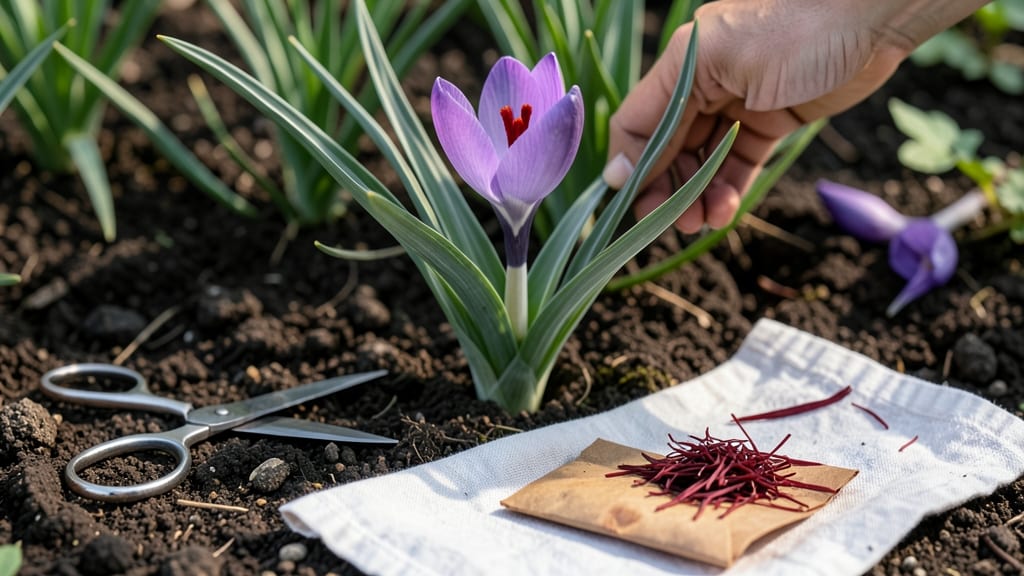
To harvest saffron from the Saffron Crocus 🌼, you’ll need to catch those deep crimson stigmas at their peak—just 3-4 days after flowering, when they’re fully elongated and vibrant.
Picture this: you’ve spent months nurturing your Saffron Crocus in Zones 5-9, and now the moment of truth arrives. One wrong move—like picking too early or too late—and you could ruin months of work.
The difference between premium saffron and waste often comes down to timing, precision, and knowing exactly when those delicate threads are ready.
In this guide, I’ll walk you through the exact steps to harvest saffron without damaging the stigmas, from identifying the perfect bloom to drying and storing your crop for maximum flavor and value. You’ll also learn the common mistakes that turn a high-value harvest into a disappointment.
Whether you’re a seasoned grower or a first-timer, mastering the art of saffron harvesting will give you the confidence—and the golden threads—to elevate any dish. Let’s get started.
When to harvest saffron crocus for maximum yield & quality
Timing is everything when harvesting saffron crocus—those tiny crimson stigmas lose their potency if picked too early or too late. The 3-day window after full bloom is your golden opportunity.
Miss it, and you risk pale, bitter threads that fetch a fraction of the price. Even experienced growers rely on visual cues and climate awareness to nail this delicate process.
First, focus on the flower's position. Saffron crocus blooms face eastward in the morning, opening fully by 8-9 AM under ideal conditions. This morning orientation is nature’s signal that the stigmas have reached peak maturity.
If your flowers face westward or remain closed past noon, they’re either too young or stressed by heat or drought.
Climate plays a surprising role. In cooler regions (Zones 5-7), harvest timing shifts 2-3 days earlier than in warmer zones. A frost warning can force an early harvest, while unseasonable heat may accelerate stigma development. Always check your local USDA zone and adjust expectations accordingly.
Here’s the critical 3-day window broken down: Day 1: Stigmas are bright red but still attached tightly. Day 2: Stigmas lengthen to 1-1.5 inches and separate easily. Day 3: Petals begin wilting—peak harvest time before quality drops.
| Harvest Stage | Visual Cues | Climate Impact | Action Required |
|---|---|---|---|
| Day 1 (Not Ready) | Stigmas pale yellow-green, <1 inch long | Cooler temps delay maturation | Wait 24 hours; avoid harvesting |
| Day 2 (Optimal) | Stigmas deep crimson, 1-1.5" long, thread-like | Ideal: 60-75°F; harvest by 10 AM | Harvest immediately after petals open |
| Day 3 (Late) | Petals wilt, stigmas darker red but may crack | Heat/drought accelerates wilting | Harvest if no rain forecasted; quality drops |
| Day 4+ (Waste) | Stigmas brittle, blackened, or moldy | Humidity/frost ruins harvest | Discard; replant for next season |
Regional schedules vary dramatically. In California’s Central Valley, saffron crocus blooms late October to early November, while New England growers may harvest as early as mid-September due to cooler climates. Always monitor your garden’s microclimate—shaded areas bloom later than sun-drenched spots.
Pro tip: Use a magnifying glass to inspect stigmas. At peak harvest, they should look like tiny, perfect threads, not stubby or curled. If you see green tips on the stigmas, they’re underripe. Conversely, dark brown or blackened stigmas are overripe and should be discarded.
Morning is the best time to harvest. Why? Dew can mask wilting, and cooler temps preserve stigma integrity. Work quickly—saffron crocus flowers close by noon, so plan to harvest within 2-3 hours of opening.
If you’re harvesting large quantities, assign someone to monitor flower opening times while others process the stigmas.
Don’t overlook the moon phase either. Some growers swear by harvesting during a waning moon for higher-quality saffron. While not scientifically proven, it’s a tradition worth testing in your garden. Pair this with dry, sunny weather for optimal results.
Finally, track your harvest dates annually. Saffron crocus is perennial, but its bloom cycle shifts slightly each year based on soil health, sunlight, and weather patterns. Keep a garden journal to refine your timing for future seasons. Precision now means higher yields and premium prices later.
Step-by-Step saffron extraction: from blooms to threads
Once your saffron crocus blooms reach peak maturity, the real work begins—extracting those prized crimson stigmas. This delicate process requires precision to preserve quality. I’ve harvested saffron for years, and I can tell you: rushing or using the wrong tools will degrade flavor and color.
Let’s break it down into actionable steps to maximize your yield while keeping those threads vibrant.
Start by selecting only the healthiest, fully open flowers—look for deep purple petals with no blemishes. Avoid flowers that have been exposed to rain or dew, as moisture accelerates spoilage.
The 3-day window after blooming is critical: harvest too early, and the stigmas won’t develop fully; wait too long, and they’ll darken or lose potency. Timing is everything for premium saffron quality.
- 🌸 Step 1: Select Flowers
Pick only fully open blooms with deep purple petals. Discard wilted or damaged flowers. - 🧵 Step 2: Remove Stigmas
Gently pinch the three stigmas from each flower using your thumb and index finger. Avoid tearing the style. - 🌡️ Step 3: Dry Immediately
Spread stigmas on parchment paper in a shady, well-ventilated area (60-70°F). Avoid direct sunlight to prevent burning. - ⏳ Step 4: Monitor Drying
Check every 2-3 hours. Stigmas are ready when brittle and deep crimson (typically 6-12 hours). - 📦 Step 5: Store Properly
Transfer dried stigmas to an airtight glass jar in a cool, dark place. Label with harvest date.
For stigma removal, I recommend using fine-tip tweezers or your fingers for precision—mechanical tools risk damaging the delicate threads. Always work on a clean surface to avoid contamination.
A common mistake is removing the stigmas too aggressively, which can snap them or leave behind style fragments. Take your time; patience here ensures higher-grade saffron.
Drying is where many gardeners go wrong. Humidity is the enemy—aim for 40-50% humidity and avoid plastic bags, which trap moisture. I use a dehumidifier nearby during harvest season to control conditions.
Spread stigmas in a single layer on parchment paper, and stir them every few hours to ensure even drying. Over-drying turns them brittle; under-drying leaves them prone to mold.
Once dry, store your saffron in small batches to maintain freshness. Exposure to light and air accelerates oxidation, turning those vibrant threads dull. I divide my harvest into weekly portions and keep them in the freezer for long-term storage.
For immediate use, a dark glass jar with a tight seal works perfectly. Always test a small batch before committing to large-scale storage—this helps you gauge drying success.
Remember, one flower yields just 3-4 threads, so efficiency matters. A single saffron crocus plant produces about 10-15 threads, meaning you’ll need hundreds of flowers for meaningful yields. Plan accordingly, and treat each stigma with the care it deserves—your future dishes (and wallet) will thank you.