
How To
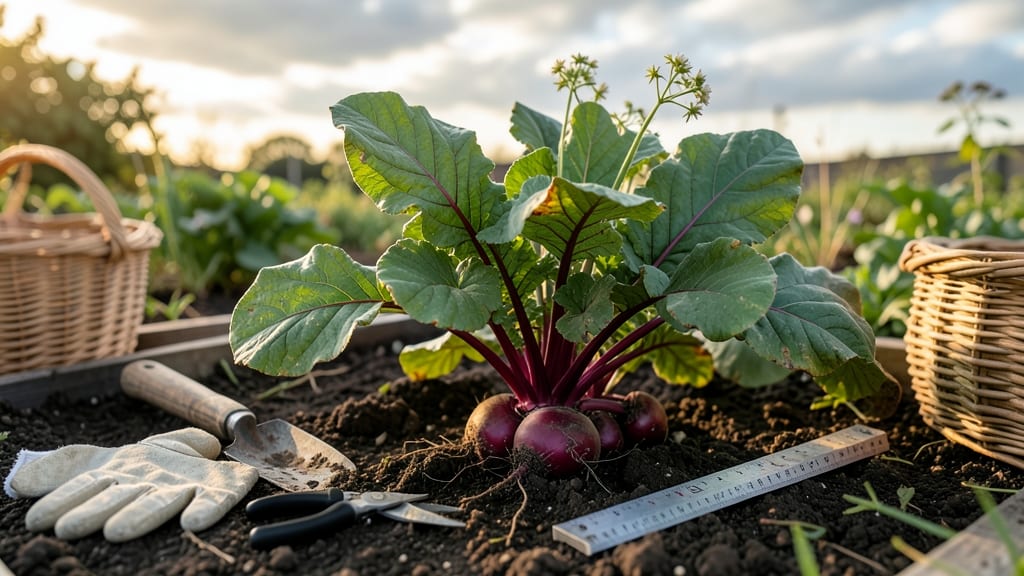
To know when to harvest beets 🍠, focus on root size, skin firmness, and leaf color—these three clues tell you exactly when they’re ready to pull.
Picture this: You’ve waited 60 days, and now the roots are golf-ball-sized but still rock-hard when you press them. That’s the classic sign of a missed window—harvest too late, and you’re left with tough, woody beets that even boiling can’t save.
But get it right, and you’ll pull out sweet, tender roots that are perfect for roasting, pickling, or tossing into salads. The secret? A simple finger test, checking the soil for resistance, and knowing when to ignore the calendar in favor of the plant’s signals.
Here’s how to read your beets like a pro—plus what to do if you’ve let them linger in the ground a little too long.
The finger-press test: how to check beet root tenderness before harvesting
Harvesting beets at the perfect moment ensures they're tender and packed with sweet flavor. The finger-press test is my go-to method to check root tenderness without digging up every plant. This simple technique combines soil pressure with visual cues to determine when your beets are ready for the table.
Overharvesting or waiting too long can ruin the texture and taste, so mastering this skill saves time and frustration.
Start by observing the foliage color and growth pattern. Healthy beet greens should be vibrant—deep green, purple, or red, depending on the variety. If the leaves look pale or yellowing, the roots may be underdeveloped or stressed.
Meanwhile, if the greens start to wilt or bolt (send up flower stalks), the beets have likely passed their prime. These visual clues give you a head start before even touching the soil.
Now, let's dive into the finger-press test. This hands-on method is the most reliable way to gauge root maturity. By applying gentle pressure to the soil around the beet, you can feel the root's resistance and size without disturbing the entire plant.
It's a non-invasive way to check multiple beets in a patch quickly. Here’s how to do it step-by-step:
- 1 Locate a beet plant in your garden bed. Choose one with healthy, vibrant foliage to start.
- 2 Gently press the soil around the base of the plant with your index finger. Aim for about 1 inch deep into the soil.
- 3 Assess resistance. If the root feels firm but slightly soft under your finger, it’s likely ready. You should feel a slight give, indicating the root is fully formed but still tender.
- 4 Check root size by gently wiggling the plant. If the root feels 1-3 inches in diameter and comes out easily with minimal resistance, it’s harvest-ready. Smaller roots are underdeveloped, while larger ones may be woody.
- 5 Verify color consistency. Dig up the beet and check its color. The skin should be deep and uniform, not pale or streaked. This confirms the root is mature and flavorful.
Another key indicator is the root diameter. Beets are typically ready when they reach 1-2 inches in diameter. Smaller roots are still developing their sweetness, while larger roots can become tough and fibrous.
If you’re growing baby beets, you can harvest them when they’re about 1 inch wide, but they’ll have a milder flavor compared to fully mature roots.
Pay attention to the growth pattern of your beet plants. If the foliage is growing rapidly but the roots feel small during the finger-press test, the plant may be putting more energy into leaves than roots. This can happen if the soil is too rich in nitrogen.
In this case, reduce nitrogen-heavy fertilizers and focus on a balanced fertilizer to encourage root growth. Adjusting your fertilizer can help redirect the plant’s energy toward producing sweeter, larger roots.
Timing is everything when it comes to harvesting beets. If you wait too long, the roots can become woody and tough, losing their sweetness. On the other hand, harvesting too early means you’ll end up with small, underdeveloped roots that lack flavor.
The finger-press test, combined with visual cues, ensures you harvest at the perfect moment—when the roots are tender, sweet, and ready to enjoy. With practice, you’ll develop a feel for when your beets are at their peak.
Once you’ve mastered the finger-press test, you can confidently harvest your beets without guessing. This method works for all beet varieties, whether you’re growing golden beets, chioggia beets, or classic red beets.
The key is consistency—check your plants regularly and harvest before they bolt or become overmature. Happy harvesting!
Pro tip: If you’re unsure about a particular beet, dig up one from the middle of the patch. This gives you a clear idea of the overall maturity without disturbing the edges of your garden bed. Rotate your harvests to encourage even growth across the entire plant.
Best time of day and season to harvest beets for maximum sweetness
Timing your beet harvest correctly makes all the difference between tender, sweet roots and woody, tough disappointments. The best time of day to harvest beets is cool morning hours, when temperatures are below 75°F (24°C).
This prevents stress and preserves flavor. Avoid harvesting in midday heat, as high temperatures can cause the roots to become bitter or develop a rubbery texture.
Seasonal timing also plays a crucial role. Early beet varieties like 'Detroit Dark Red' or 'Golden' should be harvested 50-60 days after planting, typically in late spring to early summer.
Late varieties like 'Chioggia' or 'Bull's Blood' take 60-70 days and are best harvested in mid-to-late summer before bolting in hot weather.
| Harvest Window | Best Time of Day | Seasonal Timing | Temperature Ideal |
|---|---|---|---|
| Early Varieties | Cool morning (6-9 AM) | Late spring (May-June) | 55-65°F (13-18°C) |
| Late Varieties | Early morning (5-8 AM) | Mid-to-late summer (July-August) | 60-70°F (15-21°C) |
| All Varieties | Avoid midday heat | Before first frost | Never above 80°F (27°C) |
Temperature affects beet flavor more than you might think. Beets grown in cooler weather develop higher sugar content and a sweeter taste. If your summer heatwave hits 85°F (29°C) or higher, harvest early in the morning and store them in a cool, dark place immediately to prevent flavor loss.
Overheating in the ground can also trigger bolting, causing the plant to produce seeds instead of edible roots.
Once harvested, store beets properly to maintain their sweetness. Keep them in a plastic bag in the crisper drawer of your refrigerator, where they’ll stay fresh for up to 2 weeks.
For long-term storage, cure them first by leaving them in a dry, dark place at 55-60°F (13-15°C) for 1-2 hours to harden the skin. Then, store in a cool, humid environment like a root cellar for several months.
If you miss the perfect harvest window, don’t panic! Underripe beets can still be used in cooked dishes like soups or roasted with olive oil, while slightly overmature beets work well for pickling or fermenting.
Just avoid letting them sit too long in the ground, as this leads to woodiness and reduced sweetness.
Pro tip: Always harvest beets with a garden fork or trowel to avoid damaging nearby roots. Gently loosen the soil around the plant, then grasp the greens and pull upward—this ensures the root stays intact and ready for storage or immediate use. 🌱