
How To
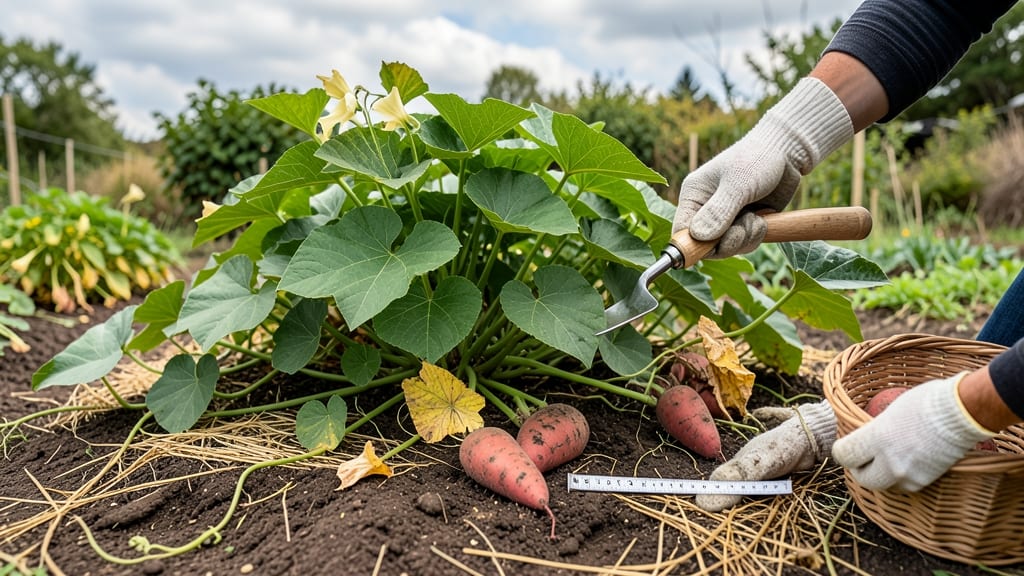
To tell when to harvest sweet potatoes, watch for three key signs: skin that slips easily from the tuber, yellowing vines, and a 90–120-day growth window after planting.
Sweet potatoes left too long in the ground become woody and lose their sweet flavor—but harvesting too early means small, underdeveloped tubers. Mastering the perfect harvest time ensures maximum yield and taste, and these key indicators will transform your guesswork into confidence.
Start by checking the skin slip test: gently peel back a small section of soil to expose the tuber. If the skin slips off easily with a slight tug, it’s ready. Next, observe the vines—they should yellow and die back naturally, signaling maturity.
In this guide, I’ll walk you through these practical steps, including how to test soil conditions, adjust for regional frost risks, and even troubleshoot if your vines turn yellow too soon or too late.
The skin slip test: the most reliable way to harvest sweet potatoes
Harvesting sweet potatoes at the right time is an art that balances tuber size, flavor development, and soil conditions. The skin slip test is the gold standard among gardeners because it directly measures tuber maturity without digging up your entire crop.
Unlike relying on vine color or days since planting, this method gives you real-time feedback about what's happening underground.
When performed correctly, the skin slip test reveals whether your sweet potatoes are still growing or ready to harvest. The key is understanding how skin texture changes as tubers mature—a subtle but critical clue most gardeners miss.
For example, a shiny, taut skin means your potatoes are still developing, while a dull, rough surface signals peak harvest time. Let's break down the exact steps to master this technique.
For gardeners with loose, sandy soil, the finger technique works perfectly—just press gently to feel for that telltale slip. But if you're working with heavy clay soil, you may need to use your whole hand to get an accurate reading.
The key is consistency: always test the same way and at the same time of day for reliable results.
Avoid common mistakes like testing after rain, which makes the skin appear slippery when it's not actually mature. Also, don't confuse skin roughness with readiness—some varieties develop a naturally rough texture before they're fully mature.
When in doubt, wait a week and test again. Patience pays off with sweeter, more flavorful sweet potatoes.
Pro tip: If you're growing multiple varieties, test each one separately since maturity rates can vary by 3–5 days. For example, Beauregard sweet potatoes often mature slightly earlier than Jewel varieties. Keep a small harvest journal to track which varieties ripen fastest in your specific climate.
Once you've confirmed readiness with the skin slip test, it's time to harvest. Use a fork or your hands to gently dig around the tuber, leaving about 2 inches of soil attached to prevent bruising.
Cure your harvest immediately by storing them in a warm (80–85°F), humid (80–90%) environment for 10 days to develop their signature sweetness.
Mastering the skin slip test transforms sweet potato harvesting from a guessing game to a precise science. With practice, you'll develop an instinct for when your tubers are at their peak—delivering homegrown sweet potatoes that rival store-bought in both size and flavor. Happy digging! 🍠🌱
Vine die-back patterns: when and why sweet potato vines turn yellow
Understanding why your sweet potato vines turn yellow is key to knowing when to harvest. This natural process signals tuber maturity, but timing varies based on environmental factors and your growing conditions.
The vines' yellowing isn't just random—it's a direct indicator of when your tubers are ready to pull from the soil.
For most varieties, normal vine die-back occurs between 90–120 days after planting, typically in late summer or early fall. However, this timeline shifts with frost dates, drought stress, or pest damage. Learning to distinguish between natural senescence and abnormal stress helps you avoid harvesting too early or too late.
Here's how vine die-back correlates with tuber readiness:
- Early die-back (before 90 days) often means stress from drought or pests.
- Normal die-back (90–120 days) aligns with peak tuber maturity.
- Late die-back (after 120 days) may signal frost sensitivity or over-maturity.
| Stage | Vine Appearance | Tuber Condition | Action |
|---|---|---|---|
| Early Die-Back | Yellowing leaves, wilting | Small, underdeveloped | Check for pests/drought |
| Normal Die-Back | Full yellowing, dry stems | Large, firm, sweet | Harvest immediately |
| Late Die-Back | Blackened, mushy vines | Woody, less sweet | Harvest but expect lower quality |
If your vines yellow too early, it could mean drought stress or aphid infestations. In this case, perform the skin slip test to confirm tuber readiness—if the skin slips easily, harvest anyway.
For late die-back, frost damage is often the culprit, especially in northern climates where first frost arrives early.
Home gardeners can also force die-back by cutting back vines 2–3 weeks before your expected frost date. This concentrates energy into the tubers, improving size and sweetness. Just be sure to leave enough foliage for photosynthesis until harvest day.
Pay attention to your local first frost date—this is your final deadline. If frost is imminent, harvest even if vines aren't fully yellow. Sweet potatoes store well in cool, dark conditions, so you can cure them later for optimal flavor.