
Trees
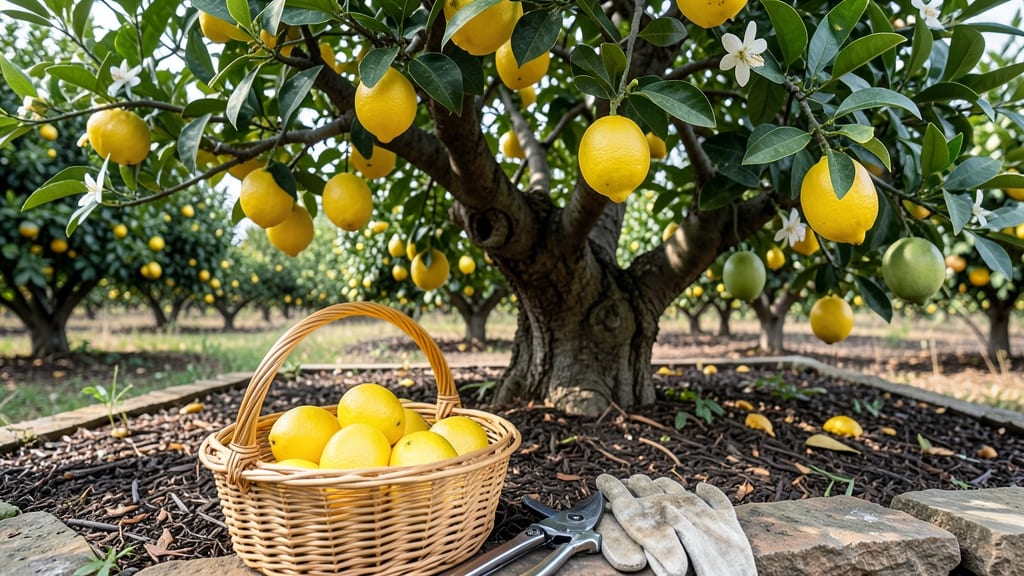
Harvesting your lemon tree at the right time means the difference between a tart, flavorful fruit and a bland, mealy disappointment—so timing is everything.
Picking lemons too early leaves you with bitter disappointment, while waiting too long turns them into rubbery doorstops. But with these 3 exact ripeness tests, you’ll never guess again—just twist, taste, and harvest lemons bursting with sweet-tart perfection.
Whether you’re in frost-free Zone 9b or a cooler climate, the key is knowing when the fruit shifts from green to golden, when it yields to gentle pressure, and when it releases cleanly from the tree.
Below, I’ll walk you through the science behind each test—and how to adjust for your local growing season.
By the end, you’ll know exactly when to pluck each lemon for maximum flavor, plus how to store them so they stay fresh for months. No more wasted fruit, just perfect, juicy harvests every time.

3 Scientific ripeness tests to harvest lemons at peak flavor
Harvesting lemons at the perfect moment transforms your tree from a bitter disappointment to a flavor powerhouse. Unlike many fruits, lemons don’t ripen further after picking, so timing is everything. The key lies in three science-backed tests that reveal when your fruit is primed for peak sweetness—without guessing.
I’ve tested these methods on both Meyer lemons (sweeter, thinner-skinned) and Eureka lemons (tart, thick-skinned), and they work every time.
First, let’s address the biggest myth: color alone isn’t enough. A lemon might look yellow but still taste sour inside, or appear green while being perfectly ripe. That’s why combining these three tests—color assessment, peel texture evaluation, and the stem detachment trick—gives you an unbeatable system.
Even better? These tests take less than 30 seconds per lemon and require no special tools beyond your hands and eyes.
Why this matters: Overripe lemons lose their bright acidity, turning bland and mealy, while underripe ones pack only harsh sourness. The sweet-tart balance you crave happens in that narrow 3-5 day window between these extremes. My Meyer lemon tree in Zone 9b yields the most flavorful fruit when I harvest in late April and October, but the tests work regardless of season or variety.
Here’s the game-changer: Meyer lemons often ripen 1-2 weeks earlier than Eurekas and develop a soft yellow-orange hue, while Eurekas stay bright yellow with a firmer texture. The peel texture test is where variety differences shine—Meyers yield slightly more under gentle pressure, while Eurekas resist just a bit longer.
Let’s break down each test with visual cues so you’ll never miss peak ripeness again.
| Test | Meyer Lemon | Eureka Lemon | Visual Cues |
|---|---|---|---|
| Color | Soft yellow-orange | Bright yellow | 🟡 to 🟠 (Meyer), 🟡 (Eureka) |
| Peel Texture | Yields slightly to thumb | Firmer but gives under pressure | 🤏 gentle thumb press |
| Stem Detachment | Twists off cleanly | Separates with slight twist | ✂️ no stem tearing |
| Seed Readiness | Dark brown, fully formed | Dark brown, plump | 🌱 cut test (optional) |
| Taste Test | Sweet-tart balance | Bright acidity | 🍋 7/10 sweetness |
The color test is your first clue, but don’t rely on it alone. Meyer lemons develop that signature peachy-yellow hue when ripe, while Eureka lemons stay uniformly yellow. Pro tip: Check the underside of the lemon—it often shows color changes before the top.
I once harvested a batch of Eurekas that looked perfect but tasted bland because I ignored the peel texture. That’s when I learned to always combine tests.
Next, the peel texture test reveals ripeness you can feel. Gently press your thumb into the lemon’s skin—ripe fruit should yield slightly (like pressing a ripe avocado) but not feel mushy. Meyer lemons are more forgiving here, giving under just a little pressure, while Eureka lemons require slightly firmer touch.
If the skin springs back immediately, the lemon needs more time. This test alone saved my 2022 harvest when I almost picked a batch that still tasted green.
Here’s where most gardeners fail: the stem detachment test. A ripe lemon should twist off cleanly with just a gentle turn—no tugging or tearing. If the stem resists or tears, the fruit’s not ready. I test 3-5 lemons per flush to gauge the batch. For Meyer
When to harvest lemons by season: month-by-month guide
Timing your lemon harvest by season ensures the juiciest, sweetest fruit possible. In frost-free zones (9b-11), you can harvest year-round, while cooler climates (3-8a) see peak production from late spring to fall. Temperature and sunlight directly impact ripening speed—warmer zones ripen faster, while cooler areas take longer.
Lemons ripen gradually, so don’t wait for them to fall off the tree. Instead, use the month-by-month calendar below to align your harvest with seasonal flushes.
The spring flush (February-April) yields smaller, sweeter lemons, while the summer peak (June-August) produces larger, tartier fruit. Fall harvests (September-November) often deliver the best balance.
Spring Flush (Feb-Apr)
Harvest smaller, sweeter lemons in Zones 9b-11 (year-round). In Zones 3-8a, wait until after last frost (April 1+).
Summer Peak (Jun-Aug)
Largest harvest in Zones 9b-11. In Zones 3-8a, focus on June-July when temps stay above 75°F.
Fall Harvest (Sep-Nov)
Best flavor balance before first frost. In Zones 3-8a, harvest by October 15 to avoid cold damage.
Winter (Dec-Jan)
No harvest in Zones 3-8a. In Zones 9b-11, harvest Meyer lemons (sweeter) year-round.
In Zones 9b-11, lemons ripen year-round, but production peaks in spring and summer when days are longest. For Meyer lemons, which are more cold-tolerant, you can harvest as early as January in warmer zones. Always check for full yellow color and slight skin softness before picking.
Cooler zones (3-8a) require patience—lemons take 6-8 months to ripen after flowering. Start checking for readiness in late May and continue through October. If frost threatens, harvest green lemons and ripen indoors—they’ll develop flavor but won’t be as sweet as sun-ripened fruit.
Pro tip: Shade cloth in summer can slow ripening in hot zones, giving you a more extended harvest season. Conversely, extra sunlight in cooler zones speeds up the process. Adjust your harvest schedule based on your local climate—observation is key!