
Trees
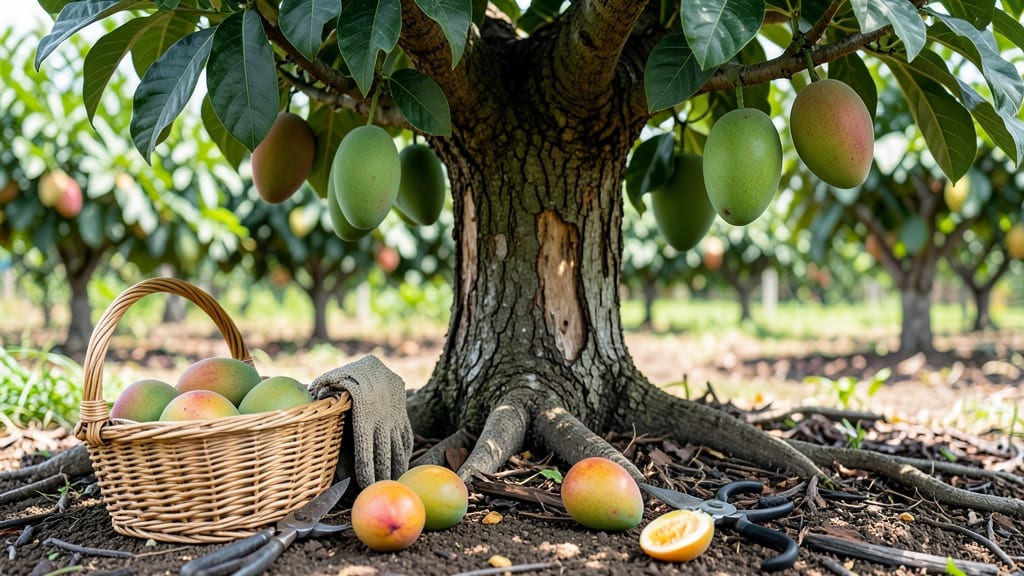
Timing your mango tree harvest time means the difference between sweet, juicy fruit and bland, underripe disappointments.
Picture this: you’ve waited months for your 🥭 to ripen, only to pick it too early and end up with mealy, flavorless pulp. Or worse, you wait too long and the fruit splits or attracts pests. The right moment is all about reading the fruit’s cues—and knowing when to act.
From the deepening hues of yellow, red, or orange to the telltale sweet aroma near the stem, there are science-backed ways to tell when your mango is ready. Regional differences matter too—whether you’re in frost-free tropical zones or cooler microclimates like Zone 9b—each climate shifts the ideal window.
In this guide, I’ll break down the exact signs to watch for, how to adjust for your local growing conditions, and even how to store your harvest for maximum freshness. Let’s make sure your next mango is the sweetest yet.


How to determine the exact mango harvest time by color, smell & touch
Picking mangoes at the perfect moment transforms your harvest from meh to magnificent. Unlike many fruits, mangoes don't ripen well after picking—so timing is everything. I’ve learned the hard way that waiting too long means mealy flesh, while harvesting too early guarantees tart, underdeveloped flavor.
The key? Mastering three simple but science-backed cues: color shifts, aroma tests, and the gentle twist method.
Mango trees (like Mangifera indica) produce fruit that matures unevenly, even on the same branch. That’s why I now check 5-7 fruits per tree—some may be ready while others need weeks more.
The stem response is your best friend here: a ripe mango will separate cleanly from the branch with just a slight twist, while unripe ones cling stubbornly. Pair this with visual and olfactory clues, and you’ll nail that sweet-spot harvest every time.
🌱
The color shift is your first visual clue, but don’t rely on it alone—some varieties like Haden mangoes stay green until nearly ripe. Instead, I focus on the color change near the stem, where the fruit often develops a blush or yellow halo first.
For example, Keitt mangoes turn deep red, while Ataulfo varieties develop a golden hue. Pro tip: Use a flashlight to inspect shadowed areas—hidden color changes reveal ripeness.
Never underestimate the power of aroma. A ripe mango emits a distinctly sweet, almost floral scent near the stem. I’ve trained my nose to detect this by comparing ripe and unripe fruit side by side.
If your mango smells grassy or bland, it’s not ready—even if the color looks promising. This cue is especially critical in humid climates, where ethylene gases (the ripening hormone) disperse faster.
✂️
For the touch test, I use my thumb to press gently near the stem. A ripe mango should yield slightly—like pressing a ripe peach—but still hold its shape. If it feels mushy, it’s overripe; if it’s rock-hard, it’s underripe.
I also check the stem’s resistance: twist the fruit gently at the shoulder (where it meets the branch). If it separates cleanly with just a little pressure, it’s ready. If the stem snaps off instead of detaching at the joint, wait another week.
Regional climates throw a wrench into timing. In tropical zones (USDA 10-12), mangoes ripen year-round, but peak harvests occur from April to September. In subtropical microclimates (Zone 9b), like parts of Florida or California, fruit may take longer to ripen due to cooler nights.
I’ve found that shade-cloth-covered trees in hot climates produce fruit that ripens 2-3 weeks faster than those in full sun.
🌡️
One mistake I made early on was harvesting based on fruit size alone. Big doesn’t always mean ripe—some mangoes grow to full size but never develop sweetness. Instead, I now track 3 cues simultaneously: color, aroma, and the stem twist.
For example, a Tommy Atkins mango might be the right size but still green and scentless—definitely not ready. Combine these methods, and you’ll avoid the bitter disappointment of underripe fruit.
If you’re unsure, harvest a few fruits and let them ripen indoors. Place them in a paper bag with a banana (bananas release ethylene gas) for 2-3 days to speed up rip
Best mango varieties and their ideal harvest windows (with regional adjustments)
Not all mangoes ripen on the same schedule, and where you live plays a huge role in determining the perfect harvest time.
Tropical varieties like Ataulfo (or "honey mango") thrive year-round in USDA Zones 10-12, while Tommy Atkins—a subtropical favorite—needs cooler microclimates like Zone 9b to develop properly. Even within the same variety, a Florida mango may ripen 2-4 weeks earlier than one grown in California’s Central Valley.
The key difference? Day length and temperature fluctuations trigger flowering and fruiting cycles. In frost-free zones, mangoes can produce two harvests per year, while cooler regions typically see just one peak season (late spring to early summer).
Let’s break down the top varieties and their regional timing so you can plan your harvest like a pro.
| Variety | Primary Colors | Tropical Zone Harvest | Subtropical Zone Harvest | Key Ripeness Cues |
|---|---|---|---|---|
| Ataulfo | Golden yellow | Year-round (peaks May-Aug) | June-July (cooler zones) | Skin softens; sweet aroma near stem |
| Tommy Atkins | Red with green patches | April-June | May-July (Zone 9b) | Fruit gives slightly when pressed |
| Keitt | Green with red blush | June-August | July-September | Stem twists easily; seed softens |
| Haden | Red-orange | May-July | June-August | Skin deepens; sweet fragrance |
| Carrie | Yellow with red stripes | July-September | August-October | Fruit detaches with gentle twist |
If you’re growing Ataulfo mangoes in South Florida, expect your first harvest as early as March, with a second wave in August. Meanwhile, gardeners in Southern California’s Zone 10a can pick Tommy Atkins from May through July.
The trick? Monitor your local chilling hours—mangoes need 150-300 hours below 68°F to set fruit properly in cooler climates.
Pro tip: In subtropical zones, a late-winter pruning session (February) encourages earlier flowering, which can shift your harvest window by 2-3 weeks. Pair this with consistent watering (deep soaks every 7-10 days) to avoid stress-induced fruit drop.
And remember—never harvest when temps exceed 90°F, as this can cause sunscald on the skin.
For container-grown mangoes (like dwarf varieties), harvest times may shift by 1-2 weeks later due to root restrictions. If you’re in a transition zone (like Zone 9a), consider planting heat-tolerant varieties like Carrie or Kent, which handle brief cold snaps better than others.
The right variety + timing = sweeter, juicier mangoes every time.
🌱