
Picking
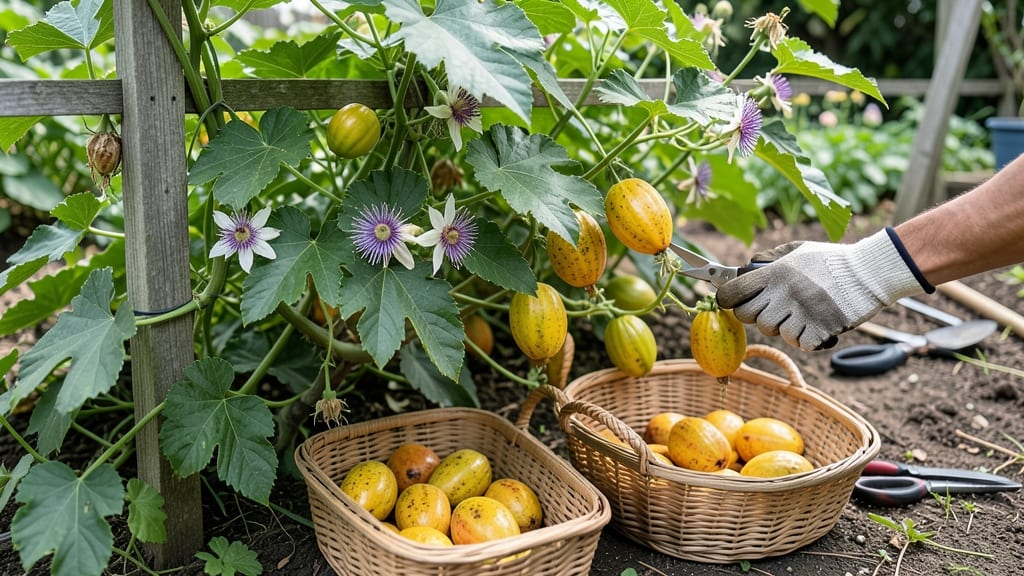
Timing the passion fruit harvest is all about watching for those pods to crack open and the vine to signal readiness with a yellowing hue.
If you’ve ever wondered why your passion fruit vine suddenly turns yellow or when those coveted pods finally crack open, timing is everything—miss the harvest window, and you’ll lose a bounty of sweet, tropical fruit.
Most varieties take 6-9 months to mature, but the real secret lies in the fruit’s color shift and texture. A ripe passion fruit 🍈 yields slightly to gentle pressure and detaches easily at the stem—ignore those cues, and you might end up with seedy, mealy fruit instead.
Below, I’ll break down the exact signs to watch for, how climate affects your harvest schedule, and why a yellowing vine could mean it’s time to pick—or prune. Ready to turn your vine into a fruit factory?

When passion fruit pods crack open: signs of perfect harvest time
Harvesting passion fruit at the perfect moment transforms your vine’s bounty from tart to sweetly tropical. The moment those pods begin to crack open signals readiness—but timing is everything.
Overripe fruit becomes mealy, while underripe pods stay bitter and seedy. Let’s break down the visual cues and environmental factors that tell you when to pick.
First, observe the pod color, which varies by variety. Purple passion fruit (like Purple Giant) should turn a deep, vibrant purple, while yellow varieties (such as Golden Passion Fruit) develop a sunshine-yellow hue.
This color shift isn’t just cosmetic—it’s a chemical signal that the fruit’s sugars have peaked. Ignore this cue, and you risk harvesting fruit that’s past its prime.
Next, check the skin texture. A ripe passion fruit will feel slightly soft when gently squeezed—like a ripe avocado. If it’s rock-hard, it’s not ready, and if it’s mushy or splitting, it’s overripe.
Pro tip: The skin should also yield slightly under thumb pressure but not dent deeply. This balance is your golden ticket to perfect flavor.
Don’t overlook the stem attachment. When ripe, the stem near the fruit’s base will dry out and detach easily with a gentle twist. If the stem pulls off with resistance, the fruit needs more time.
This dry stem is nature’s way of telling you the fruit is ready to harvest—a sign you shouldn’t ignore, especially in humid climates where overripeness happens fast.
The cracking sound is another telltale sign. As passion fruit ripens, the outer shell can crack open slightly, releasing a sweet, floral aroma. This isn’t just a visual cue—it’s a scent-based confirmation that the fruit is nearing peak ripeness.
If you smell that intoxicating fragrance, grab your pruners and harvest within 24 hours to avoid overripeness.
Environmental factors like temperature and humidity also play a role. Passion fruit thrives in warm climates (75–85°F), and fruit ripens faster in high humidity. In drier regions, pods may take longer to ripen, so monitor them closely.
If your vine is in a cooler microclimate, like a shaded patio, the ripening process slows down—patience is key here.
| Harvest Cue | Description | Action |
|---|---|---|
| Pod Color | Deep purple (purple varieties) or golden yellow (yellow varieties) | Harvest when fully colored |
| Skin Texture | Slightly soft, yields under gentle thumb pressure | Pick when skin is firm but not hard |
| Stem Detachment | Dries out, detaches with slight twist | Twist gently to harvest |
| Cracking Sound | Pod begins to split open with a popping sound | Harvest within 24 hours |
| Aroma | Sweet, floral scent near stem | Pick immediately for peak flavor |
If you’re growing multiple varieties, pay attention to their ripening timelines. Purple passion fruit typically ripens 2–3 weeks earlier than yellow varieties. Mixing varieties on one vine can create a staggered harvest, so keep a journal to track which pods ripen first.
This strategy ensures you’re always enjoying fresh fruit instead of dealing with a sudden glut of overripe pods.
Harvesting at the wrong time can also stress your vine. Overripe fruit attracts pests like fruit flies, while underripe fruit falls off prematurely, wasting your efforts. To avoid this, check your pods every 2–3 days during peak season.
In tropical climates, this could mean harvesting weekly, while in cooler regions, you might only get one or two harvests per season.
Once you’ve mastered the art of timing your harvest, you’ll enjoy passion fruit that’s bursting with flavor and perfectly ripe. Store harvested fruit in a cool, dry place (like a paper bag) to extend freshness for 3–5 days.
For longer storage, refrigerate uncut pods—they’ll keep for up to 2 weeks. Now that you know the signs, there’s no excuse for missing the perfect harvest window!
Why your passion fruit vine turns yellow (and how it affects harvest)
A yellowing passion fruit vine isn’t always a cause for panic, but it’s your vine’s way of signaling something’s off.
When leaves shift from vibrant green to yellow, it often means the plant is struggling to support fruit production—whether from nutrient deficiencies, overwatering issues, or even disease stress. This color change can directly impact your harvest, reducing fruit size, sweetness, or even causing premature drop.
The most common culprit is iron deficiency, often called chlorosis, where the vine can’t absorb enough iron from alkaline soil. Without iron, chlorophyll production drops, leaving leaves yellow while veins stay green.
Another red flag is overwatering, which suffocates roots and prevents nutrient uptake, while fungal infections like powdery mildew can also trigger yellowing patches.
⚠️ NON-NEGOTIABLE: Address yellowing leaves FAST—if ignored, your vine may drop flowers or fruit before they mature. A yellow vine in peak harvest season (typically 6-9 months after planting) could mean you’re losing 30-50% of potential yield if not corrected.
The good news? Most issues are reversible with targeted care.
🚨 Warning: Yellow Leaves = Harvest Risk
If your vine’s leaves turn yellow during fruit development, act within 2-3 weeks to save your crop. Yellowing leaves reduce photosynthesis, starving developing fruit of energy. Prioritize soil tests and adjust care immediately—delaying treatment can lead to stunted fruit or complete crop failure.
🌱 Pro Tip: Check new growth first—if only older leaves yellow, it’s likely nutrient-related. If new leaves yellow too, it’s often water or disease.
First, test your soil’s pH—passion fruit thrives in 6.0-7.5 pH. If alkaline (above 7.5), amend with sulfur or peat moss to unlock iron. For chlorosis, apply chelated iron (like iron sulfate) every 4-6 weeks during growing season.
If overwatering is the issue, let the top 2-3 inches of soil dry between waterings and improve drainage with compost or perlite.
For fungal issues, remove infected leaves immediately and spray with neem oil or copper fungicide every 7-10 days until new growth appears. Prune back severely yellowed stems to redirect energy to healthier parts of the vine.
This not only restores vine health but also encourages more vigorous flowering for next season’s harvest.
Monitor your vine’s response within 2-3 weeks after treatment. Healthy new leaves should emerge within 10-14 days if the issue is nutrient-related. If yellowing persists, consider root rot—reduce watering immediately and repot if growing in containers.
A thriving vine produces 20-30% more fruit than a stressed one, so don’t skip this step!
Remember, a yellow vine isn’t always a death sentence—it’s a call to action. With the right adjustments, you’ll not only save your current harvest but set your vine up for even bigger yields next season. Happy growing! 🌿