
Picking
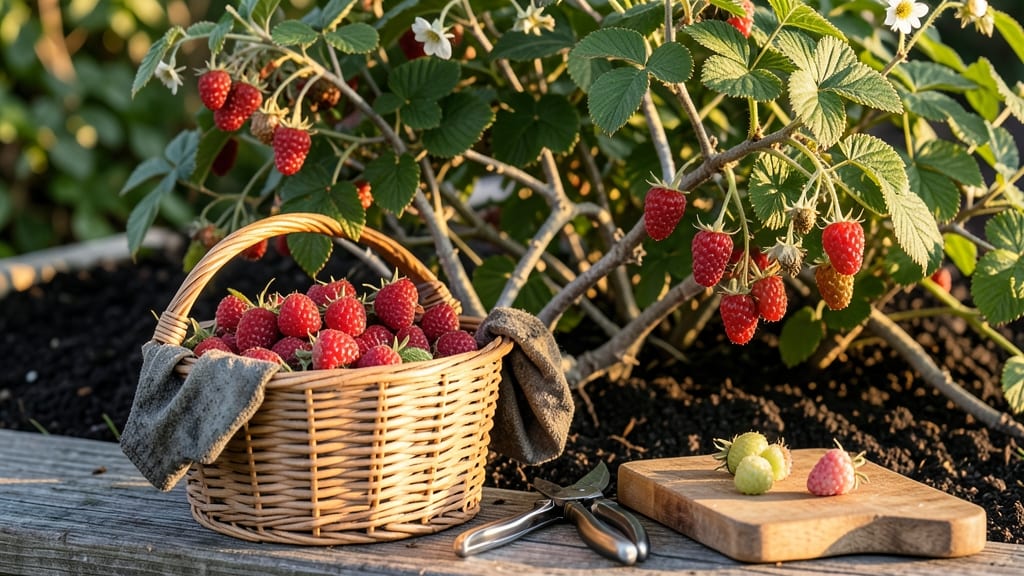
Raspberry harvest season arrives when those deep red berries 🍇 burst with sweetness and plumpness, but timing it right is the difference between a flavorful bounty and a bird buffet.
Picture this: you’ve spent months nurturing your raspberry bushes, only to find half your crop gone—or worse, still hard and tart when you finally pick them. That’s why knowing the exact moment to harvest isn’t just about taste; it’s about saving your effort (and your sanity).
In the Northern Hemisphere, raspberries typically ripen between June and September, but climate, variety, and even your local microclimate can shift that window by weeks. Everbearing varieties might give you two harvests a year, while June-bearing types deliver one big flush—if you catch it at the right time.
Below, I’ll break down how to spot perfectly ripe berries, when to expect your first harvest based on your zone, and the game-changer tricks to stretch your season and keep birds from crashing your party.
When to harvest raspberries for peak sweetness and flavor
Knowing exactly when to harvest raspberries transforms your crop from tart to sweetly delicious. The difference between a perfectly ripe berry and one that's still firm or overripe comes down to three key factors: color, firmness, and how easily the berry detaches.
I’ve learned the hard way that picking too early means underripe fruit, while waiting too long risks bird raids and mushy berries.
Raspberry varieties also play a huge role in timing. June-bearing types produce one massive crop in late summer, while everbearing varieties offer two smaller harvests—spring and fall. Even within these categories, temperature swings can shift ripening by 1-2 weeks.
For example, my Heritage raspberries in Zone 6a typically ripen in early July, but a cool spring can delay them until mid-July.
Here’s the visual guide I use to decide when my raspberries are ready:
| Raspberry Type | Color Indicator | Firmness Test | Detachment Test | Best Harvest Window |
|---|---|---|---|---|
| June-Bearing | Deep red/purple | Yields slightly to gentle pressure | Separates cleanly from receptacle | Mid-July to early August (Northern Hemisphere) |
| Everbearing | Deep red/purple (spring) or golden-yellow (fall) | Firm but softens near harvest | Pulls away easily from stem | Late May (spring) and September (fall) |
| Fall-Bearing | Rich red or black (varies by variety) | Plump and slightly soft | Detaches with minimal resistance | August to October (Northern Hemisphere) |
| Gold varieties (e.g., 'Golden Everbearing') | Golden-yellow, fully colored | Slightly softer than red varieties | Pulls away with gentle tug | Late June to early July (spring) and September (fall) |
Temperature matters more than you might think. In hot climates like Zone 9-10, raspberries ripen faster—sometimes 2-3 weeks earlier than in cooler regions. I once had my Boyne raspberries ready by late June in Southern California, while my neighbor in Zone 5 wasn’t harvesting until mid-August.
Always check the local frost dates to avoid late-season surprises.
Don’t rely solely on color—firmness is your best friend. A ripe raspberry should feel plump but yield slightly when you gently squeeze it. If it’s rock-hard, it’s not ready; if it’s mushy, it’s past its prime.
I test a few berries daily during peak season, especially with everbearing varieties, because their windows are shorter and more unpredictable.
Another trick I swear by? The detachment test. Gently pull a berry away from the plant. If it separates cleanly from the receptacle (the cone-shaped base), it’s ready. If it snaps off or leaves part of the stem behind, wait another day.
This method has saved me from picking underripe berries that turn bitter after a few days in storage.
Watch for bird activity too—if you see robins or starlings perched nearby, your berries might be ripe enough for them! I’ve lost entire canes to bird raids when I delayed harvesting by even a day. A quick net or bird netting can be a lifesaver during peak ripening.
Finally, variety-specific quirks can throw you off. Black raspberries, like 'Black Hawk,' stay firm longer but develop their signature deep purple-black color just before ripening. Meanwhile, red raspberries like 'Dorman Red' turn a vibrant crimson hue and soften noticeably. Always check your plant’s variety tags for unique ripening traits.
With these cues, you’ll never miss the sweetest window again. Happy harvesting—your taste buds (and birds) will thank you! 🍇
Proven strategies to protect your harvest from birds and pests
Birds and pests can turn your raspberry harvest season into a feast for them instead of you. Once those juicy berries ripen, robins, starlings, and squirrels will descend like clockwork. The good news? With the right deterrents and tactics, you can safeguard your crop without resorting to harsh chemicals.
Start by understanding their habits—birds often strike at dawn and dusk, while pests like Japanese beetles target stressed plants.
My top recommendation? Physical barriers like floating row covers or bird netting create an instant shield. These work for both young canes and established bushes, and they’re reusable for years.
Pair them with reflective tape or old CDs strung above the plants—birds hate the flashing light, and it’s a zero-cost solution. For ground pests, a thick layer of organic mulch disrupts their access while retaining soil moisture.
Cover plants with fine mesh netting (1/2" holes) secured tightly. Use zip ties or clips to prevent gaps. Works for all raspberry varieties.
Hang aluminum foil strips or CDs from strings above plants. Move them weekly to confuse birds. Best for small gardens.
Remove bird feeders nearby and prune dense shrubs where birds perch. Install fake owls (move weekly to avoid adaptation).
Use neem oil for beetles or kaolin clay (Surround WP) to deter chewing insects. Reapply after rain. Avoid during bloom.
For everbearing raspberries, which produce fruit in two seasons, double down on protection during the fall harvest. Birds are even more aggressive then because food is scarce.
I’ve had success with commercial bird netting (like Agribon) draped over hoop tunnels—it’s a bit pricier but lasts for years and keeps out 99% of pests. If you’re on a budget, even a lightweight row cover from the garden center works in a pinch.
Don’t overlook natural repellents like hot pepper spray or garlic-based solutions. Mix 2 tablespoons of hot sauce with a gallon of water, add a drop of dish soap, and spray on leaves.
The capsaicin confuses pests’ scent receptors. Reapply every 5–7 days or after rain. For ground-dwelling critters, lay down diatomaceous earth around the base—it’s non-toxic but deadly to insects.
Timing matters too. If you’re dealing with Japanese beetles, harvest berries early in the morning when beetles are less active. For birds, focus on dawn and dusk patrols—that’s when they’re most likely to strike.
I’ve even set up a motion-activated sprinkler near my bushes, and it scares off both birds and squirrels with a sudden burst of water. It’s a low-maintenance solution that pays off big time.
Protecting your raspberry harvest is all about layered defenses. Combine physical barriers, visual deterrents, and natural repellents for the best results. Start with the easiest, most cost-effective methods—like netting and reflective tapeplump, pest-free harvest from June through September. 🍇