
Picking
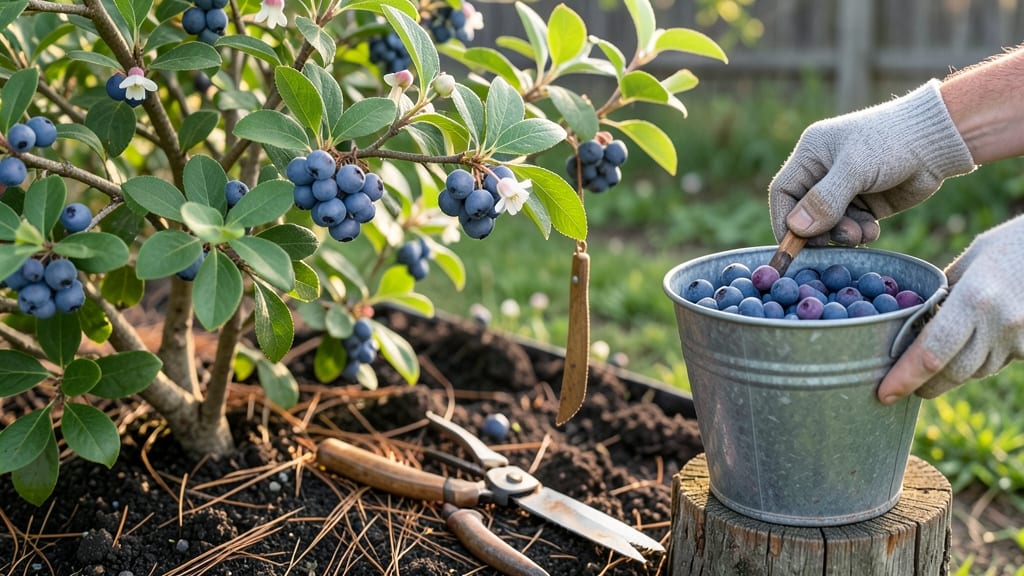
Harvesting blueberries at the right time ensures you get the sweetest, juiciest 🫐 berries possible—missing the window means bland, mealy fruit that falls short of summer perfection.
You might think color alone determines ripeness, but that’s only part of the story. The real secret lies in a mix of deep blue hue, firmness, and a clean stem snap—details that turn a good harvest into a great one.
In General (USDA Zone 6 default), the best time to pick is between June and August, but the exact moment depends on temperature, sunlight, and how the berries respond to a gentle twist.
Get it wrong, and you’ll either leave flavor on the bush or end up with overripe mush.
Below, I’ll break down the exact tests to use, the best time of day to harvest, and how to handle your pickings once they’re off the plant for maximum freshness.
How to tell when blueberries are ripe: color, size & stem tests
Picking blueberries at the wrong time can mean the difference between sweet, juicy perfection and bland, mealy disappointment. The key to maximizing flavor and yield lies in mastering three critical tests: color, size, and the stem snap.
These indicators work together to ensure you harvest at peak ripeness—when the berries are ready to burst with flavor.
Blueberries go through distinct color stages that signal ripeness. Early in the season, they start as pale green, then transition to a pinkish hue before finally deepening to a rich deep blue or purple.
This final color is your first clue that the berries are approaching harvest time. However, color alone isn’t enough—you’ll also need to check the berry’s size and firmness.
Here’s a quick reference to help you identify the perfect moment to harvest:
| Ripeness Indicator | What to Look For | Action |
|---|---|---|
| Color | Deep blue or purple (not red or green) | Check for uniform color |
| Size | Plump, 1–1.5 inches in diameter | Compare to similar berries |
| Stem Snap | Berry detaches cleanly with a gentle twist | Test 3–5 berries per cluster |
| Firmness | Skin resists gentle thumb pressure | Avoid mushy or overly soft berries |
The stem snap test is one of the most reliable ways to determine ripeness. When a blueberry is ready to pick, it should detach easily from the stem with a slight twist—almost like it’s snapping off. If the berry resists or requires force, it’s not ripe yet.
Conversely, if it falls off too easily, it may be overripe and prone to spoiling quickly. This test is especially useful for wild blueberries or those growing in dense clusters.
Berry size is another critical factor. Ripe blueberries typically measure between 1 to 1.5 inches in diameter. Smaller berries are often underdeveloped, while larger ones may be overripe. To test, compare a few berries from the same cluster—if they’re all consistently plump, they’re likely ready.
Avoid harvesting berries that feel shriveled or leathery, as these signs indicate they’ve passed their prime.
One common mistake gardeners make is relying solely on color to judge ripeness. Some varieties, like ‘Duke’ or ‘Bluecrop’, develop a waxy bloom that can make them appear dull even when fully ripe.
In these cases, the stem snap test becomes even more important. Always pair visual cues with physical tests for the most accurate results.
Harvesting blueberries too early can leave you with tart, underripe fruit, while waiting too long risks bird damage or spoilage. To extend your harvest window, pick berries every 2–3 days once they start ripening.
Use a wide-mouth container or a shallow basket lined with a cloth to avoid bruising the delicate fruit. And remember: morning harvests are ideal because the berries are cooler and firmer.
If you’re unsure whether your blueberries are ready, do a taste test on a few berries. Ripe blueberries should be sweet with a hint of tartness, while unripe ones will taste bland or overly sour.
This simple trick can save you from harvesting a crop that’s past its peak. Once you’ve mastered these tests, you’ll never miss the perfect moment to pick again!
🌱
Best time of day and season to harvest blueberries for maximum sweetness
Timing your blueberry harvest is everything—picking at the wrong moment can turn sweet berries into bland, mealy disappointments. The best time of day and seasonal window directly impact flavor, texture, and even storage life.
For peak sweetness, I’ve learned to follow nature’s cues and adjust for my USDA Zone 6 climate, but these tips work for most regions.
Morning harvests are ideal because cooler temperatures preserve berry firmness and sugar levels. Heat during the day can cause berries to soften prematurely, while overnight dew can dilute their flavor.
Seasonally, late June through August is prime time in northern climates, but southern growers may enjoy harvests as early as May or as late as September, depending on variety and microclimate.
- 1 Morning (6–9 AM): Harvest before 10 AM when berries are cool and firm. Avoid afternoon heat, which can cause premature softening.
- 2 Seasonal Zones: North (Zones 3–6): Late June–August. South (Zones 7–9): May–September, with early varieties ripening first.
- 3 Temperature Check: Ideal harvest temps are 60–75°F. Below 50°F, berries may taste tart; above 80°F, they soften too quickly.
- 4 Storage Life Tip: Berries harvested in cooler mornings last 5–7 days in the fridge vs. 2–3 days if picked in the heat.
Temperature plays a sneaky role in ripeness. In my experience, berries ripen faster when daytime highs hit 75–85°F but nights stay above 55°F. If temps drop unexpectedly, harvest immediately—cold snaps can halt ripening or cause berries to split.
Conversely, heatwaves accelerate sugar conversion, so check ripeness daily during hot spells.
Regional differences matter too. In northern climates, blueberries often ripen in waves, starting with early varieties like 'Bluecrop' in late June and ending with late varieties like 'Jersey' in August.
Meanwhile, southern growers may see two harvest seasons: one in spring and another in fall, thanks to milder winters. Always monitor your bushes—some varieties ripen 2–3 weeks earlier than others!
Pro tip: If you’re unsure about ripeness, do a taste test on a few berries. Fully ripe blueberries should be bursting with sweetness and just slightly tart, not bland or overly sour.
Overripe berries turn mushy and ferment quickly, so don’t wait too long once they’re ready. And remember, harvesting consistently encourages more production—don’t let berries pile up on the bush!
Finally, store harvested berries properly to preserve their sweetness. Keep them in a single layer in the fridge, and avoid washing until you’re ready to eat or freeze them. With the right timing, your blueberries will be sweeter than store-bought and packed with flavor. Happy harvesting! 🫐