
Pests and Diseases
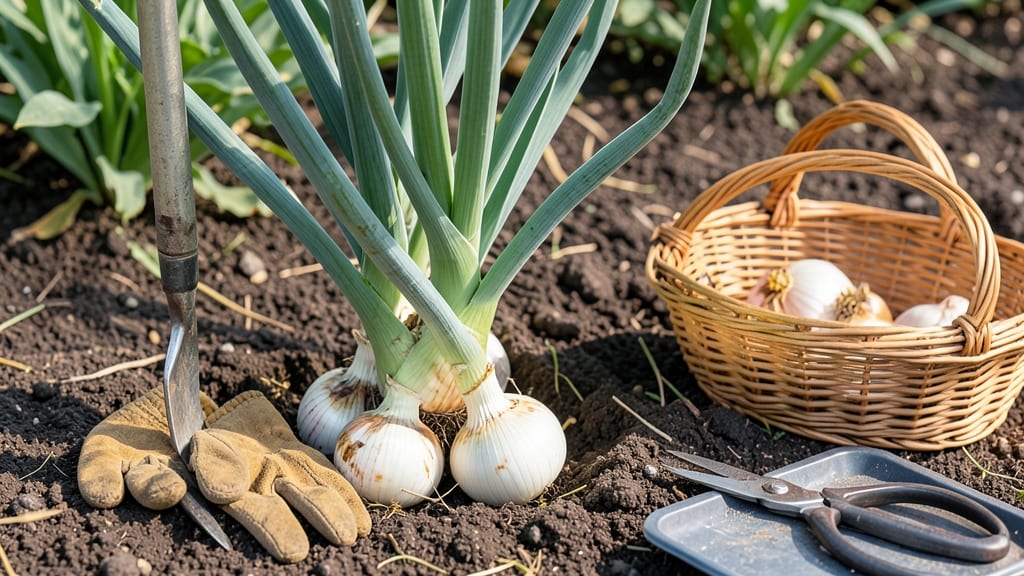
Onion harvest season arrives when bulbs reach 1-2 inches and tops yellow 🧅—timing that can shift dramatically depending on your climate and variety.
Miss the window, and you’re left with tough, pungent bulbs instead of the sweet, tender onions you planted for. Or harvest too early, and those flavorful meals you’ve been dreaming of won’t deliver.
Whether you’re growing short-day varieties in the South or long-day onions up North, knowing the exact signs and regional timing is the key to a successful harvest.
In this guide, I’ll break down the best months for your zone, how to spot ready onions, and storage tricks to keep them fresh long after the season ends.
Onion harvest season: exact months and regional timing differences
Timing your onion harvest correctly is more than just picking a random month—it depends on your climate zone, the onion variety you're growing, and whether you're after sweet green onions or mature bulbs.
In cooler regions like USDA Zones 3-7, harvest typically falls between late June and August, while warmer zones like Zones 8-10 may see harvests as early as May or as late as October. The key? Understanding how day length and temperature influence your onions' development.
Onions are divided into two main categories: short-day varieties (like '1015Y Yellow') and long-day varieties (like 'Sweet Spanish'). Short-day onions need 10-12 hours of daylight to bulb well, making them ideal for southern climates, while long-day onions thrive in northern regions with longer daylight hours.
Even within the same zone, a 2-4 week difference in harvest timing can mean the difference between perfect storage onions and tough, pungent bulbs.
If you're growing green onions (also called scallions), the rules change entirely. These can be harvested every 3-4 weeks throughout the growing season by simply cutting the outer leaves when they reach 6-8 inches tall.
This method lets you enjoy fresh greens for months without waiting for bulbs to form. For mature onions, though, precision is key—harvest too early, and you'll get small, pungent bulbs; wait too long, and they'll split or rot in the ground.
In cooler climates, onions often mature faster due to shorter growing seasons. Plant your sets or seeds 4-6 weeks before your last frost date for a spring harvest, or opt for fall-planted varieties that overwinter and bulb in early spring.
In warmer regions, you can even get two harvests per year—one in early summer and another in fall—by choosing heat-tolerant varieties like 'Candy' or 'Texas Early White'.
One common mistake is assuming all onions follow the same timeline. For example, 'Yellow Granex' (a popular short-day onion) needs 90-120 days to mature, while 'Sweet Spanish' (a long-day variety) takes 120-150 days.
Always check the seed packet for days-to-maturity estimates and adjust your planting schedule accordingly. Pro tip: Use a planting calendar to track your onions' progress and set reminders for harvest windows.
Regional microclimates also play a huge role. A garden in central California might see harvests in May and September, while a garden in upstate New York will likely wait until July or August. Pay attention to your local
5 Clear signs your onions are ready for harvest (and when to wait)
Harvesting onions at the right time transforms your garden into a flavor powerhouse—sweet, tender bulbs packed with taste. But miss the window, and you’ll end up with tough, pungent onions that ruin soups and salads. The key? Watching for these 5 clear signs of readiness while avoiding common mistakes.
First, let’s set the stage: most onion varieties take 90-150 days to mature, depending on your climate and whether you’re growing short-day or long-day types.
In cooler regions, harvest typically falls between late June and August, while warmer zones may see onions ready as early as May or June.
🌱 When Is Onion Harvest Season?
- 📅 Cool Climates (Zones 3-6): Late June to August
- 🌡️ Warm Climates (Zones 7-10): May to July
- 🌱 Short-Day Varieties: Harvest earlier (May-June)
- ⏳ Long-Day Varieties: Wait until July-August
- ❄️ Avoid Frost: Harvest before first frost (typically October)
Now, let’s talk leaf changes—the first sign your onions are ready. When the outer leaves turn yellow and begin to flop over, it’s your garden’s way of saying, “Time to harvest!”
This happens because the plant redirects energy from leaf production to bulb maturation. If you see 50% of leaves yellowing, grab your gardening gloves and get ready to dig.
Next, check the bulb size—ready onions should measure 1-2 inches in diameter. To test, gently dig around one onion and check its size. If it’s smaller than a golf ball, it’s not ready yet.
Overly large bulbs (bigger than a tennis ball) may split or develop hollow centers, so timing is everything. Pro tip: Use a ruler or caliper for precise measurements if you’re growing multiple varieties.
Don’t overlook the neck of the bulb, where the stem meets the bulb. When it tightens and the skin becomes dry and papery, that’s another green light to harvest.
Run your fingers over the bulb—if it feels firm and the skin no longer sticks to your fingers, it’s time. This dryness prevents rot during storage, so it’s a critical sign to watch for.
Harvesting too early means small, pungent bulbs with poor storage life, while waiting too long leads to split bulbs or hollow centers. If you’ve missed the window, you can still use the green tops for cooking, but they’ll lose their sweetness.
For best results, aim to harvest within 2-3 days of noticing these signs—onions don’t wait!
Finally, pay attention to soil conditions. Dry soil signals the bulb is fully mature. If the ground feels damp, wait a few days to let the soil dry out slightly before harvesting.
This final step ensures your onions cure properly, preserving their flavor and extending shelf life. Once you’ve confirmed all five signs, it’s time to grab your garden fork or trowel and get harvesting!